
It’s one of the most frustrating moments for any dog owner: you thought you had conquered house training, but suddenly you’re finding puddles where they don’t belong. If you’re dealing with a sudden setback, you’re not alone. The process of re potty training a dog, often called addressing potty training regression, is a common hurdle. It’s a sign that something is off, but with patience and the right strategy, you can get your furry friend back on track.
This challenge is more than just an inconvenience; it’s a communication breakdown. Your dog isn’t being spiteful—they are trying to tell you something. Whether the cause is medical, emotional, or environmental, understanding the “why” behind the accidents is the first step toward a solution. This guide will walk you through the potential causes and provide a clear, step-by-step plan for effective retraining. For specific challenges related to age, understanding a 2-year old dog regressing potty training can offer more targeted insights.
Why Do Potty Trained Dogs Regress?
Before you can fix the problem, you need to understand its source. A dog that was once perfectly house-trained doesn’t start having accidents out of rebellion. The reasons are almost always rooted in a significant change or underlying issue.
Underlying Medical Conditions
The very first possibility to rule out is a health problem. Many medical issues can lead to incontinence or an increased urge to urinate, making it difficult for your dog to hold it like they used to. Some common culprits include:
- Urinary Tract Infections (UTIs): A UTI can cause a sudden and frequent urge to urinate, making accidents almost unavoidable.
- Bladder Stones or Crystals: These can cause pain and an urgent need to go.
- Kidney Disease: This condition affects your dog’s ability to concentrate urine, leading to more frequent urination.
- Diabetes: A classic sign of diabetes in dogs is increased thirst and, consequently, increased urination.
- Cognitive Dysfunction: In older dogs, confusion and disorientation can lead to forgetting their house training rules.
If the accidents started suddenly without any obvious trigger, a trip to the veterinarian is your most important first step.
Stress, Fear, and Anxiety
Dogs are highly sensitive to their emotional environment. Stress is a major cause of behavioral changes, including potty training regression. Think about any recent changes in your household that might have unsettled your dog:
- A New Home: Moving is a huge stressor for dogs. New sights, sounds, and smells can be overwhelming.
- Changes in the Family: The arrival of a new baby, a partner, or even another pet can disrupt your dog’s sense of security.
- Schedule Changes: Did you get a new job? Are your work-from-home hours different? A change in your daily routine can throw off your dog’s potty schedule.
- Loud Noises: Construction, thunderstorms, or fireworks can create fear and anxiety, leading to accidents.
- Separation Anxiety: If accidents only happen when you’re away, separation anxiety could be the root cause.
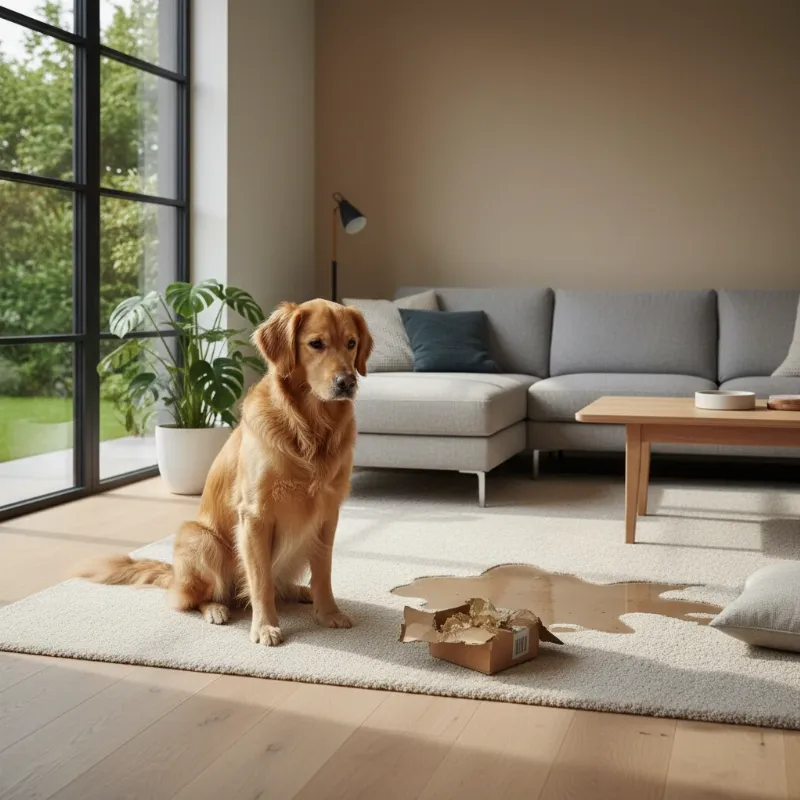 An alt-text describing a common scenario of potty training regression in dogs: a golden retriever looking apologetic next to a wet spot on a living room rug.
Your Step-by-Step Retraining Plan
Once you’ve ruled out medical issues with your vet, it’s time to begin the Re Potty Training Dog process. This strategy is all about going back to basics, re-establishing routines, and rebuilding your dog’s confidence. The principles are similar to those used in adult dog potty training from scratch.
Step 1: Go Back to Potty Training 101
Treat your dog as if they are a brand new puppy who has never been house-trained. This means starting from the very beginning to reinforce the correct habits.
- Frequent Potty Breaks: Take your dog out much more often than you think you need to. A good rule of thumb is first thing in the morning, last thing at night, and after every meal, nap, and play session. For an adult dog, this might mean every 2-3 hours initially.
- Leash Them Up: When you go outside, keep your dog on a leash. This prevents them from getting distracted by squirrels or smells and keeps them focused on the task at hand.
- Use a Cue Word: As your dog is eliminating, say a cue word like “Go potty” or “Do your business” in a calm, encouraging tone. This helps them associate the word with the action.
- Reward Success Lavishly: The moment your dog finishes peeing or pooping outside, praise them enthusiastically and give them a high-value treat. This is the most critical part of the process—it makes going outside the best thing ever.
Step 2: Manage the Environment
Management is key to preventing accidents and setting your dog up for success. The goal is to make it impossible for them to fail.
- Constant Supervision: Do not give your dog unsupervised freedom in the house. Keep them tethered to you with a leash or use baby gates to confine them to the same room you are in.
- Crate Training: When you cannot actively supervise your dog, use a crate. A crate acts as a safe den and dogs will instinctively avoid soiling their sleeping area. Ensure the crate is the right size—just big enough for them to stand up and turn around in.
- Clean Accidents Thoroughly: Do not underestimate the importance of proper cleanup. If your dog can smell a previous accident spot, they will be drawn to use it again. Avoid ammonia-based cleaners, as their smell is similar to urine. Instead, use an enzymatic cleaner specifically designed to break down and eliminate pet stains and odors completely.
As veterinary behaviorist Dr. Sarah Miller often notes, “An enzymatic cleaner is non-negotiable. If you don’t fully remove the scent molecules, you’re unintentionally leaving a signpost for your dog that says ‘potty here’.”
Step 3: Address the Underlying Stress
If you suspect stress or anxiety is the cause, retraining must be paired with efforts to make your dog feel more secure.
- Maintain a Predictable Routine: Dogs thrive on predictability. Keep feeding times, walk times, and potty breaks as consistent as possible every day.
- Increase Exercise and Enrichment: A tired dog is a happy dog. Ensure your dog is getting enough physical exercise and mental stimulation through puzzle toys, training games, and chews. This helps reduce anxiety and boredom.
- Create a Safe Space: Make sure your dog’s crate or bed is a comfortable, positive-only zone. Never use the crate for punishment.
If the regression seems to be tied to a specific location or method, exploring options like how to train a dog to use a pad could be a temporary management tool while you work on the core issue.
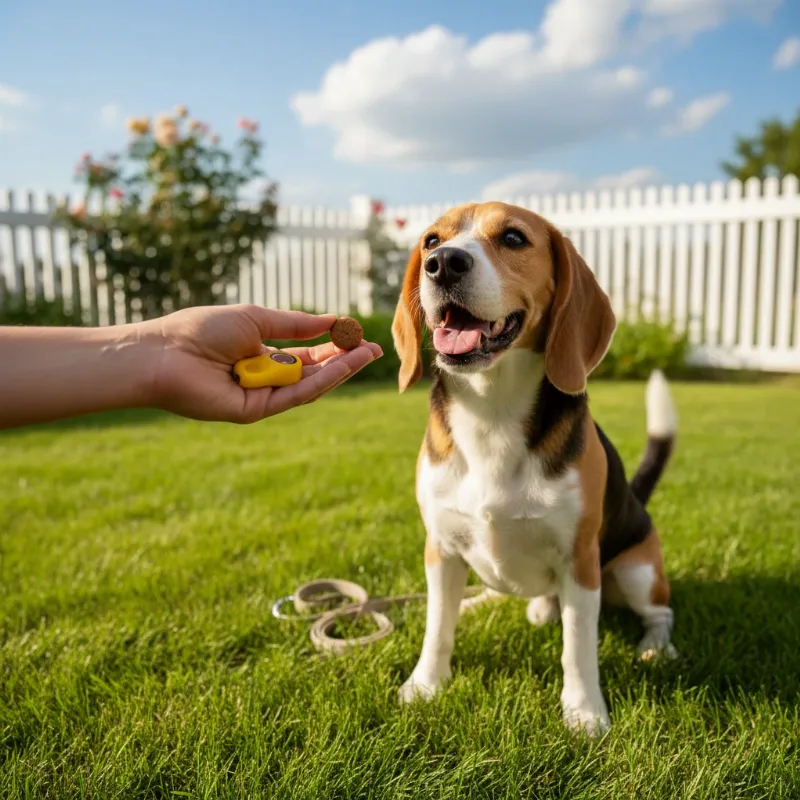 An alt-text optimized for SEO about re potty training a dog: an owner rewarding a happy dog with a treat after it successfully potties on the grass.
Common Mistakes to Avoid
When you’re feeling frustrated, it’s easy to make mistakes that can set your training back. Be mindful to avoid these common pitfalls:
- Punishing Your Dog: Never scold, yell at, or physically punish your dog for having an accident. This will only create fear and anxiety, making the problem worse. It teaches your dog that you are unpredictable and scary, not that going inside is wrong.
- Waiting Too Long: Don’t assume your dog will “tell you” when they need to go out, especially during retraining. Be proactive and take them out on a strict schedule.
- Inconsistent Routines: A weekend of lax rules can undo a week of hard work. Consistency from all family members is crucial for re-establishing good habits.
- Giving Too Much Freedom Too Soon: Earning back full-house freedom is a gradual process. Don’t rush it. Wait until your dog has been accident-free for at least a month before slowly increasing their unsupervised time.
Sometimes, a dedicated tool can make a world of difference. Investing in a quality potty trainer for dogs can provide a designated spot and simplify the process, especially for those in apartments.
Frequently Asked Questions (FAQ)
How long does it take to re-potty train a dog?
The timeline varies depending on the dog and the underlying cause of the regression. It could take anywhere from a week to a few months. The key is consistency and patience. Rushing the process will only lead to setbacks.
Why is my dog suddenly peeing in the house at night?
Nighttime accidents could be a sign of a medical issue like a UTI or kidney problems, especially if your dog was previously able to hold it all night. It could also be related to anxiety. Learning the specifics of toilet training a dog at night can provide targeted strategies for this exact problem.
Can a change in dog food cause potty training regression?
Yes, a sudden change in diet can cause digestive upset, leading to diarrhea and accidents. If you are changing your dog’s food, always transition gradually over 7-10 days to allow their system to adjust.
My dog has accidents when guests come over. Why?
This is often due to either excitement or anxiety. Your dog may be too distracted to remember their training or too nervous to control their bladder. Manage the situation by taking your dog out for a potty break right before guests arrive and keeping introductions calm.
Is my dog being defiant by peeing inside?
No, dogs do not act out of spite or defiance. House soiling is a symptom of a problem—whether it’s medical, emotional, or a flaw in their original training. It’s a sign they need help, not punishment.
Conclusion: Patience is Key
Dealing with potty training regression can test your patience, but it’s a solvable problem. By starting with a vet visit and then committing to a consistent back-to-basics approach, you can successfully re potty training dog habits. Remember to focus on positive reinforcement, manage your dog’s environment to prevent mistakes, and address any underlying stressors. Your dog isn’t trying to make your life difficult; they are relying on you to understand their needs and guide them back to the right path. With empathy and consistency, you can restore harmony to your home and strengthen the bond with your beloved companion.
