
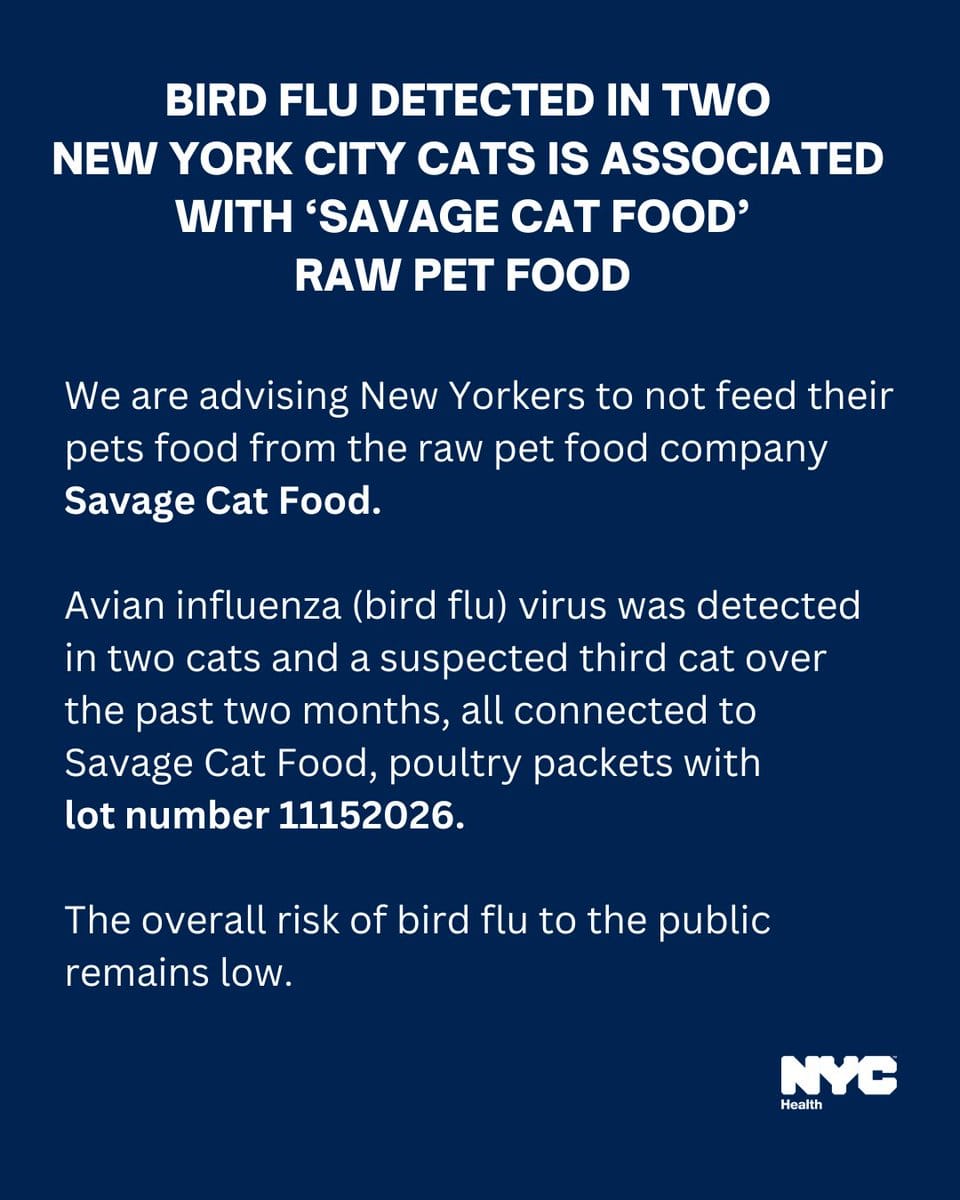
New York City pet owners are strongly advised to avoid feeding their pets raw food or raw milk. The New York City Health Department has confirmed that avian influenza (bird flu) virus was detected in two cats, and potentially a third, over the past two months. All affected cats are linked to raw pet food products from Savage Cat Food, specifically poultry packets with lot number 11152026. This information has been shared with the FDA and the company. While these cases are concerning for pet owners, the overall risk of bird flu to the public in New York City remains low, with no human cases reported to date.
“We strongly encourage New Yorkers whose cats are experiencing illness after consuming Savage Cat Food products or other raw meat or dairy products to contact their veterinarian,” stated NYC Health Department Acting Commissioner, Dr. Michelle Morse. “The current risk to New Yorkers of bird flu remains low. Bird flu viruses present a wider risk to the general public only if the virus develops the ability to transmit between people — which we have not seen at this time.”
One affected cat, Cat A, became ill this month with fever, loss of appetite, and severe respiratory disease after consuming chicken packets from Savage Cat Food (lot number 11152026). Testing for H5 bird flu was conducted at the Cornell Veterinary Diagnostic Laboratory, with confirmatory H5N1 testing pending from the U.S.D.A. National Veterinary Services Laboratory (NVSL). Tragically, Cat A died as a result of the infection.
A second cat, Cat B, was diagnosed with H5N1, with testing confirmed by NVSL last month. This cat developed severe respiratory and liver disease, along with a fever, and also succumbed to the infection. Further testing by NVSL suggests Cat B was infected with an H5N1 strain related to that found in Savage Cat Food, lot 11152026. While Cat B did not directly consume the raw food product, it was exposed to a sick cat, Cat C. Cat C experienced fever after consuming Savage Cat Food lot number 11152026. Cat C survived, but H5 testing was not performed due to the time elapsed since illness.
The Health Department has been actively communicating with cat owners, veterinary staff, and Savage Pet Food. Although cat H5N1 infections are rare, individuals who had close contact with the sick cats have been advised to monitor their health. Arrangements for testing, treatment, or prophylaxis will be made if indicated.
Tips for Pet Owners to Minimize Risk
To protect your pets and prevent the spread of bird flu, pet owners should adhere to the following guidelines:
- Avoid Feeding Raw Diets: Do not feed your pets raw food or raw milk. Opt for commercially prepared, commercially cooked, or properly home-prepared diets that are safe and nutritionally complete.
- Monitor for Illness: If your pet has consumed raw food and begins to show signs of sickness, such as fever, lethargy, loss of appetite, or respiratory distress, contact your veterinarian immediately. Isolate your sick pet from other animals to prevent potential transmission.
- Keep Cats Indoors: Indoor cats are less likely to be exposed to wild birds or contaminated environments. Keeping cats indoors is a crucial step in protecting their health and reducing their risk of contracting diseases like bird flu.
- Supervise Dogs Outdoors: When walking your dog, be vigilant and prevent them from interacting with or consuming dead or sick animals, as these could be sources of infection.
The U.S. Food and Drug Administration (FDA) has also been monitoring reports of H5N1 in cats across other states, including California, Colorado, Oregon, and Washington, which were linked to contaminated food products. H5N1 can transmit to cats through the consumption of products such as raw pet food and treats, raw milk, and raw poultry derived from infected poultry or cattle.
This investigation is a collaborative effort involving local, state, and federal agencies, along with academic partners. The ongoing investigation by the FDA and additional testing by NVSL have been critical, supported by routine surveillance and testing from animal health partners. These include the NYS Department of Agriculture, the Cornell College of Veterinary Medicine, the New York State Department of Health, and dedicated local veterinarians who played a vital role in identifying these cases.
For more information:
- NYC Health Department – Avian Flu
- Highly Pathogenic Avian Influenza (Bird Flu) Resource Center – Cornell University College of Veterinary Medicine
- FDA Outlines Ways to Reduce Risk of HPAI in Cats
- USDA lists all confirmed cases of HPAI in domestic cats
