
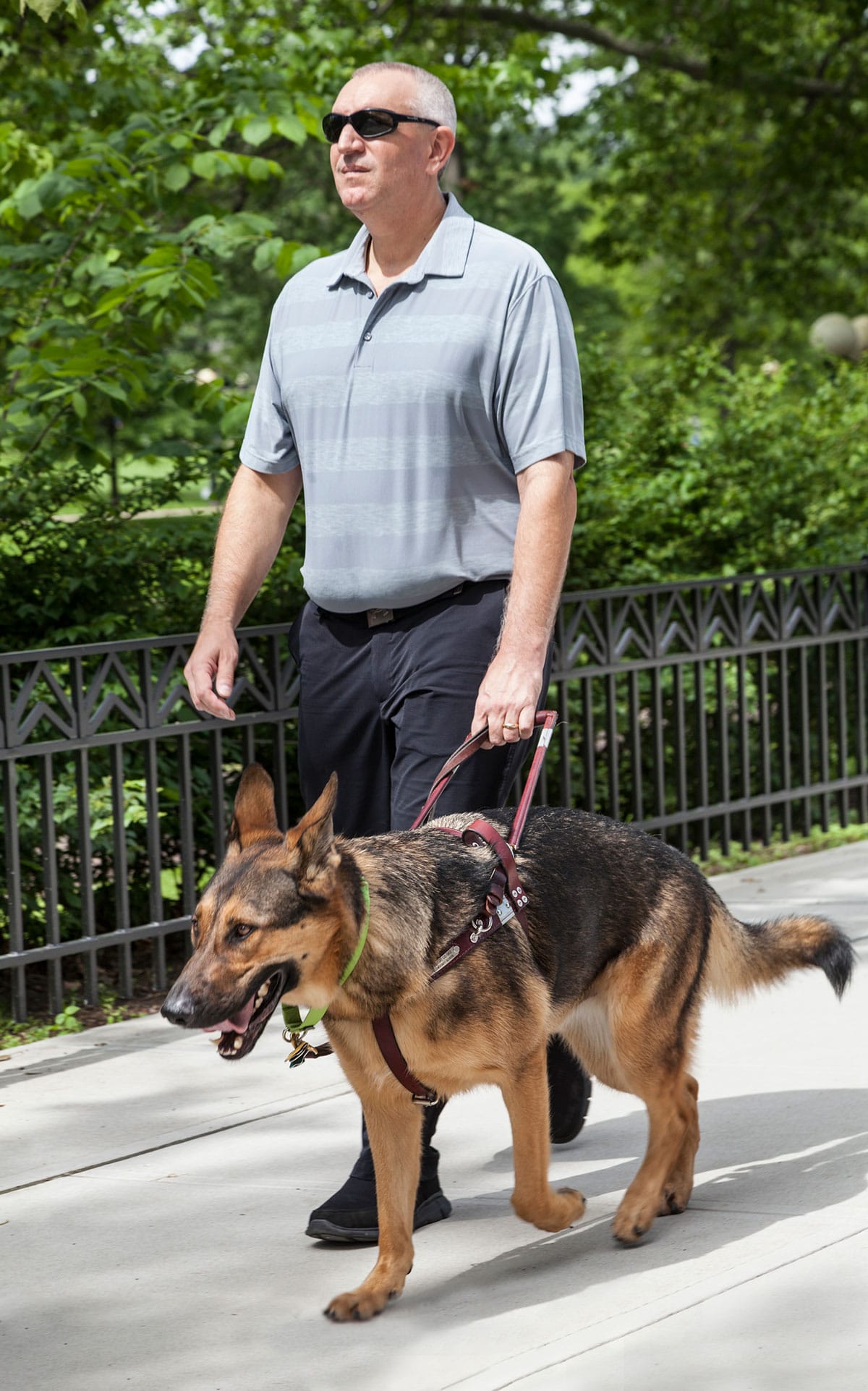
Welcome to the Honest Dog Breeder podcast, where we explore the world of dog breeding to help you build a business you love and produce dogs that fulfill their owners’ dreams. Today, we have a truly inspiring guest, Meghan Whalen of Roo Roo Rat Terriers in Wisconsin. Meghan is not only a dedicated breeder focusing on companion and service temperament dogs, but she is also blind. Her journey and insights offer a unique perspective on breeding, training, and overcoming challenges.
Meghan, who believes you can have an honest dog breeding program that also pays the bills, shares her extensive experience. She breeds Rat Terriers and also raises and trains service dogs, offers boarding and training for pet dogs, conducts phone consultations, and is developing a business to create specialized service dog equipment.
Service Dog Equipment and Business Ventures
Meghan’s venture into creating service dog equipment stems from her own needs and her understanding of what works best. She produces items like adjustable leashes, Martingale collars, slip collars, and buckle collars. Currently, she’s focusing on crafting guide dog harnesses and plans to expand into mobility assistance harnesses for dogs that provide pulling, balance, and bracing support. Eventually, she aims to produce vests for working dogs, whether for identification or indicating a dog in training. This diverse skill set highlights her commitment to improving the lives of both dogs and their handlers.
The Journey into Rat Terrier Breeding
Meghan’s passion for dogs began at age 12 when she saved up to get her first Rat Terrier, Snickers, from a shelter. Snickers, despite having fear reactivity and aggression issues, taught Meghan invaluable lessons about dog behavior and training. Later, a breeder-acquired Rat Terrier named Mazda, who lived to 11, passed away from congestive heart failure. Tragically, Meghan also lost a rescue Rat Terrier to DM, a genetic condition, and another with luxating patellas. These experiences, compounded by the medical and temperamental challenges faced by her dogs, spurred her to research responsible breeding practices. She realized that by combining her knowledge of service dog training with breeding, she could focus on producing dogs with sound temperaments, physical health, and genetic soundness. In 2017, she acquired her first prospective breeding pair, Mayhem and Chaos, and had her first litter in 2018. Now, dog breeding is her sole profession, a goal she achieved last summer.
Training a Service Dog for Guide Work
Meghan’s expertise extends to training service dogs, particularly for guide work. She has a Weimaraner named Tribby, who is currently undergoing training to be her next guide dog. The process, which typically takes about nine to ten months, begins with extensive socialization and obedience training. The key is to expose the dog to a wide variety of environments to foster adaptability. This includes visits to malls, restaurants, sporting events, and even simple walks around the neighborhood to observe traffic.
Simultaneously, basic obedience commands like sit, stay, and come are reinforced across all environments. A unique aspect of Meghan’s training involves teaching puppies basic directional commands like left and right, along with skills like backing up and body awareness. This foundational training prepares them for the complex task of obstacle avoidance.
Around the age of one to 15 months, the dogs begin learning to pull in a harness. Their primary responsibilities as guide dogs include traveling in a straight line, stopping for changes in elevation (like curbs or stairs), indicating and navigating around obstacles (including overhead ones like tree branches), and eventually learning to work with moving obstacles. Meghan likens the core of guide dog training to expanding the dog’s spatial awareness from avoiding personal hazards to ensuring the safety of both themselves and their handler within a larger space.
The Unique Challenges and Strengths of a Blind Guide Dog Handler
Training a guide dog for oneself presents a unique set of challenges, especially when the handler is blind. Meghan emphasizes starting in a familiar environment, like her own neighborhood, and initially using her cane alongside the dog. This allows her to verify the dog’s navigation and provide praise when tasks are performed correctly. She explains that a cane is an “obstacle finder,” while a dog is an “obstacle avoider,” and the transition requires immense trust. Even with a well-trained dog, mistakes can happen, making it easy for a handler to become disoriented.
Meghan relies on a gradual progression of trust-building, starting with familiar routes and progressing to entirely new, complex environments like airports. The most significant challenge is relinquishing control and trusting the training she has instilled. She acknowledges that sometimes, certain skills might require more focused training in specific environments, leading to a hybrid approach where training is ongoing.
Considering Owner-Training a Service Animal
For individuals interested in owner-training a service animal, Meghan recommends seeking resources and guidance. She co-instructs an eight-week online course that covers everything from puppy selection and temperament evaluation to socialization, training expectations, and the specific skills needed for various service roles, including guide work. A crucial piece of advice is the paramount importance of selecting the right dog with the inherent tendencies for service work. A dog that lunges, barks, or growls at people in public is not suitable for service dog quality temperament.
Selecting Breeding Dogs and Whelping Puppies with Visual Impairment
Meghan’s approach to selecting breeding dogs is remarkably insightful, relying heavily on tactile information and communication with other breeders. When evaluating puppies from her own lines, she handles them from birth, assessing their physical development, body structure, and temperament. She pays close attention to how puppies relax in her hands, whether they are comfortable being held on their backs, and their overall demeanor.
When acquiring a puppy from another breeder, Meghan asks detailed questions about the puppy’s interactions with littermates, their eating habits, and their response to being handled. She also relies on photos shared by friends who can provide visual descriptions, helping her visualize the puppy’s potential structure and appearance.
Whelping puppies presents its own set of challenges. Meghan manages this by keeping meticulous records of her dogs’ heat cycles, using phone reminders, and relying on tactile cues. She can feel subtle changes in tissue firmness before a dog comes into heat and checks for discharge by wiping the dog with a tissue. Initially, she sent photos of the used tissues to breeder friends for confirmation, but now, with her extensive experience, she relies on her own tactile assessments and her intuition about her dogs’ behaviors.
During whelping, Meghan keeps her pregnant dogs with her constantly, often on a leash to prevent them from attempting to whelp unattended. She monitors for physical changes, such as the dropping of milk and the shedding of the mucus plug. She emphasizes the importance of her dogs being exceptionally comfortable with touch, as she needs to be able to palpate their abdomens to monitor contractions and feel for puppies emerging. She uses a tactile method to determine if a puppy is breech or headfirst, guiding her expectations for the birthing process. She also uses a talking scale to weigh puppies immediately after birth and an AI app for color identification, often supplemented by video calls with friends for more detailed descriptions of markings.
Early Neurological Stimulation and Puppy Assessment
Meghan utilizes Early Neurological Stimulation (ENS) not only for its developmental benefits but also as a crucial tool for assessing puppies from birth. Through a series of exercises, she observes how each puppy reacts to different stimuli. Some puppies may relax immediately, while others might exhibit stress or even “shut down.” Meghan interprets these responses to predict a puppy’s future temperament, identifying those who might need more time to observe before engaging in new activities. This allows her to match puppies with appropriate homes, recommending more active families for observant puppies and avoiding placing them in overly quiet environments where they might become understimulated. She can even infer when a puppy’s eyes have opened based on changes in their responses during ENS exercises.
Navigating Buyer Interactions and Misconceptions
Despite her visual impairment, Meghan has found that most buyers are not deterred. She openly shares her blindness, often noting it in her Facebook page’s pinned post and emphasizing that while photos might not be her strength, she can provide videos and detailed descriptions. She encountered one instance where another breeder questioned the care of her dogs based on a photograph. Meghan addressed this publicly by posting a clearer image and calmly explaining her situation, encouraging direct communication for any concerns. She believes that if her approach isn’t a good fit for a potential buyer, they will simply choose another breeder, and that’s perfectly acceptable.
The “Superpower” of Enhanced Senses
Meghan’s blindness has, in many ways, honed her other senses, which she describes as a “superpower.” While she doesn’t possess “better” senses, she relies on them more extensively, leading to a refined perception. This is particularly evident in her ability to assess a dog’s health and well-being through scent and touch. She can detect subtle olfactory cues related to heat cycles, potential health issues in puppies (like Giardia), and even the progression of labor. This heightened sensory awareness allows her to gather critical information that others might miss.
A Close Call with Pyometra
Meghan recently experienced a concerning health issue with one of her breeding females. After a breeding that didn’t result in pregnancy, she noticed an unusual “squishy, gloppy” feeling in the dog’s abdomen and a discharge with no odor or color. Trusting her instincts, she took the dog to her vet, suspecting pyometra (a uterine infection). Despite normal blood work, Meghan insisted on a spay. During the surgery, the vet discovered the uterus was severely enlarged and filled with pus, clearly indicating early-stage pyometra. Meghan’s prompt action and insistence on the procedure likely saved the dog’s life, as the infection was caught before any rupture or leakage occurred. This incident underscores the importance of trusting your intuition and advocating for your dog’s health.
Palpating Pregnancy and Puppy Counts
Remarkably, Meghan can also palpate to determine pregnancy in dogs around 30-35 days gestation, a skill she has never been wrong about. She can even estimate the number of puppies, particularly in first-time mothers, and accurately predict due dates, sometimes adjusting them based on her palpation findings.
The Importance of Touch and Affection
Meghan shares that her puppies are consistently described by their new families as exceptionally affectionate. She attributes this to her consistent practice of picking up and handling each puppy every time she checks on them. This extensive tactile interaction, she believes, fosters comfort, confidence, and a deep bond, contributing to their intuitive nature and ability to adapt to new environments. Her advice to other breeders and owners is clear: “There’s no such thing as touching them too much.”
Connecting with Meghan Whalen
You can connect with Meghan Whalen on Facebook at facebook.com/roorooratties or via email at roorooratties@gmail.com. She is also working on developing a website.
