
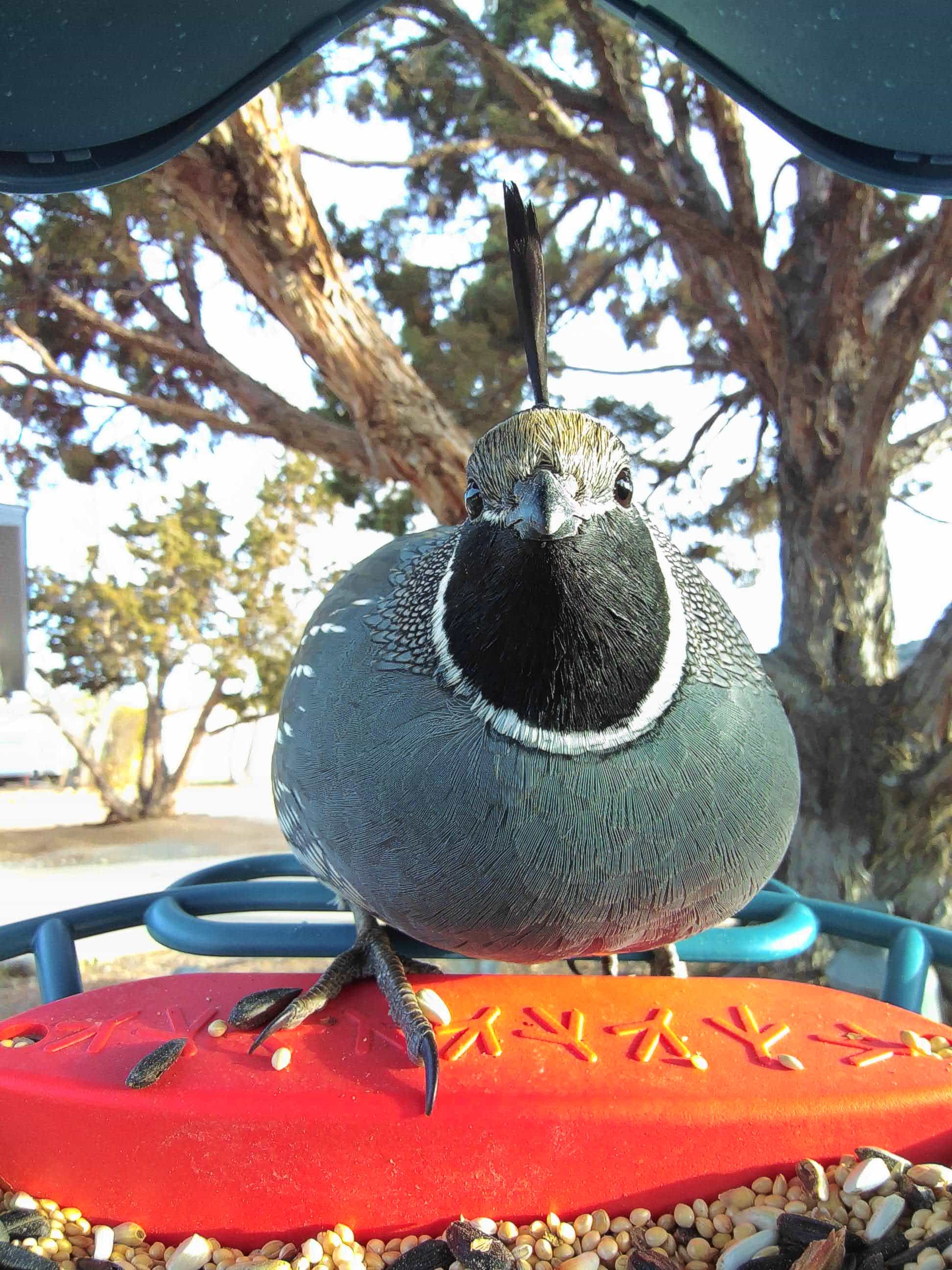
Understanding bird behavior provides valuable insights into their natural history and daily lives. This article delves into the specifics of the Gambel’s Quail, a common bird found throughout the Sonoran Desert and beyond.
A Look at Quail Species in Arizona
Arizona is home to four distinct species of quail. Among these, the Gambel’s Quail is the most numerous and widely recognized. Also known as Arizona quail, desert quail, or valley quail, they are distinguishable from other quail species by their unique physical appearance, coloration, and field marks. The other quail species in Arizona have more limited populations, ranges, and habitats.
Masked Bobwhite Quail
The Masked Bobwhite Quail is the rarest of the four species. Its historical range has significantly diminished due to habitat fragmentation, overgrazing, drought, and hunting. This critically endangered species can now only be found in a few remote grassland habitats. In the United States, the Buenos Aires National Wildlife Refuge operates a captive breeding program for these birds. This species is the southwestern form of the Northern Bobwhite and gets its name from the black mask adult males display.
Montezuma Quail
The Montezuma Quail stands out with its distinct patterning, often referred to as the Harlequin Quail due to its clownish face. Found in limited foothill grassland areas of southeastern Arizona, southern New Mexico, and southern Texas, they are identifiable by their intricate markings and rounded body shape. Hunters consider them a challenging target due to their size and weight. Their coloration provides excellent camouflage, and they characteristically “freeze” in place, making them difficult to spot until approached closely.
Scaled Quail
Scaled Quail inhabit arid, brushy grasslands in southeastern Arizona, most of New Mexico, and throughout western Texas. While visually distinct, they are closely related to Gambel’s and California Quail, with documented hybrids found where their ranges overlap. They possess a stockier build and a shorter tail than Gambel’s Quail, along with a short white feather tuft on their heads instead of the typical top-knots.
Chukar
Chukar are an introduced Eurasian species found in the Rocky Mountain region of the American West. Hunters find them to be a challenging game bird. Small family coveys can be observed in areas like southern Utah, often near public campgrounds where they may approach to forage for food.
The Distinctive Gambel’s Quail
Gambel’s Quail are the most familiar to many, commonly found in the Sonoran Desert and increasingly in suburban and urban backyards. While their numbers and range have decreased since early settlement, they remain abundant native species.
Unique Top-knots
Gambel’s Quail are easily identified by their comma-shaped top-knot, a cluster of black feathers extending from the forehead and bending forward. California Quail share a similar top-knot but are not found in Arizona. Mountain Quail have a long, straight top-knot, while Scaled Quail have a shorter tuft of white feathers. Masked Bobwhite and Montezuma Quails lack top-knots entirely.
Covey Social Structure
Gambel’s Quail are typically seen in family groups called coveys. During cooler winter months, multiple families may merge into larger coveys of forty or more birds. In the spring and summer breeding season, they revert to smaller, single-family units, usually numbering ten to twenty birds, though up to thirty have been observed. It is believed that larger family groups may include unmated sub-adult females who have added their own eggs to the nest. Historical accounts suggest that Gambel’s Quail were once incredibly numerous, with winter coveys stretching for miles.
Predators and Survival
As ground-dwelling birds, Gambel’s Quail are constantly vigilant against a variety of predators, including raptors, roadrunners, snakes, coyotes, bobcats, and domestic cats. Domestic and feral cats are considered the most significant predator, accounting for more quail deaths than all other predators combined.
Flight and Locomotion
While often observed walking, Gambel’s Quail can fly short distances to evade predators, reach foraging areas, or roost at night. Even young chicks can fly to roosts with adults. Their flight, though not as developed as some species, allows them to escape most predators, typically reaching speeds of around 40 mph. Their running speed is about 14 to 15 mph. Witnessing a family group walking in single file is a heartwarming sight.
Breeding and Nesting Habits
Due to high predation rates, quail hens may produce multiple broods per breeding season. The breeding season in southern Arizona is long, typically from late winter to mid-autumn, with the peak occurring between March and September. Each female lays an average of ten to fifteen eggs per brood. Both male and female adults share parental responsibilities, including constructing shallow scrapes lined with natural materials for nests. These nests are used for a single brood, with subsequent broods requiring new nesting sites. Hens may occasionally lay eggs in the nests of other birds like roadrunners, cactus wrens, and thrashers. Gambel’s Quail eggs are unique in coloration and patterning, ranging from dull white to buff or pink-buff, often blotched with purples and browns.
Incubation and Parental Care
While the hen lays the eggs, she incubates them while the male typically guards the nesting area. If the female is incapacitated, the male will assume all parenting duties. Recent research indicates that males may also share incubation duties with females. Once hatched, both parents diligently teach their young essential survival skills, including foraging, predator avoidance, and finding water and shelter.
Vocalizations and Communication
Covey members communicate through low chuckles or grunts. A lone bird separated from the group may emit a distinctive “location” call, the familiar chi-CA-go-go. Mated pairs form strong bonds, and larger winter coveys typically dissolve into smaller family groups by March, initiating the breeding season. While research on wild courtship displays is ongoing, studies of captive birds suggest that “tidbitting,” where the male ruffles his feathers and presents food to a potential mate, is common. Some quail species also engage in mating duets.
Range and Naming
Gambel’s Quail have the largest range among quail species in the American West and are known to hybridize with California and Scaled Quail where their territories overlap. The species was first described and named in 1843, honoring naturalist William Gambel. Unfortunately, various quail species are experiencing population declines and range contractions due to factors like overgrazing, hunting, drought, wildfires, climate change, and invasive fire ants.
Diet and Foraging
The diet of Gambel’s Quail is diverse, encompassing both plant material and insects, which are a crucial source of nutrients. Favorite insects include ants, grasshoppers, beetles, and caterpillars. Young quail chicks have a diet heavily dominated by insects. As they mature, their diet diversifies to include a wide variety of plant foods, such as tubers, bulbs, new shoots, leaves, buds, flowers, grass seeds, grains, and native fruits like prickly pear and berries. Their chicken-like anatomy, with strong legs and sharp claws, is well-suited for scratching the ground to excavate insects and plant matter.
Feeding Strategies and Water Needs
Gambel’s Quail require regular access to fresh water, often traveling to natural sources or cattle ponds. They prefer dust bathing to water cleansing. Ground-level bird baths are most effective for attracting them, and maintaining a shallow water depth of one to one-and-a-half inches is crucial, especially for protecting young chicks from drowning. Providing a reliable water source can attract a greater variety of bird species than any single food type. To ensure quail consume their food, it is recommended to place it out shortly before their expected arrival times, as they are creatures of habit. This strategy helps prevent other birds like doves and pigeons from consuming the food.
