
Bringing a new puppy into your home is an exciting milestone, filled with promises of joy, companionship, and unconditional love. Yet, it also ushers in a period of intense learning, for both you and your furry companion. For many new pet parents, the thought of house training, curbing destructive chewing, and instilling good manners can seem daunting, making the aspiration of “Puppy Raising Made Easy” feel more like a distant dream. However, with the right strategies and a bit of patience, transforming your rambunctious pup into a well-behaved, happy adult dog is not only achievable but can also be a remarkably smooth journey. Drawing on decades of professional experience, we’ll delve into the foundational principles that simplify puppy care, with a strong emphasis on a technique that proves to be a game-changer: crate training. This isn’t just about managing a puppy; it’s about fostering a confident, secure, and respectful relationship right from the start. To further enhance your training knowledge, consider exploring valuable insights from top dog training books uk that can complement these methods.
The journey of raising a puppy can truly be a transformative experience, as one professional dog trainer discovered two decades ago. Initially skeptical about crate training, the trainer adopted an Australian Kelpie named Keli, who was destined to be a Canine Field Agent. Determined to provide Keli with cutting-edge care, the trainer reluctantly decided to try crate training. The first night, Keli cried briefly, then settled. At 2 AM, she woke her owner, signaling a need to go outside – a clear win for house training. This early success eliminated messes and prevented chewing incidents, quickly turning skepticism into belief. The true turning point came when her older Bull Terrier mix, Caper, voluntarily curled up in Keli’s crate, clearly enjoying the comfort and security it offered. This moment solidified the trainer’s conviction, making her a lifelong advocate for crate training as an indispensable tool for easy puppy raising.
The Foundation: Understanding Your New Puppy
The Puppy Mindset: Instincts and Needs
To make puppy raising genuinely easy, understanding your puppy’s natural instincts and needs is paramount. Puppies, like their wild ancestors, are den animals. They instinctively seek out small, enclosed spaces where they feel safe and secure. This innate desire is precisely why a properly introduced crate can become their cherished sanctuary rather than a confinement. Beyond the need for a safe space, puppies are social creatures requiring interaction, mental stimulation, and physical exercise. They explore the world with their mouths, which explains their insatiable desire to chew. Recognizing these fundamental behaviors allows you to anticipate their needs and structure their environment and training in a way that aligns with their natural predispositions, fostering a cooperative and joyful relationship.
Essential Puppy Supplies Checklist
Before your puppy even sets paw in your home, having the right supplies on hand can significantly ease the transition and set the stage for successful “puppy raising made easy.” A well-prepared environment reduces stress for both you and your new family member.
- Crate: Choose one that is appropriately sized (see details below) and made of sturdy material like wire or plastic.
- Food and Water Bowls: Stainless steel or ceramic are recommended for hygiene.
- High-Quality Puppy Food: Consult with your veterinarian on the best food for your puppy’s breed and age.
- Collar, Leash, and ID Tags: Ensure the collar fits comfortably and the tags have up-to-date contact information.
- Chew Toys: A variety of safe, durable chew toys are essential to redirect destructive chewing.
- Comfort Items: A soft bed or blanket for the crate.
- Grooming Tools: Puppy-friendly brush, nail clippers, and shampoo.
- Cleaning Supplies: Enzymatic cleaner for accidents.
- Vet Information: Have your veterinarian’s contact details handy for initial check-ups and emergencies.
Embracing the Crate: A Game-Changer for Easy Puppy Raising
The Canine Den: A Home Within a Home
A dog crate, whether sturdy plastic, fiberglass, wood, metal, or wire, serves as much more than just a cage; it’s a dog’s personal, portable bedroom – a modern interpretation of a canine den. It’s a space just big enough for a dog to stand up, turn around, and lie down comfortably. When introduced correctly using positive training methods, most dogs readily embrace their crates. For them, it’s a secure retreat where they can escape the hustle and bustle of a busy household, find peace from curious toddlers, or simply enjoy undisturbed rest. Owners find immense value in crates because they are generally considered the easiest way to manage house training and prevent costly damage to furniture and personal possessions. This “home within a home” offers peace of mind, knowing your puppy is safe and secure when left alone, and provides a positive “time-out” when antics become overwhelming, like persistent begging at the dinner table.
Crate Training: Not a Punishment, But a Safe Haven
It’s crucial to establish from the outset that a crate should never be used as a place of punishment. Forcing your dog or puppy into their crate in anger, yelling at them, or slamming the door can create negative associations that undermine all your positive training efforts. Instead, if your puppy has engaged in inappropriate behavior requiring a time-out, quietly guide them to their crate with a calm demeanor, allowing both of you a moment to de-escalate.
Furthermore, a crate is not suitable for long-term confinement. While some puppies can manage an eight-hour stretch in a crate overnight, you should always be nearby and ready to take them out if they signal a need. During the day, a puppy generally shouldn’t be asked to stay in a crate longer than two to four hours at a time. For adult dogs, this period extends slightly to six to eight hours. Exceeding these limits risks forcing your dog to eliminate inside their crate, which is highly detrimental to house training. Dogs instinctively avoid soiling their dens, and breaking this inhibition can make future house training incredibly difficult, a common issue seen in puppies from unclean puppy mills. Respecting these duration limits is key to maintaining the crate as a positive, safe haven.
Mastering Crate Training: Step-by-Step Guidance
Setting Up the Perfect Den
The journey to successful crate training begins with setting up the ideal “den.” The crate should be appropriately sized – just large enough for your dog to stand up, turn around, and lie down comfortably. Resist the urge to provide a crate that’s too big, as excessive space can encourage them to use one end as a potty area. If you purchase a crate for your puppy to grow into, use a divider to block off the back, gradually increasing the space as your puppy grows. To make the crate comfortable and inviting, line the floor with a soft rug or pad. This ensures that their personal space is always a welcoming retreat.
Gentle Introduction to the Crate
With the crate door open, begin by tossing irresistible treats inside. If your puppy hesitates, toss treats just close enough to the doorway so they can poke their nose in to eat them. If you’re using a clicker or a verbal marker (“Yes!”), mark the moment they eat the treat. Gradually toss the treats farther into the crate, encouraging them to step inside. Continue to mark and reward each time they enter and eat a treat. When they’re comfortably entering the crate, offer treats while they are still inside. The goal is for them to associate the crate with positive experiences and yummy rewards, never forcing them. Once they enter willingly, you can start using a verbal cue like “Go to bed” as they go in, eventually enabling them to enter on command.
Gradually Increasing Crate Time
Once your dog happily enters the crate in anticipation of a treat, you can begin gently closing the door. Start by swinging the door closed without latching it. Mark and treat, then immediately open the door. Repeat this step, gradually increasing the length of time the door stays closed before you mark and treat. Sometimes, you can mark and reward without opening the door right away. When your dog stays calmly in the crate with the door closed for at least 10 seconds without showing signs of anxiety, you can progress. Close the door, latch it, and take one step away. Mark, return, reward, and open the door. Repeat this, varying the time and distance you are away. It’s important not to make it progressively harder; intersperse longer periods with shorter ones to keep your puppy guessing and prevent them from anticipating only increasing difficulty. Also, start increasing the number of times you mark and treat without opening the door, but remember that every mark (click or “Yes!”) should still be followed by a treat.
A smart tactic is to leave the crate open when you’re not actively training. Occasionally toss treats or favorite toys into the crate when your puppy isn’t looking. This creates pleasant surprises, reinforcing the idea that the crate is a source of good things. You can even feed your puppy their meals inside the crate with the door open, further solidifying the positive association and making the crate a truly wonderful place.
Handling Whining and Anxiety
It’s almost inevitable that your puppy will whine or fuss in the crate at some point. This is the biggest hurdle for many owners, and how you respond is critical. The most common mistake owners make is letting the puppy out while they are crying. This inadvertently teaches them that fussing is an effective way to get free. Instead, wait for a few seconds of quiet, then mark and reward. If the fussing is persistent, or your puppy panics to the point of risking self-injury, you must let them out. This level of distress may indicate separation anxiety, a condition for which crates are generally not recommended as they can exacerbate panic in close confinement. If you suspect separation anxiety, discontinue crate training and consult with a professional behaviorist or trainer experienced in this area.
Otherwise, if the fussing is mild, wait for silence, reward, and then take a step or two back in the training program. Return to a level where your puppy was consistently successful. When they are comfortable at that easier stage again, increase the difficulty in smaller, varied increments. For example, instead of going from 5 seconds to 10 to 15, try 5 seconds, then 7, then 3, then 8, and so on. This prevents them from predicting increased difficulty and helps build their tolerance more effectively.
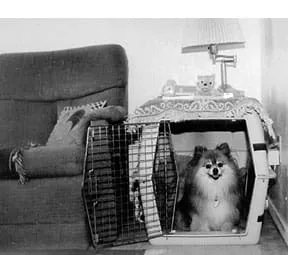 Happy puppy resting comfortably inside a wire dog crate, illustrating effective crate training for easy puppy raising.
Beyond the Crate: Holistic Approach to Easy Puppy Raising
While crate training is a cornerstone of easy puppy raising, a holistic approach addresses other vital aspects of your puppy’s development, ensuring they grow into a truly well-adjusted companion.
House Training Made Simple
Crate training plays a pivotal role in house training, but it’s part of a larger strategy. Puppies have small bladders and need frequent potty breaks – often every 1-2 hours for very young puppies, and immediately after waking, eating, or playing. The crate helps because puppies are reluctant to soil their sleeping area. Establish a consistent routine, taking your puppy to the same designated potty spot each time. Reward lavishly with praise and treats immediately after they eliminate outside. Clean up any indoor accidents thoroughly with an enzymatic cleaner to eliminate odors that might encourage repeat incidents. Consistency, vigilance, and positive reinforcement are the keys to a house-trained puppy.
Nipping and Chewing: Redirecting Puppy Behavior
Puppies explore their world with their mouths, and chewing is a natural behavior, especially during teething. To make puppy raising easy, you must teach them what is acceptable to chew and what is not. Provide a wide array of appropriate chew toys – rubber toys, puzzle toys, rope toys. When your puppy mouths or nips you, immediately redirect their attention to a suitable chew toy. If they continue to nip you, a firm “No!” and temporarily withdrawing attention can be effective. Never allow them to chew on hands or clothing; this teaches them that human skin is a toy. Ensure valuable items are out of reach, and consider bitter-tasting sprays for furniture if needed, though direct redirection is always preferable.
Early Socialization and Basic Obedience
A well-socialized puppy is a confident, friendly adult dog. Early, positive exposure to a variety of sights, sounds, people, and vaccinated dogs is crucial for their development (after their initial vaccination series is complete). Enroll in a puppy socialization class to provide controlled, positive interactions. Introduce them to different environments, textures, and noises gradually, always ensuring a positive experience.
Simultaneously, begin basic obedience training with positive reinforcement. Simple commands like “sit,” “stay,” “come,” and “leave it” build a foundation of communication and control. Keep training sessions short, fun, and rewarding. This early investment in training and socialization will significantly impact your puppy’s temperament and adaptability, setting the stage for my life in dog years to be filled with harmony and understanding.
Nutrition and Health: Laying a Strong Foundation
Proper nutrition and routine healthcare are non-negotiable for easy puppy raising. Choose a high-quality puppy food specifically formulated for their age and breed size, consulting with your vet for recommendations. Follow feeding guidelines carefully to prevent over or underfeeding. Establish a consistent feeding schedule, typically 2-3 times a day, to support digestion and aid in house training.
Regular veterinary visits are critical. Ensure your puppy receives all necessary vaccinations (distemper, parvovirus, rabies, etc.), deworming treatments, and flea/tick prevention as recommended by your vet. Be observant for any signs of illness, such as lethargy, loss of appetite, vomiting, diarrhea, or unusual coughing, and contact your vet promptly if concerns arise. Proactive health management ensures your puppy grows up strong and resilient.
Maintaining Crate Reliability and Long-Term Success
Respecting the Crate as a Lifelong Tool
Once your dog is successfully crate trained, you’ve acquired an invaluable behavior management tool for life. However, it’s essential to respect its purpose and avoid misuse. Abusing the crate by confining your dog too much, for excessively long periods, or using it as a punitive measure can quickly erode their positive association with it. The crate should remain a safe, comfortable, and voluntary retreat, not a prison. Even as an adult, if your dog goes to their bed willingly and on cue, continue to reward them often enough to keep the response happy and quick.
Continuous Positive Reinforcement
Maintaining crate reliability means consistent positive reinforcement. Keep your verbal “Go To Bed” cue light, cheerful, and inviting. The crate should always be associated with good things – a quiet nap, a favorite toy, a special treat. Crucially, never allow anyone to tease or punish your dog while they are in their crate. Children, especially, need to be educated on respecting the crate as the dog’s personal space. This consistent positive approach ensures that the crate remains a cherished part of your dog’s life, serving as a reliable tool for comfort and management for many years to come.
Conclusion
Successfully navigating the early stages of a puppy’s life is about embracing a journey of learning, patience, and consistent positive reinforcement. “Puppy raising made easy” isn’t a myth; it’s a reality achieved through foundational strategies like crate training, which transforms a potentially chaotic experience into an organized, positive one. By understanding your puppy’s instincts, providing a safe haven, diligently applying step-by-step training, and extending your care to house training, chewing, socialization, and health, you lay the groundwork for a lifetime of companionship. Remember, consistency is your best friend, and every interaction is an opportunity to teach and strengthen your bond. Embrace the challenges with a positive mindset, and you’ll raise not just a puppy, but a well-adjusted, confident, and beloved member of your family. Explore more resources on Dog Care Story for a happy, healthy companion.
