
Navigating the world of mental health support can be complex, but for many, a Psychiatric Service Dog (PSD) offers a unique and profound form of assistance. These incredible animals are more than pets; they are trained partners that perform specific tasks to help mitigate the symptoms of a mental health disability. If you’re searching for “Psd Dog Training Near Me,” you’ve already taken the first crucial step toward reclaiming independence and improving your quality of life. This guide will walk you through everything you need to know about PSDs, their training, and how to find the right professional to help you and your canine partner succeed.
Finding the right training program is a critical step, often requiring a similar level of diligence as general training for service dog programs, but with a more specialized focus on psychiatric tasks.
What Exactly is a Psychiatric Service Dog (PSD)?
A Psychiatric Service Dog is a type of service animal specifically trained to assist an individual with a mental illness or psychiatric disability. These can include conditions like post-traumatic stress disorder (PTSD), anxiety disorders, depression, bipolar disorder, and schizophrenia. Under the Americans with Disabilities Act (ADA), PSDs are granted the same rights and public access as service dogs for physical disabilities.
It’s vital to distinguish a PSD from an Emotional Support Animal (ESA). While ESAs provide comfort and companionship, they are not trained to perform specific, disability-mitigating tasks. A PSD, on the other hand, undergoes extensive training to perform duties that are directly related to the handler’s disability. This distinction is what grants them legal access to public places like restaurants, stores, and airplanes where pets and ESAs are typically not allowed.
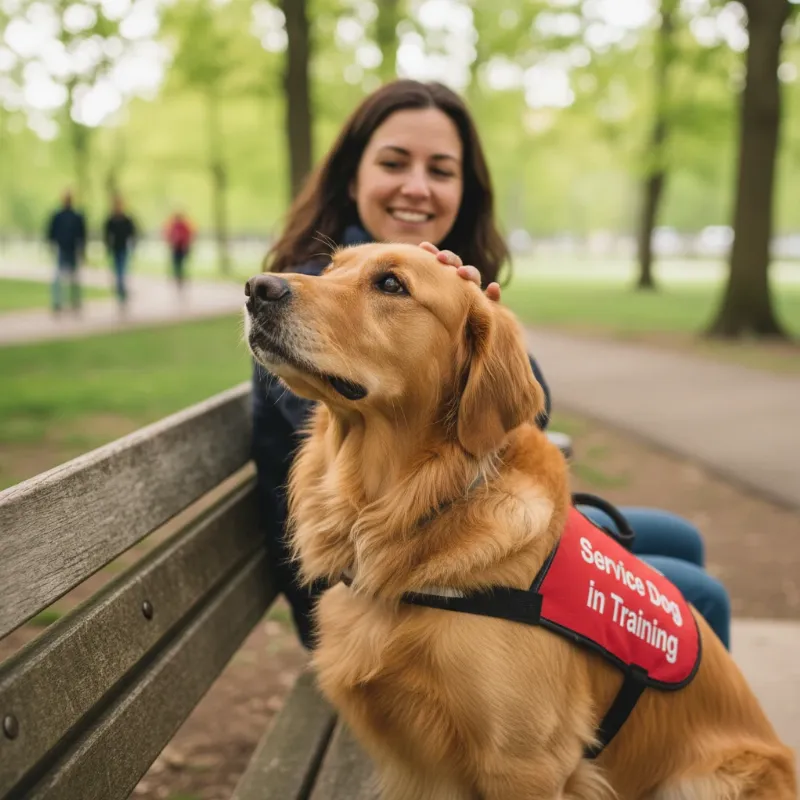 A calm golden retriever wearing a red service dog vest sits attentively next to its owner on a park bench, demonstrating the focus required for PSD dog training near me.
Essential Tasks a PSD Can Be Trained to Perform
The tasks a PSD performs are tailored to the individual needs of their handler. The goal is to interrupt or lessen the impact of psychiatric symptoms, helping the handler navigate daily life more effectively. The possibilities for task training are vast, but some of the most common and life-changing duties include:
- Deep Pressure Therapy (DPT): Applying gentle, calming pressure to the handler’s body (such as lying across their lap or chest) during an anxiety attack, panic attack, or dissociative episode. This physical grounding can help regulate the nervous system.
- Tactile Stimulation and Grounding: Using nudging, licking, or pawing to bring a handler back to the present moment, interrupting harmful or repetitive behaviors, or providing a calming distraction from overwhelming emotions.
- Medication Reminders: Training the dog to remind their handler to take medication at specific times of the day, often by nudging them or bringing them the medication bottle.
- Creating Personal Space: In crowded or overwhelming environments, a PSD can be trained to stand between their handler and other people, creating a comfortable buffer zone to reduce anxiety.
- Interruption of Harmful Behaviors: For individuals who engage in self-harming behaviors or repetitive actions (like skin picking or hair pulling) as a result of their condition, a PSD can be trained to physically interrupt these actions.
- Alerting to Rising Anxiety: Many dogs are naturally attuned to their owner’s emotional state and can be trained to recognize the subtle physiological signs of an impending anxiety or panic attack. They can then alert their handler, who can take steps to manage the situation before it escalates.
- Room and Safety Checks: For individuals with PTSD, a PSD can enter a dark room ahead of them and turn on a light, or perform a perimeter check of a room to ensure it is empty, alleviating hypervigilance.
The Journey of PSD Training: What to Expect
Training a Psychiatric Service Dog is an intensive and rewarding process that requires patience, consistency, and a deep understanding of both canine behavior and the handler’s needs. There are generally two paths you can take: obtaining a fully trained dog from a specialized organization or training your own dog with the guidance of a professional trainer.
The latter, often called owner-training, is becoming increasingly common. This approach allows the handler and dog to build an incredibly strong bond from the very beginning. The training process is typically broken down into three core phases:
- Foundation and Basic Obedience: This is the bedrock of all service dog work. The dog must master commands like sit, stay, come, down, and heel with unwavering reliability, even in distracting environments.
- Public Access Skills: A service dog must be calm, unobtrusive, and well-behaved in all public settings. This phase involves extensive socialization and proofing of obedience skills in places like grocery stores, parks, and public transportation. The dog must learn to ignore distractions and focus solely on its handler.
- Specific Task Training: Once the foundation is solid, the trainer and handler work together to teach the dog the specific, disability-mitigating tasks they require. This is the most customized part of the training and what officially qualifies the dog as a service animal.
The entire process can take anywhere from one to two years. It’s a significant commitment, but the outcome is a highly skilled partner that can provide invaluable support. Looking for service dog training in my area is the first step toward connecting with a professional who can guide you through this journey.
How to Find Qualified PSD Dog Training Near Me
Your search for “psd dog training near me” needs to focus on finding a professional with the right credentials and experience. Not all dog trainers are equipped to handle the nuances of service dog work, especially for psychiatric disabilities. Here’s a step-by-step guide to finding a qualified expert:
- Look for Certifications: Seek out trainers who hold certifications from reputable organizations, such as the Certification Council for Professional Dog Trainers (CCPDT) or the International Association of Animal Behavior Consultants (IAABC). These credentials indicate a commitment to ethical, science-based training methods.
- Check Professional Directories: Organizations like Assistance Dogs International (ADI) and the International Association of Assistance Dog Partners (IAADP) have directories of accredited members and partner programs. These can be excellent starting points.
- Ask for Referrals: Reach out to local mental health providers, support groups, or your therapist. They may have connections to reputable service dog trainers in your area.
- Scrutinize Websites and Social Media: A professional trainer’s online presence should be clear, informative, and transparent. Look for testimonials, videos of their training methods, and detailed information about their experience with PSDs.
- Conduct Thorough Interviews: Once you have a shortlist, schedule consultations. This is your chance to ask critical questions and gauge whether the trainer is a good fit for you and your dog. Finding a local expert can make all the difference, and specialized providers can often be found in urban centers, so a search for service dog training raleigh could yield excellent results if you live nearby.
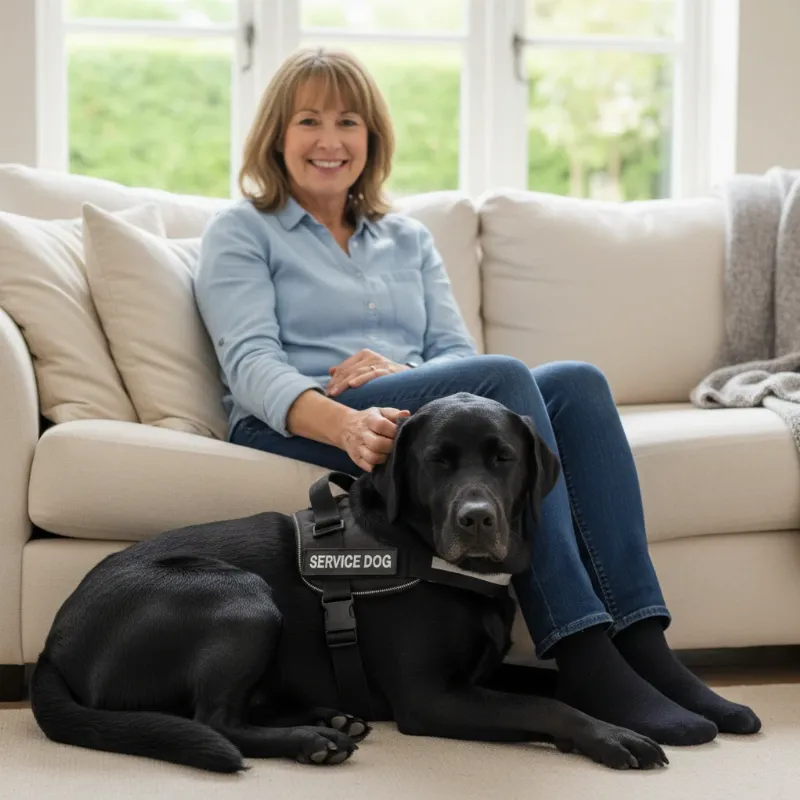 A black Labrador provides deep pressure therapy by resting its head on its owner's lap, a key task in psd dog training.
Questions to Ask a Potential Trainer
When you interview a potential trainer, be prepared with a list of questions to ensure they have the expertise you need:
- What is your specific experience with training Psychiatric Service Dogs?
- What training methods do you use? (Look for positive reinforcement techniques).
- Are you familiar with the ADA laws regarding service animals?
- Can you provide references from past clients who you’ve helped train a PSD?
- What is your process for evaluating a dog’s suitability for service work?
- How do you involve the handler in the training process?
- What kind of ongoing support do you offer after the initial training is complete?
Key Qualities to Look for in a PSD Candidate
While any breed can potentially be a service dog, certain temperaments and qualities make a dog more likely to succeed in this demanding role. A good PSD candidate is confident but not dominant, calm, eager to please, and highly intelligent. They should be unflappable in new environments and show no signs of aggression, fear, or anxiety.
“The success of a Psychiatric Service Dog partnership hinges on more than just training tasks; it’s about the innate temperament of the dog and the symbiotic bond with its handler. A dog that is naturally intuitive, calm under pressure, and deeply connected to its person is the ideal canvas upon which to build life-saving skills.” – Dr. Alistair Finch, Canine Behavioral Scientist
It’s important to have a professional evaluate your dog’s temperament before beginning the training journey. Sometimes, a dog may have underlying behavioral issues that need to be addressed. In these cases, seeking specialized help, such as understanding the principles behind aggressive dog training charlotte, can provide a foundation for more advanced work, although severe aggression typically disqualifies a dog from service work.
Understanding the Costs and Commitment
Training a PSD is a significant financial and time investment. Costs can vary widely depending on your location, the trainer’s experience, and the specific training path you choose. Professional trainers can charge anywhere from $100 to $250+ per hour for private sessions. A fully trained service dog from an organization can cost upwards of $20,000.
Beyond the initial training fees, there is the lifelong commitment to the dog’s health, well-being, and ongoing training maintenance. You must practice public access skills and task work regularly to keep your dog sharp and reliable. The financial realities can differ by region, much like the cost of living varies, making services like service dog training orlando fl subject to local market rates.
Frequently Asked Questions (FAQ) about PSD Training
What is the main difference between a PSD and an ESA?
The primary difference is training. A PSD is trained to perform specific tasks that mitigate a person’s disability. An ESA provides comfort through their presence but is not task-trained and does not have the same public access rights under the ADA.
Can I train my own dog to be a PSD?
Yes, the ADA allows for individuals to train their own service animals. However, it is highly recommended to work with a qualified professional trainer to ensure the dog is trained to the highest standard and to navigate the complexities of public access and task training successfully.
How long does it take to train a PSD?
On average, it takes 1-2 years to fully train a Psychiatric Service Dog. The timeline depends on the dog’s age, temperament, and the specific tasks it needs to learn.
Are certain breeds better for PSD work?
While any breed can be a service dog, breeds known for their intelligence, calm demeanor, and biddability, such as Labradors, Golden Retrievers, Poodles, and Collies, are common choices. The individual dog’s temperament is far more important than its breed.
Do PSDs need to be certified or registered?
No. Under the ADA, there is no mandatory certification or registration for service animals in the United States. The dog’s qualification as a service animal comes from its specialized training to perform tasks for a person with a disability.
A Partnership for a Brighter Future
Embarking on the journey to find “psd dog training near me” is about more than just obedience; it’s about forging a partnership that can profoundly enhance your mental well-being and independence. A well-trained Psychiatric Service Dog provides not just task-based assistance but also unwavering, non-judgmental support. By investing the time to find a qualified, ethical trainer and committing to the process, you are building a lifeline and a pathway to a more confident and manageable life. This unique bond between human and dog is a powerful testament to the healing potential of our canine companions.
