
When you’re looking for a loyal companion, a dog can bring immense joy and security to your life. However, for some owners, the desire for an extra layer of security leads them to seek professional protective dog training. This specialized training goes beyond basic obedience, focusing on developing a dog’s natural guarding instincts in a controlled and ethical manner. Whether you’re seeking a vigilant family protector or a dedicated personal security dog, understanding the process, benefits, and considerations is crucial for a successful partnership.
Understanding Protective Dog Training
Protective dog training is a highly specialized field that aims to cultivate a dog’s innate protective abilities. It’s not about creating an aggressive animal, but rather about channeling a dog’s instinct to defend its territory and loved ones into a reliable and responsive behavior. This type of training requires experienced professionals who understand canine behavior, ethical training practices, and the legal implications of owning a protection-trained dog.
The Core Principles of Protection Training
At its heart, protective dog training is built on several key principles:
- Instinct Channeling: Dogs possess natural guarding instincts. Professional trainers help channel these instincts appropriately, teaching the dog when and how to react to perceived threats.
- Controlled Environment: Training occurs in controlled scenarios designed to simulate real-world situations without putting the dog, handler, or public at undue risk.
- Obedience Foundation: A strong foundation in basic and advanced obedience is paramount. A protection dog must be under absolute control at all times, able to obey commands even in high-stress situations.
- Handler-Dog Bond: The training strengthens the bond and communication between the dog and its handler. Trust and clear understanding are essential for effective protection work.
- Ethical Considerations: Responsible trainers prioritize the dog’s well-being, ensuring the training is humane, avoids unnecessary aggression, and prepares the dog for a balanced life.
What Protective Dog Training Is NOT
It’s important to dispel common misconceptions. Protective dog training is not about:
- Creating an Aggressive Dog: The goal is not to make a dog randomly aggressive. Instead, it’s about controlled, responsive protection.
- Unleashing a Dog’s Fury: A well-trained protection dog is a controlled asset, not a liability. Aggression is a tool used only when necessary and commanded.
- Neglecting Basic Manners: A protection dog still needs to be a well-behaved companion in everyday life.
Benefits of a Trained Protection Dog
Investing in protective dog training can offer significant advantages:
- Enhanced Security: A trained protection dog provides an elevated level of security for your home and family. They act as a deterrent and can alert you to potential dangers.
- Deterrent Effect: The mere presence of a dog trained for protection can deter potential intruders, often making your property a less appealing target.
- Peace of Mind: Knowing you have a capable and trained companion by your side can provide invaluable peace of mind, especially for individuals or families concerned about safety.
- Companionship with a Purpose: Beyond security, these dogs offer the same companionship, loyalty, and affection as any other dog, but with an added layer of capability.
- For Specific Professions: Certain breeds and individuals excel in roles such as personal protection, detection work, or law enforcement support, requiring specialized training.
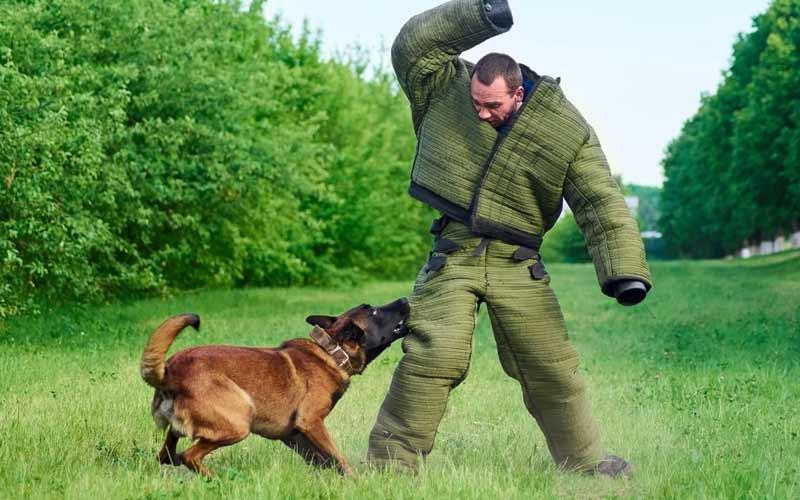 An experienced dog trainer working with a German Shepherd, demonstrating a controlled protective stance in an outdoor training facility.
Finding the Right Training Program and Trainer
Choosing the right training program and professional is the most critical step in protective dog training.
Key Considerations When Selecting a Trainer:
- Experience and Reputation: Look for trainers with a proven track record in protective dog training. Seek reviews, testimonials, and ask for references. Reputable trainers are often members of professional organizations.
- Training Philosophy: Understand their methods. Ethical trainers use positive reinforcement and force-free techniques as much as possible, focusing on building the dog’s confidence and willingness to work. Avoid trainers who rely heavily on harsh methods or intimidation.
- Breed Specialization: Some trainers specialize in specific breeds known for their protective instincts. While not always necessary, expertise with certain breeds can be beneficial.
- Safety Protocols: Inquire about their safety measures during training sessions. This includes the equipment used, the environment, and how they manage potentially challenging dogs.
- Handler Training: A good program includes comprehensive training for the owner. You need to learn how to manage, command, and care for your protection dog effectively. This includes understanding body language and how to maintain control.
- Legal and Ethical Compliance: Ensure the trainer adheres to all local laws and ethical guidelines regarding the training and ownership of protection dogs.
Questions to Ask Potential Trainers:
- What is your experience with protective dog training?
- What breeds do you typically work with?
- Can you describe your training methodology?
- What does a typical training program involve, and how long does it usually take?
- What is the role of the owner in the training process?
- What safety measures do you have in place?
- Can you provide references or testimonials from satisfied clients?
- What are the ongoing costs or requirements after initial training?
The Protective Dog Training Process
A comprehensive protective dog training program typically involves several stages:
- Foundation Obedience: This is the bedrock of all dog training. Dogs must master commands like “sit,” “stay,” “come,” and “down” reliably, even with distractions. This ensures the handler has full control.
- Socialization: Exposing the dog to a wide variety of people, places, sounds, and other animals in a positive way is crucial. A well-socialized dog is less likely to be fear-aggressive and more likely to distinguish between a real threat and a normal situation.
- Alert and Bark Training: Teaching the dog to alert its handler to the presence of strangers or unusual sounds is a fundamental protective behavior. This is often trained through controlled scenarios.
- Controlled Agitation/Protection Work: In this advanced stage, under strict supervision, the dog is introduced to a decoy (trainer) in protective gear. The dog learns to engage when commanded and, importantly, to disengage on command. This phase focuses on bite work, redirection, and control.
- Real-World Scenarios: Training progresses to simulate real-life situations, such as responding to a stranger approaching the property, a perceived threat in a public place, or a command to protect the handler.
- Handler Training: As mentioned, the owner’s participation is vital. You’ll learn commands, how to read your dog’s signals, how to maintain control, and how to handle everyday situations with your protection-trained dog.
Choosing the Right Breed for Protection Work
While many breeds can excel in protection work with proper training, some are naturally predisposed due to their temperament, size, and history. Common choices include:
- German Shepherd: Renowned for their intelligence, trainability, courage, and loyalty. They are versatile and excel in various roles, including protection.
- Belgian Malinois: Similar to German Shepherds but often more intense and high-energy, requiring very experienced handlers. They are highly driven and excel in demanding protection roles.
- Doberman Pinscher: Known for their sleek appearance, intelligence, and protective nature. They are alert and can be very effective protectors.
- Rottweiler: Possessing a strong build and confident demeanor, Rottweilers are naturally protective and loyal. Early socialization and consistent training are key.
- Giant Schnauzer: A robust and intelligent breed with a strong guarding instinct and a desire to protect their family.
It’s crucial to remember that individual temperament within a breed varies significantly. A dog’s suitability for protection work depends more on its individual drive, confidence, and trainability than solely on its breed.
The Responsibilities of Owning a Protection Dog
Owning a protection-trained dog is a significant commitment that comes with substantial responsibilities:
- Ongoing Training: Protection skills need to be maintained through regular practice and reinforcement. You can’t just “train and forget.”
- Socialization: Continuous, positive exposure to different environments and people is essential to ensure the dog remains balanced and doesn’t become overly reactive.
- Legal Compliance: Familiarize yourself with your local laws regarding owning and handling dogs trained for protection. This may include registration, insurance, or specific leash and muzzle requirements in certain areas.
- Public Perception: Be mindful that a protection-trained dog may be perceived differently by the public. Responsible handling and clear control are paramount.
- Commitment to Well-being: A protection dog is still a dog that needs love, exercise, proper nutrition, and veterinary care. Their working capabilities do not diminish their need for a happy and healthy life.
Conclusion: A Partnership Built on Trust and Training
Protective dog training is a serious undertaking that requires dedication, expertise, and a deep understanding of canine behavior. When done correctly, it results in a loyal, capable, and trustworthy companion that enhances your sense of security and enriches your life. Finding a reputable trainer who prioritizes ethical practices and owner education is the first and most important step. With the right training and a strong bond, your dog can become an invaluable protector and a cherished member of your family. If you’re considering protective dog training near you, begin your research by looking for experienced professionals who can guide you through this rewarding journey.
