
Embarking on a breeding journey with your canine companion requires careful planning and specialized veterinary care. This guide delves into the essential pre-breeding examinations and the science behind determining optimal breeding dates, ensuring the best possible outcomes for your dog and her potential offspring. Understanding these crucial steps is vital for any responsible breeder aiming for successful reproduction.
Understanding Pre-Breeding Examinations
Before initiating any breeding program, a comprehensive pre-breeding examination is highly recommended. This consultation with a veterinarian serves as a critical juncture to discuss your breeding aspirations, including the type of semen to be used, the dog’s reproductive history, and the preferred breeding method. It is the ideal time to address any questions or concerns you may have regarding the process.
During this examination, your veterinarian will also advise on necessary diagnostic testing. These may include tests for brucellosis, orthopedic foundation for animals (OFA) X-rays to assess hip and elbow health, vaginal cultures to check for infections, and thyroid testing. To ensure the most accurate assessment, it is advisable to schedule this exam shortly before your female dog is expected to enter her heat cycle. For those seeking in-depth guidance, reproductive technicians are available to offer their expertise and answer most breeding-related questions at no charge. Alternatively, a 15-minute telephone consultation with a veterinarian can be arranged for a fee.
Determining Optimal Breeding Dates
Establishing the precise breeding dates is a multifaceted process influenced by several factors, including the type of semen used, the number and timing of inseminations, and the individual history of the female dog.
To accurately pinpoint ovulation, progesterone testing is typically initiated between days 5 and 7 of the heat cycle. Alongside blood draws for progesterone analysis, a vaginal cytology sample, commonly referred to as a vaginal smear, is collected using a sterile swab. While there isn’t a single definitive number to mark ovulation, a progesterone level between 4-8 ng/ml generally indicates the onset of ovulation, with most dogs ovulating around 5 ng/ml. Veterinarians analyze these results, considering the rate of progesterone increase and the specifics of the breeding. For frozen semen breedings, rechecking progesterone levels after reaching 5-8 ng/ml is often recommended to confirm the rise and its speed.
In conjunction with progesterone testing, LH (luteinizing hormone) testing is utilized, particularly for frozen semen breedings. The LH surge, which precedes ovulation by approximately 48 hours, is only detectable for a brief 24-hour period. This requires daily blood draws at consistent times to freeze serum for later LH testing. When ovulation is suspected based on progesterone levels, the frozen serum from two days prior to suspected ovulation is tested for LH. A positive result confirms ovulation on the suspected day, while a negative result may prompt retesting. It’s important to note that LH peaks can occasionally go undetected.
After ovulation, the eggs require approximately 48 hours to mature and become receptive to fertilization, remaining viable for several days. The lifespan of the sperm also plays a role in breeding timing. Freshly collected semen can remain viable for 24-48 hours or more, fresh chilled semen for around 24 hours post-insemination, and frozen semen for about 12 hours. The quality of the semen is a significant determinant. Typically, breeding with frozen semen is initiated a day later than with fresh semen, often involving two or three breedings to maximize conception rates.
Progesterone Testing Services
Progesterone testing is conveniently offered on a walk-in basis through our in-house laboratory. If you haven’t yet completed your pre-breeding exam, it can be scheduled during your first progesterone testing appointment. For samples received by 12:00 PM, the veterinarian’s recommendations will be available after 4:00 PM on the same day. You may be advised to return for a follow-up test within 1-3 days, or a breeding date recommendation will be provided.
Appointments made after 12:00 PM will generally have results ready by 11:00 AM the following business day. Saturday testing is available before 12:00 PM for same-day results; tests requested after 12:00 PM will be processed on Monday. For urgent needs requiring results earlier in the day or same-day results for appointments after 12:00 PM (but before 3:00 PM), a STAT (expedited) test can be performed for an additional $30, yielding results within 3 hours. STAT requests after 3:00 PM are at the office’s discretion due to laboratory equipment maintenance.
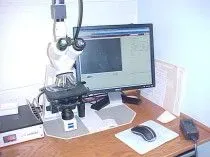 A veterinarian examines a dog's ultrasound results
 A close-up of a dog's reproductive system during an examination
Cesarean Section (C-Section) Policy
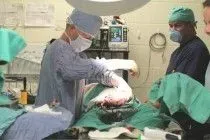
Cesarean sections are sometimes a necessary procedure in canine breeding programs. Our facilities provide C-section services for planned surgeries, as well as for emergencies or when a distressed female requires immediate intervention. We strongly encourage scheduling an X-ray to assess puppy numbers and a progesterone test between days 56-59 of the pregnancy. Progesterone testing can help predict the timing of natural labor, making it the optimal period for a C-section. This timing ensures that the puppies are sufficiently developed for birth and that the mother is prepared with milk production and maternal instincts.
Planned C-sections:
If a C-section is anticipated due to breed predispositions, past reproductive history, identified risk factors, or litter size, the surgery can be scheduled in advance. The C-section date will be determined by the veterinarian, considering the original breeding dates, the patient’s history, and current progesterone levels. For planned surgeries requiring progesterone testing, blood must be drawn by 9:30 AM, and the test should be run STAT for expedited results (additional $30 fee). The decision to proceed with the C-section on the scheduled day or postpone it must be made by 12:00 PM to avoid after-hours charges, as regular surgery hours conclude at 3:00 PM.
Emergency C-sections:
In unexpected emergency situations, we prioritize accommodating clients and patients based on the urgency of the case. If the decision for a C-section is made early in the day and you arrive before 12:00 PM, the surgery can typically be completed by 3:00 PM, thus avoiding after-hours fees. Please be aware that ALL C-SECTIONS PERFORMED AFTER 3:00 PM OR DURING NON-BUSINESS HOURS WILL INCUR AFTER-HOURS RATES. On numerous occasions, we can perform C-sections when our office is closed, including Sundays or holidays, provided arrangements are made in advance. After-hours fees are necessary to ensure adequate staffing for the safety and well-being of both the mother dog and her puppies.
