
There are few moments more frustrating for a dog owner than discovering a wet spot on the carpet, especially when you thought your potty training days were long behind you. You did everything right, your dog was reliable for months or even years, and now, suddenly, the accidents are back. This baffling and disheartening experience is known as potty training regression in dogs. Before you throw your hands up in despair, take a deep breath. Your dog isn’t being bad or spiteful, and this is a common and, most importantly, solvable problem.
This frustrating issue, often called dog regression potty training, can leave owners feeling helpless. But the truth is, these accidents are a form of communication. Your dog is trying to tell you that something is wrong, whether it’s a medical issue, a hidden stressor, or a gap in their initial training. This guide will walk you through the reasons behind this behavior and provide a clear, step-by-step action plan to get your furry friend back on track.
First Things First: Is It Medical?
Before you assume the issue is behavioral, your very first step should always be a trip to the veterinarian. A sudden change in potty habits is one of the most common signs of an underlying health problem. Trying to re-train a dog who is physically unable to control themselves is unfair to them and futile for you.
Your vet will likely perform a physical exam and may recommend a urinalysis or bloodwork to check for common culprits, which include:
- Urinary Tract Infections (UTIs): A UTI is a frequent cause of sudden incontinence. It creates inflammation and a constant urge to urinate, making it difficult for even the best-trained dog to hold it.
- Bladder Stones or Crystals: These can cause blockages and irritation, leading to frequent, painful urination.
- Kidney Disease: Issues with the kidneys can lead to a significant increase in thirst and, consequently, urination.
- Diabetes: A classic sign of diabetes in dogs is excessive thirst and urination (polydipsia and polyuria).
- Cushing’s Disease: This hormonal imbalance can also lead to increased drinking and urination.
- Age-Related Incontinence: In older dogs, the sphincter muscles that control the bladder can weaken, leading to leakage, especially when they are resting or asleep.
Ruling out a medical cause is a non-negotiable first step. Once you have a clean bill of health from your vet, you can confidently move on to addressing the behavioral reasons.
Uncovering the Behavioral Causes of Potty Training Setbacks
If your vet gives you the all-clear, it’s time to play detective. A Potty Training Regression Dog is often reacting to a change in their environment or an internal state of stress. Understanding why is my potty trained dog regressing is the key to finding the right solution.
Stress and Anxiety: The Silent Culprits
Dogs are creatures of habit, and they thrive on routine. Any disruption to their predictable world can cause significant stress, which often manifests in behavioral changes, including potty accidents. Think about any recent changes in your household:
- A New Home: Moving is a massive upheaval for a dog. The new smells, new layout, and lack of familiar territory can make them feel insecure.
- A New Family Member: Bringing home a new baby or a new pet (dog, cat, or otherwise) dramatically changes the household dynamic and can be very stressful.
- Change in Routine: Did you start a new job with different hours? Are the kids back in school after a summer at home? Even small shifts in their daily schedule can throw a sensitive dog for a loop.
- Absence of a Family Member: If a primary caregiver leaves for a trip or goes off to college, the dog can experience separation anxiety, leading to accidents.
- Loud Noises: Construction, thunderstorms, or fireworks can create fear and anxiety, causing a dog to lose control of their bladder.
Age-Related Regression: From Puppies to Seniors
Age plays a significant role in potty habits. A regression in a puppy is very different from one in a senior dog.
- Puppies (4-12 Months): It’s extremely common for puppies to go through a regression phase, particularly during adolescence (around 6-9 months). Their brains are still developing, hormones are kicking in, and they might be testing boundaries. It doesn’t mean your initial training failed; it just means it hasn’t fully solidified yet.
- Adult Dogs: For instance, it’s not uncommon to see a 2-year old dog regressing potty training as they enter social maturity. A previously scary experience outside, like an off-leash dog rushing them, could create a negative association with their potty spot.
- Senior Dogs: As dogs age, they can experience Cognitive Dysfunction Syndrome (CDS), which is similar to dementia in humans. They may simply forget their training or become confused about where they are.
Gaps in the Original Training
Sometimes, the regression isn’t a regression at all but rather a sign that the training was never 100% complete. This is often the case if the dog was given too much freedom too soon. Another major factor is improper cleanup of previous accidents. A dog’s sense of smell is incredibly powerful. If you didn’t use an enzymatic cleaner, faint odor molecules remain that essentially scream “this is a toilet!” to your dog, encouraging them to go in the same spot again.
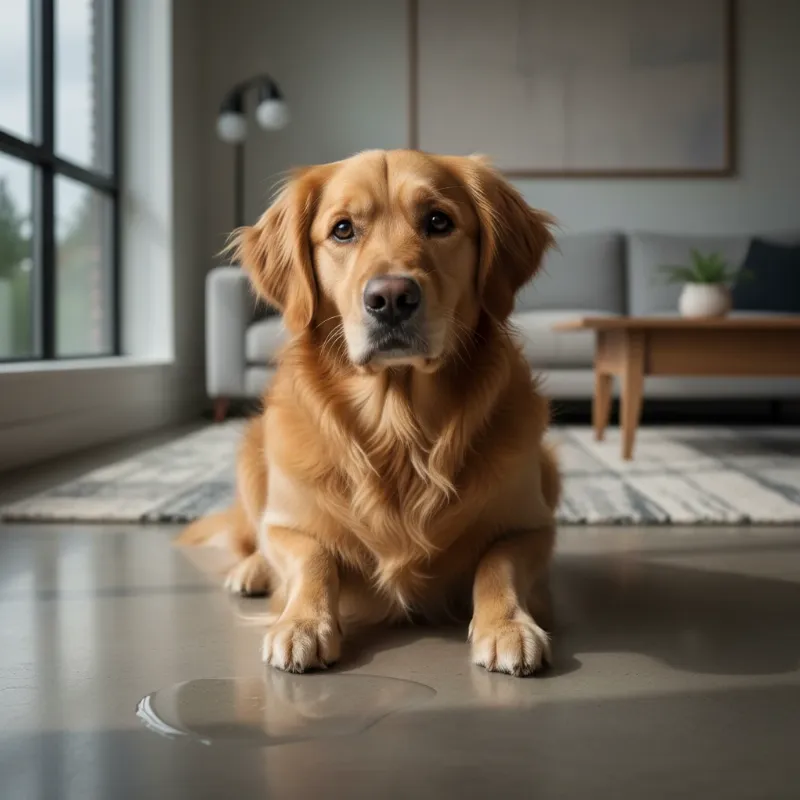 A golden retriever looking apologetic next to a puddle, illustrating a potty training regression dog issue.
Your Action Plan: How to Correct a Potty Training Regression Dog
Once you have an idea of the cause, you can implement a consistent and compassionate plan. The goal is not to punish but to manage, retrain, and rebuild your dog’s confidence.
Step 1: The Vet Visit (Recap)
We can’t say it enough: rule out medical issues first. This is the foundation of your entire plan.
Step 2: Go Back to Potty Training 101
You need to approach this as if you have a brand-new puppy who knows nothing. This requires patience and consistency. The process is very similar to the initial steps of house training, so you may need to re potty training dog fundamentals.
- Increase Potty Breaks: Take your dog out on a leash far more frequently than you think you need to. First thing in the morning, last thing at night, after every meal, after every nap, and after playtime are all mandatory. Aim for at least once every 1-2 hours initially.
- Supervise Constantly: Do not allow your dog to have unsupervised freedom in the house. They should be leashed to you or in the same room with eyes on them at all times. If you can’t watch them, use a crate or a dog-proofed room. Every accident you prevent is a win.
- Reward Success Lavishly: When your dog eliminates outside, throw a party! Use a happy, excited tone of voice (“Yes! Good potty!”) and immediately reward them with a super high-value treat they don’t get any other time. The reward must happen the second they finish, not when they get back inside.
Step 3: Deep Clean Like a Pro
Throw away the standard household cleaners. Ammonia-based products can actually smell like urine to a dog and encourage them to mark over it. You absolutely must use an enzymatic cleaner. These products contain biological enzymes that break down and completely eliminate the odor-causing proteins in urine, removing the “scent signpost” for your dog.
Step 4: Manage Their World
While retraining, management is your best friend. In addition to supervising, pay close attention to their pre-potty signals. These are often subtle but can include circling, sniffing the ground intently, whining, or walking towards the door. The moment you see these, calmly and quickly take them outside to their designated spot.
What If I Know the Cause? Specific Scenarios
“When a dog experiences a major life change, like a new baby, they aren’t acting out of jealousy; they’re acting out of insecurity,” explains Dr. Emily Carter, a veterinary behaviorist. “The key is to maintain their routine and reassure them of their place in the family pack. Go back to basics with potty breaks to provide that structure they crave.”
The New House Problem
If you’ve just moved, your dog has to relearn the potty rules. Take them on frequent leashed walks around the new yard. Reward them heavily for going in the right spot to build a positive association with their new “bathroom.”
The New Baby or Pet
Ensure the dog still gets plenty of one-on-one attention and that their daily walk and feeding schedule remains as consistent as possible. Create positive associations with the new arrival by offering treats and praise when the dog is calm and gentle around the baby or new pet.
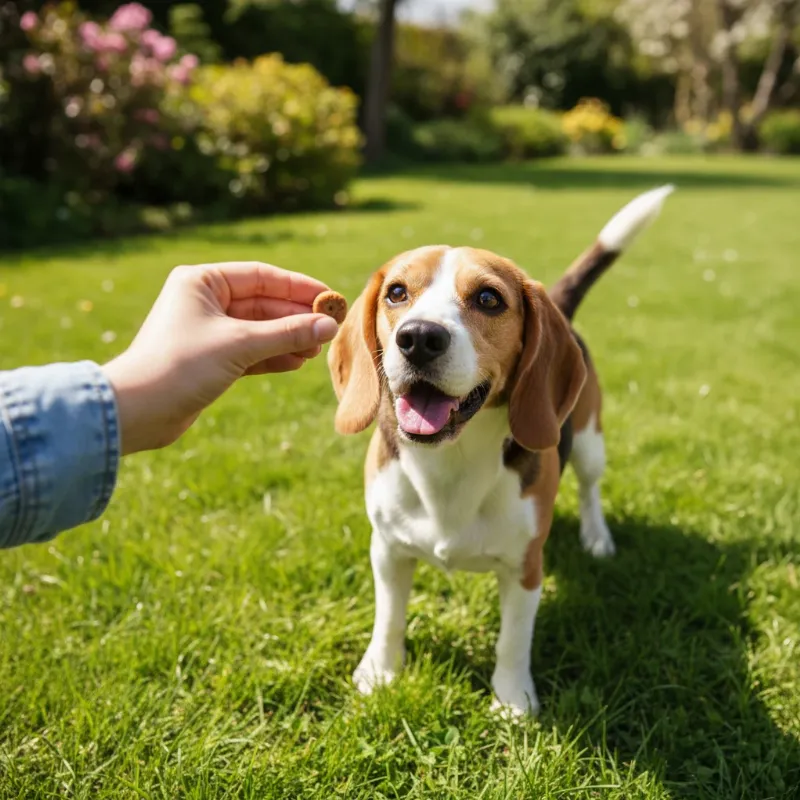 Owner rewarding a happy beagle with a successful potty outside, fixing potty training regression dog behavior.
While this guide focuses on urination and defecation, some owners facing unique challenges might even explore how to train dog to use litter box as a management solution for specific situations.
Frequently Asked Questions (FAQ)
Why is my 8-month-old puppy suddenly peeing in the house?
This is a classic case of adolescent regression. Hormonal changes and boundary-testing are common at this age. The solution is to go back to basics: more supervision, more frequent potty breaks, and heavy rewards for success outside.
Can stress cause a dog to regress in potty training?
Absolutely. Stress is one of the leading causes of behavioral potty training regression. Identify and mitigate the stressor if possible, and provide your dog with structure and a predictable routine to help them feel more secure.
Will my dog ever be fully potty trained again after a regression?
Yes! With patience, consistency, and by addressing the root cause (whether medical or behavioral), the vast majority of dogs can return to being fully reliable in the house.
How long does it take to fix potty training regression?
This depends entirely on the cause and your consistency. It could take anywhere from a few days to a few weeks. The key is to prevent any new accidents from happening indoors, as each one is a setback.
Should I punish my dog for having an accident inside?
No, never. Punishing a dog for an accident, especially after the fact, is counterproductive. It will only create fear and anxiety, which can make the problem worse. They will not connect the punishment to the act of eliminating; they will only learn that you are unpredictable and scary.
Your Path Back to a Clean Home
Dealing with a potty training regression dog can test your patience, but it’s a challenge that can be overcome with the right approach. Remember the core principles: rule out medical issues first, go back to the fundamentals of potty training, manage their environment to prevent mistakes, and remain patient and positive. Your dog isn’t trying to make your life difficult; they are asking for help. By providing clear guidance and reinforcing their successes, you can rebuild their confidence and restore harmony to your home.
