
Discovering that your beloved feline companion has suddenly bitten you during a petting session can be a startling and often frustrating experience. This behavior, known as petting-induced aggression or overstimulation aggression, is more common than many cat owners realize. While it can be alarming, understanding its causes and implementing the right management strategies can help you navigate this common feline behavior and foster a more harmonious relationship with your cat.
What Causes Petting-Induced Aggression?
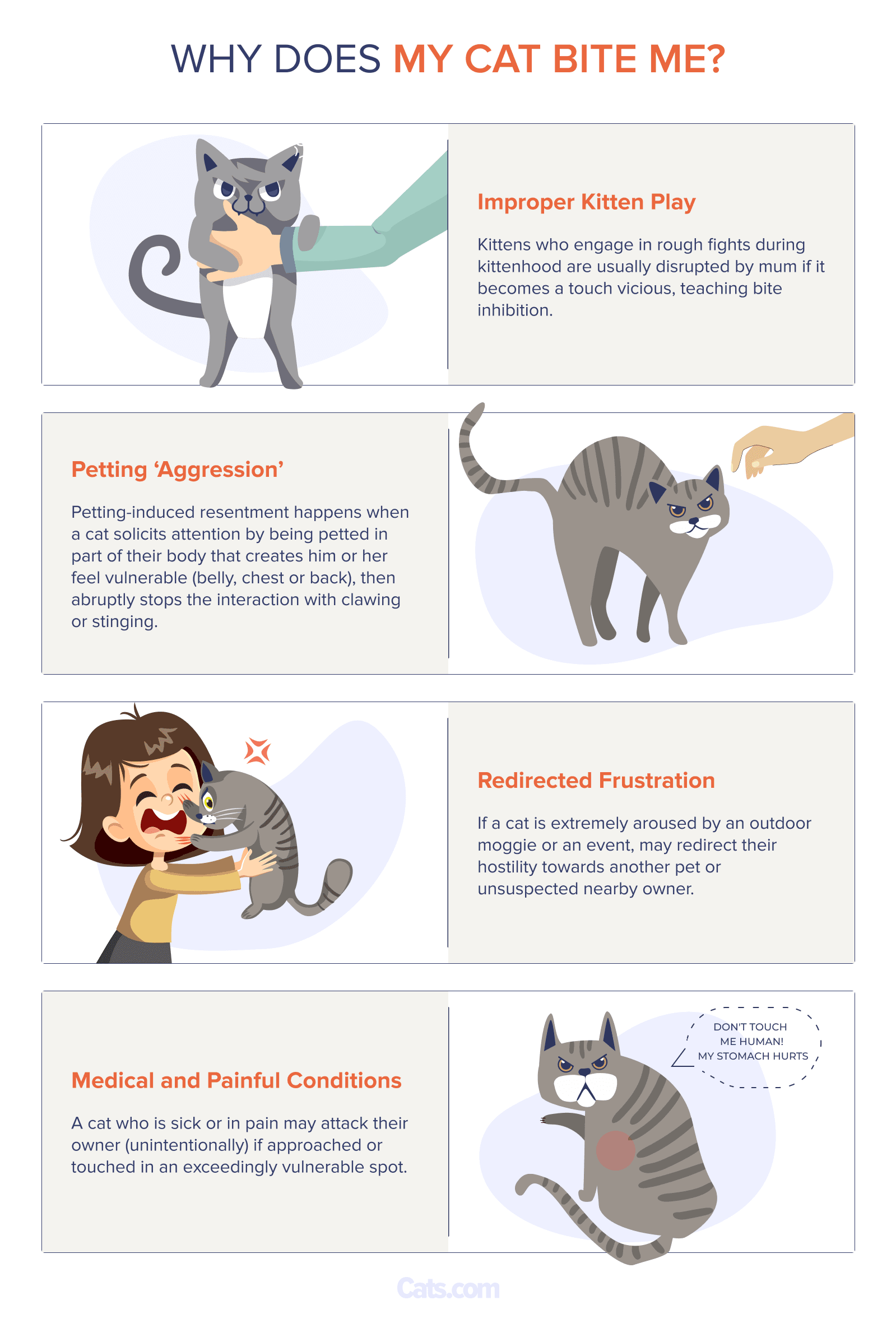
Several factors can contribute to a cat displaying aggression during petting. One primary reason is a history of their personal space and comfort level with touch being disregarded. If a cat’s cues to stop being touched were previously ignored, they may develop a more forceful way of communicating their boundaries. Poor socialization or a lack of gentle touch during their kittenhood can also lead to sensitivities around handling. Kittens who did not have littermates or a mother cat to teach them bite inhibition and appropriate social interactions might also exhibit handling sensitivities.
Here are a few key reasons to consider:
- Sensitivity Threshold: Cats, like humans, have a limit to how much repetitive stimulation they can tolerate. While your cat may initially enjoy petting, the continuous nature of it can become irritating. The bite serves as a clear signal: “I’ve had enough.” Think of it like someone repeatedly patting your back; pleasant at first, but potentially annoying if it continues too long.
- Pain: If your cat is experiencing pain from a medical condition, even the perception of being touched in a sensitive area can trigger a reactive response. Conditions like arthritis in the joints, dental issues, or ear infections can make petting uncomfortable or even painful.
- Control: In some instances, a cat may bite to assert control over the interaction, dictating when the petting begins and, more importantly, when it ends.
Managing Petting-Related Aggression
Successfully managing petting-induced aggression involves a multi-faceted approach focused on understanding your cat’s needs and communicating effectively.
Veterinary Check-up
The first and most crucial step is to schedule a visit with your veterinarian. This is essential to rule out any underlying medical conditions that might be causing pain. Pain in areas like the neck, back, hips, or even a sore tooth or ear infection can make your cat react negatively to touch. Your vet can diagnose and treat these issues, which may resolve the aggression entirely.
Understanding Your Cat’s Preferences
It’s vital to recognize that not all cats are cuddlers. While some cats adore being held and petted extensively, others prefer different forms of closeness. Some cats might enjoy sitting on your lap but dislike direct, human-initiated contact. Others may appreciate a good chin scratch but find full-body strokes overwhelming. Learning your cat’s individual preferences is key to building a positive relationship and avoiding unwanted behaviors.
Recognizing Warning Signs
Many owners report their cat suddenly biting without warning. However, with careful observation, you can often spot subtle cues that signal your cat is becoming overstimulated. Be on the lookout for:
- Ear position: Ears may flatten back or shift from a neutral, forward-facing stance.
- Tail movement: The tail might begin to twitch or swish rapidly, a stark contrast to slow, relaxed movements.
- Coat and tail fluffing: You might notice the fur, especially at the base of the tail, appearing slightly puffed up.
- Pupil dilation: Pupils can widen significantly, indicating heightened arousal.
- Vocalization: A low growl may precede a bite.
- Body stiffness: The cat’s body may stiffen, and their overall posture might change. They might even “freeze,” becoming completely still.
- Gaze: Your cat’s eyes might intently follow your hand as it moves.
- Subtle avoidance: A slight movement away from your touch can be an early indicator.
- Head turn: The cat might quickly turn its head towards your hand, a precursor to a bite.
If you observe any of these signs, it’s time to stop petting immediately and allow your cat to move away. If your cat is on your lap, redirecting their attention with a treat or a toy tossed away from you can be a safe way to disengage without causing further tension. It’s generally best to avoid picking them up to move them, as this can sometimes escalate the situation.
Timing Your Petting Sessions
Once you become adept at recognizing the warning signs, you can begin to estimate how long your cat enjoys being petted. If the signs of overstimulation typically appear after about two minutes of petting, aim to keep your sessions to a minute and a half. However, always remain vigilant for those subtle cues, as individual tolerance can vary.
Adjusting Your Petting Technique
Experiment with different ways of petting your cat. Some cats respond well to short, gentle strokes that mimic grooming by another cat. Others might prefer focused scratching under the chin or between the ears rather than broad strokes across their body. Try using just one finger for gentle petting on the face and cheeks, avoiding other areas if they seem sensitive. Often, cats are content with simply rubbing against you, a form of affection that doesn’t require direct handling.
Positive Reinforcement and Redirection
It is crucial not to physically or verbally correct your cat for biting. Any form of attention, even negative, can inadvertently reinforce the behavior. Instead, focus on redirection. If your cat becomes tense, redirect their energy into an appropriate activity, such as playing with a favorite toy. This provides them with an outlet and a positive focus, allowing them to relax and learn acceptable behaviors.
Increase Playtime
Boredom and pent-up energy can sometimes manifest as overstimulation. Ensure your cat engages in regular, interactive play sessions with you daily. Keeping your cat physically and mentally stimulated can significantly reduce frustration and may help alleviate sensitivity issues related to petting.
By understanding the root causes of petting-induced aggression and implementing these management strategies, you can foster a more trusting and enjoyable relationship with your feline friend.
