
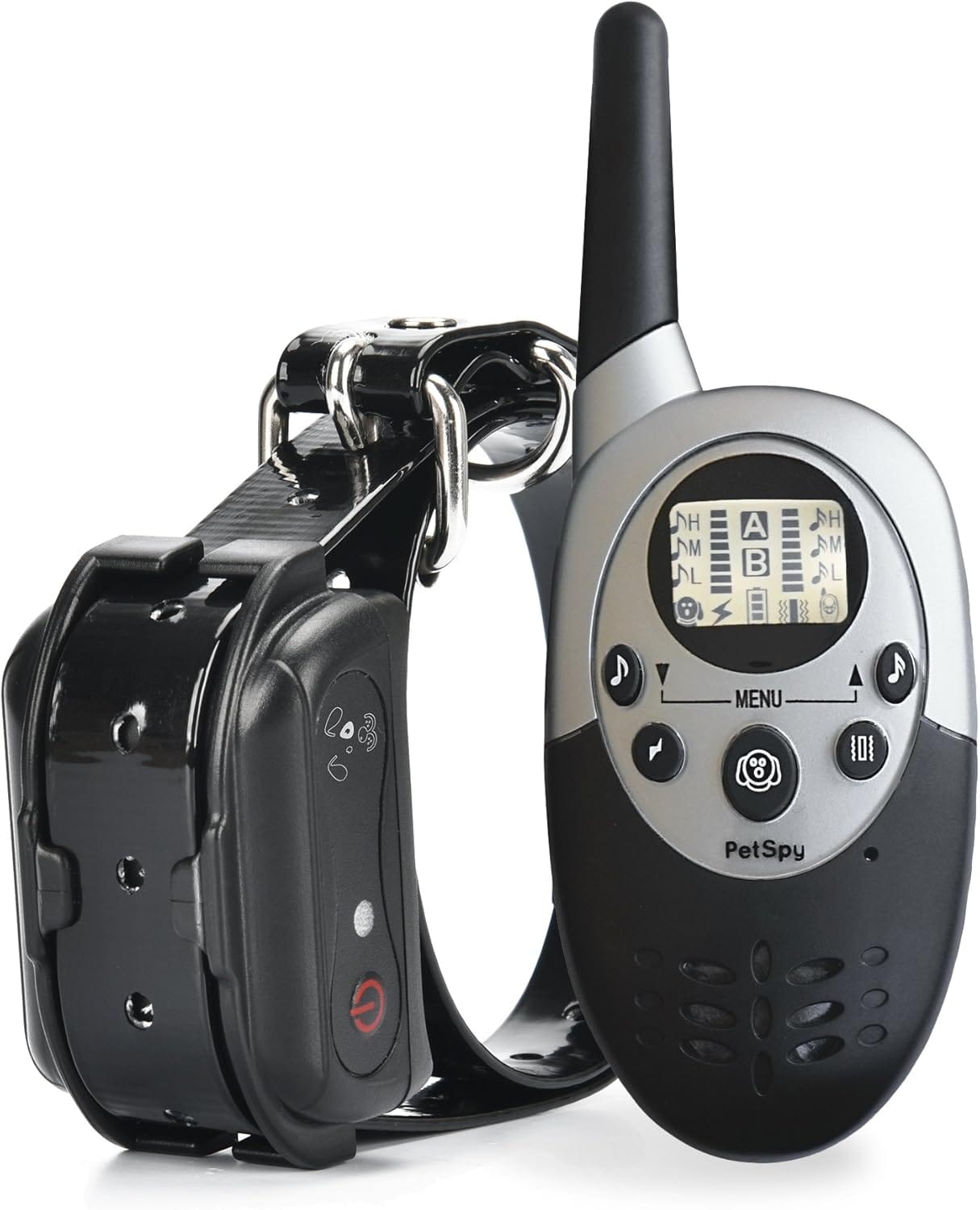
Welcome to the world of effective dog training, where understanding your tools is key to unlocking your canine companion’s full potential. The Petspy Dog Training Collar has emerged as a popular choice for dedicated owners looking to improve their dog’s behavior through clear communication and consistent training. This guide will delve deep into the ins and outs of using your PetSpy collar, ensuring you can harness its capabilities to foster a well-behaved, happy, and secure relationship with your furry friend.
At its core, the PetSpy dog training collar is designed to provide a humane and effective method for addressing common behavioral issues. Whether it’s excessive barking, leash pulling, or a lack of responsiveness, the collar offers a means to redirect your dog’s attention and reinforce desired actions. This isn’t about punishment; it’s about establishing a clear line of communication, much like how a verbal cue or a gentle hand gesture works. By understanding the technology and applying it with patience and consistency, you can guide your dog toward better habits and a more harmonious life together.
Understanding the Technology Behind PetSpy
PetSpy collars utilize a combination of stimulation methods to communicate with your dog. The primary modes typically include vibration, tone, and electric stimulation. Each mode serves a distinct purpose in the training process, and understanding when and how to use them is crucial for success.
Vibration Mode: The Gentle Nudge
The vibration mode is often the first level of communication employed. It’s a non-startling sensation that can effectively capture your dog’s attention without causing distress. This is particularly useful for dogs who are easily startled or for initial training stages. A vibration can signal to your dog that they are doing something undesirable, prompting them to reconsider their action. For instance, if your dog is about to pull excessively on the leash, a gentle vibration can interrupt the behavior, allowing you to redirect them.
Tone Mode: The Auditory Cue
Tone mode introduces an auditory element to the training. This can be used as a warning or a cue, similar to a verbal command. Some owners find success in associating the tone with a specific desired action or a correction. When used consistently, your dog can learn to associate the tone with a particular context, such as stopping an unwanted behavior. This mode is excellent for reinforcing commands or for dogs who respond well to auditory cues.
Electric Stimulation: The Clear Correction
Electric stimulation, often referred to as a “shock” or “stim,” is the most potent form of communication the collar offers. It’s crucial to understand that this is not intended to be painful but rather a startling sensation that interrupts unwanted behavior. The intensity of the electric stimulation is adjustable, and it’s vital to start at the lowest setting and gradually increase it only if necessary. This mode is typically reserved for persistent behaviors that other methods haven’t resolved. Responsible use, coupled with positive reinforcement for desired behaviors, is paramount when employing this feature.
Getting Started: Initial Setup and First Use
Before you can begin training, proper setup and introduction of the PetSpy collar are essential. Rushing this process can lead to confusion or aversion for your dog.
Fitting the Collar Correctly
A properly fitted collar is paramount for the effective and safe functioning of the PetSpy training collar. The collar should be snug enough that the contact points (the metal prongs that deliver stimulation) maintain consistent contact with your dog’s skin. However, it should not be so tight that it restricts breathing or causes discomfort. You should be able to comfortably fit two fingers between the collar and your dog’s neck. Ensure the contact points are positioned directly on the skin, not over thick fur, for optimal signal transmission.
Introducing the Collar to Your Dog
It’s a good idea to let your dog wear the collar for short periods without activating any settings initially. This allows them to get accustomed to the presence of the collar. Associate the collar with positive experiences, such as praise, treats, and playtime. Once they seem comfortable, you can begin introducing the training modes.
Start with the lowest levels of vibration and tone, observing your dog’s reaction. The goal is to get their attention, not to frighten them. When introducing electric stimulation, begin at the absolute lowest setting. Many trainers recommend using the electric stimulation only when the unwanted behavior is occurring and immediately following it with praise and a treat when the dog ceases the behavior. This teaches them that stopping the unwanted action leads to a positive outcome.
Effective Training Techniques with Your PetSpy Collar
The PetSpy collar is a tool, and like any tool, its effectiveness hinges on how you use it. Consistency, patience, and a clear understanding of your dog’s body language are your greatest allies.
Addressing Barking Issues
Excessive barking can be a common and disruptive issue. The PetSpy collar can be instrumental in curbing nuisance barking. When your dog barks excessively, the collar can be activated with a vibration or tone to interrupt the barking. If the barking continues, a low-level electric stimulation can be applied. The key is to immediately reward your dog with praise or a small treat the moment they stop barking, reinforcing the silence.
Example Scenario: Your dog barks incessantly at passersby.
- Initial Bark: The collar detects the bark and applies a vibration. Your dog may pause.
- Continued Barking: If the barking persists, a tone is emitted.
- Persistent Barking: If the barking continues, a gentle electric stimulation is applied. As soon as the dog stops barking, even for a moment, offer praise and a treat.
This process, repeated consistently, teaches your dog that silence is rewarded and excessive barking is interrupted.
Leash Training and Preventing Pulling
Leash pulling can make walks a chore. The PetSpy collar can help by providing a tactile interruption when your dog pulls too hard. As soon as the leash tightens excessively, activate a vibration or a mild stimulation. This should be paired with stopping your forward movement. When your dog releases tension on the leash and comes back towards you, immediately reward them and resume walking. This teaches them that pulling stops the walk, while a loose leash allows it to continue.
Recall Training
Improving your dog’s recall is a critical safety measure. While voice commands are primary, the PetSpy collar can serve as a backup or an aid in reinforcing recall. When you call your dog and they don’t immediately respond, a gentle stimulation can be applied to regain their attention. As they turn towards you or begin to return, immediately praise them and offer a high-value treat. This creates a strong positive association with coming back to you.
Important Considerations and Best Practices
Responsible and ethical use of the PetSpy dog training collar is non-negotiable. Always prioritize your dog’s well-being and use the collar as a supplementary tool within a broader training plan.
Consult a Professional
If you are struggling with severe behavioral issues or are unsure about using the training collar, consulting a certified professional dog trainer or a veterinary behaviorist is highly recommended. They can provide personalized guidance and ensure the collar is used appropriately for your dog’s specific needs.
Never Use for Punishment
The PetSpy collar is a communication device, not a tool for punishment. Using it out of anger or frustration can create fear and anxiety in your dog, potentially worsening the behavioral issues. Always approach training with patience and a positive mindset.
Gradual Introduction and Intensity Adjustment
Always start at the lowest intensity levels for all modes. Observe your dog’s reactions closely. Every dog is an individual, and what works for one may not work for another. Adjustments should be made gradually and only as needed.
Combine with Positive Reinforcement
The PetSpy collar is most effective when used in conjunction with positive reinforcement techniques. Reward desired behaviors consistently with praise, treats, and playtime. This builds a strong bond and teaches your dog what you want them to do, rather than solely focusing on what you don’t want.
Monitor for Skin Irritation
Regularly check your dog’s neck for any signs of irritation, redness, or sores where the contact points touch the skin. If any irritation occurs, discontinue use immediately and consult your veterinarian. Ensure the collar is clean and dry before each use.
Understand Your Dog’s Limits
Be aware of your dog’s physical and emotional state. Do not use the collar if your dog is sick, injured, extremely stressed, or fearful. Training should always be a positive experience for your dog.
Frequently Asked Questions About PetSpy Dog Training Collars
Q1: Can the PetSpy dog training collar harm my dog?
A1: When used correctly and responsibly, the PetSpy collar is designed to be safe. It’s crucial to use the lowest effective stimulation levels and monitor your dog for any signs of distress or irritation. Never use it as a form of punishment.
Q2: How long does it take for a dog to adjust to the PetSpy collar?
A2: This varies greatly depending on the individual dog. Some dogs adapt within a few days, while others may take a couple of weeks. Consistency and positive reinforcement are key to a smoother adjustment period.
Q3: What is the range of the PetSpy remote training collar?
A3: The range can vary depending on the specific PetSpy model. Many models offer a range of up to 300-500 yards, which is generally sufficient for most backyard or park training scenarios. Always check the product specifications for your particular collar.
Q4: Can I use the PetSpy collar for my puppy?
A4: It is generally recommended to wait until a puppy is at least 6 months old and has received some basic obedience training before introducing a training collar. Consult with a professional trainer for advice tailored to your puppy’s age and breed.
Q5: Should I use the electric stimulation mode all the time?
A5: Absolutely not. The electric stimulation should be used sparingly, only when other methods like vibration and tone have not been effective in interrupting unwanted behavior. It’s a tool for clear correction, not constant application.
Conclusion: Building a Better Bond Through Communication
The PetSpy dog training collar, when used with knowledge, patience, and a commitment to positive reinforcement, can be an invaluable asset in shaping your dog’s behavior. It offers a clear and consistent way to communicate your expectations, helping your dog understand boundaries and learn desirable habits. Remember that training is a journey, and every dog responds differently. By understanding the technology, applying the training techniques thoughtfully, and always prioritizing your dog’s well-being, you can strengthen your bond and enjoy a more harmonious life with your canine companion. Happy training!
