
Caring for our beloved companions’ teeth is just as crucial as maintaining our own oral health. Unfortunately, dental issues are rampant in the pet community, with studies showing that by the age of three, a staggering 70% of cats and 80% of dogs already exhibit some form of periodontal disease. This makes understanding and implementing effective Pets At Home Dental Care For Dogs and cats an essential part of responsible pet ownership. The journey to a healthy mouth ideally begins with a “clean slate.” Whether your pet has just returned from a comprehensive oral health assessment and treatment (COHAT), which includes a professional dental cleaning, radiographs, and an oral examination under anesthesia, or you’re welcoming a new puppy or kitten into your home, now is the opportune moment to establish a robust at-home dental care regimen. Prioritizing your pet’s oral hygiene contributes significantly to their overall well-being and can prevent more serious health complications down the line, ensuring a lifetime of happy, healthy smiles. For a broader perspective on pet well-being, exploring various aspects of pleasant pet care can provide valuable insights into holistic pet health management.
Brushing Daily for Optimal Oral Hygiene
Daily tooth brushing stands as the gold standard for at-home dental care. This simple yet highly effective practice is the most direct way to disrupt and remove the bacterial biofilm, or plaque, that constantly forms on your pet’s teeth within mere hours of a professional cleaning. To get started, selecting the right tools is key. You’ll want to find a soft-bristled toothbrush that works best for both you and your pet – often, having a few different sizes on hand can help determine the perfect fit. Complementing the toothbrush, an enzymatic pet toothpaste is a must. Ensure the product is specifically designed for pets and clearly labeled as “enzymatic,” as human toothpaste contains ingredients harmful to animals if swallowed. There’s a wide array of brands and flavors available, so don’t be afraid to experiment to discover which one your dog or cat prefers; it can be a “trial by flavor” journey!
If you’re introducing tooth brushing for the first time, patience and a gradual approach are vital. Start slow, make it a positive and fun experience, and don’t get discouraged if it takes time for your pet to adapt. Consistency is more important than perfection in the beginning. Many veterinary professionals are happy to provide demonstrations and guidance to help you master this crucial aspect of pets at home dental care for dogs, turning it into a bonding activity rather than a chore. For specific insights into the daily routines of certain breeds, understanding border collie care might offer additional context on how dental health integrates with overall breed-specific needs.
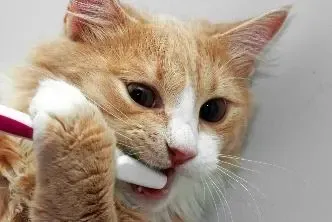 A person gently brushing a cat's teeth with a pet-specific toothbrush and toothpaste, demonstrating proper home dental care
Exploring Oral Rinses and Water Additives
Beyond daily brushing, oral rinses offer another effective option for in-home oral care. These can be used in conjunction with brushing, providing an extra layer of protection, or serve as a viable alternative if brushing proves too challenging for your pet. Common active ingredients in oral rinses include chlorhexidine, zinc gluconate, and Vitamin C, all known for their plaque-fighting properties. Application typically involves using an angled applicator, a squeeze bottle, or even a cotton swab to apply the rinse directly onto your pet’s gums. The semi-viscous nature of these rinses helps to effectively wash away the bacterial film that accumulates on gum tissue, contributing to fresher breath and healthier gums.
Furthermore, water additives present a convenient, albeit generally less effective, method for supporting your pet’s dental health. These products are added directly to your pet’s drinking water and often have minimal flavor, making them largely undetectable to most animals. However, some sensitive pets might notice the change and be reluctant to drink the enhanced water. While water additives can play a role in reducing bacteria, their impact is typically less significant compared to direct application methods like brushing or oral rinses due to dilution and less direct contact with the oral surfaces where plaque forms.
The Role of Dental Wipes in Early Care
Dental wipes can be a useful tool, especially when you’re just starting your pet’s oral care journey. They are capable of removing bacterial biofilm to some extent, but it’s important to recognize their limitations. Unlike a toothbrush, dental wipes cannot effectively reach into the intricate crevices and contours of your pet’s teeth and gums. Their primary utility lies in easing young pets or rescue animals into accepting oral handling, gradually preparing them for the more comprehensive action of a toothbrush.
Brands like Dentacetic offer dental wipes that contain proven plaque-fighting ingredients, ensuring they are both safe and effective for your pet. If your pet is resistant to a toothbrush, incorporating dental wipes into your routine can be an excellent first step. They provide a gentle introduction to mouth touching and can help build trust, making the transition to regular brushing much smoother over time.
Harnessing Dental Diets and Chews
Integrating specific dental diets and chews into your pet’s routine is an effortless way to contribute to their oral health, making teeth cleaning a part of their daily meals. Several reputable brands, such as Purina Dental Diet, Science Diet Healthy Advantage Oral +, and Royal Canin Dental Diet, formulate kibble specifically designed to help decrease tartar and plaque buildup. These specialized diets are not only nutritionally balanced but are also generally well-liked by most dogs and cats, turning mealtime into an opportunity for dental benefits without any extra fuss.
 A bowl of healthy dog food, accompanied by dental treats, emphasizing the role of diet in canine dental care
Beyond specialized kibble, certain dental chews are formulated with plaque-fighting ingredients and boast a unique texture that provides a scrubbing action to reduce plaque accumulation. However, it’s crucial to exercise caution, as not all dental chews are created equal. Some products can be excessively hard, posing a significant risk of fracturing your pet’s teeth. Veterinary dental professionals often recommend specific products, such as CET Hextra Chews, for their safety and effectiveness. For a comprehensive list of other recommended dental chews that have met stringent standards, consulting resources like www.vohc.org (Veterinary Oral Health Council) is highly advisable. This organization provides a seal of acceptance for products proven to reduce plaque and tartar, helping you make informed decisions for your pet’s dental wellness. When considering various aspects of feline health, understanding topics like persian cat care can also highlight the importance of dental care across different species and breeds.
When Professional Veterinary Dental Care is Essential
With a myriad of options available for pets at home dental care for dogs and cats, the key is to select one or more methods that best suit your lifestyle and your pet’s temperament. Certified Veterinary Technicians are invaluable resources, happy to assist you in navigating these products and demonstrating proper usage. However, it is vital to recognize when at-home care might be insufficient or even detrimental. If your pet already exhibits signs of active dental disease, such as gingivitis, excessive tartar buildup, or loose teeth, attempting home care might be painful and could exacerbate the issue.
In such cases, it is strongly recommended that your pet be examined by a veterinarian before continuing any home dental care regimen. A professional assessment will determine the extent of the dental problems and guide the appropriate course of action, which may include a professional cleaning or other treatments. Home dental care should always be a positive, pain-free bonding experience between you and your beloved companion, not a source of discomfort. For any concerns regarding your pet’s dental health or when considering a professional check-up, reaching out to your local village vet hospital is the best first step. They are passionate about supporting the pet community and are always happy to offer demonstrations and guidance on performing effective at-home dental care.
