
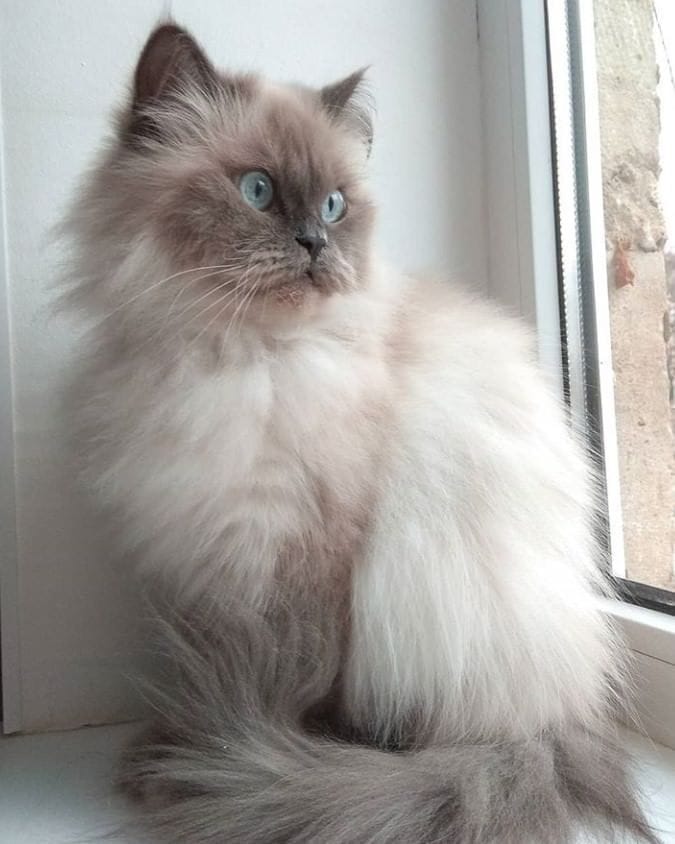
The Himalayan cat, with its luxurious coat and captivating blue eyes, is a true icon of feline elegance. This breed, a result of meticulous crossbreeding, embodies the gentle nature of the Persian and the striking features of the Siamese. For those willing to dedicate time to grooming, the Himalayan cat offers a rewarding companionship.
The Genesis of the Himalayan Breed
The journey to creating the Himalayan cat began in the 1930s through an ambitious experimental breeding program. American breeder Virginia Cobb, in collaboration with geneticist Dr. Clyde Keeler, embarked on a mission to combine the desirable traits of two distinct breeds. By crossing the Persian cat, known for its long, flowing fur, with the Siamese, famous for its colorpoint pattern and piercing blue eyes, they successfully produced the first Himalayan kitten. This groundbreaking achievement resulted in a cat that inherited the Persian’s magnificent coat while displaying the Siamese’s characteristic color points and vivid eye color.
Recognition in the Feline World
The unique appeal of the Himalayan cat quickly gained recognition from major feline associations. While The Cat Fanciers’ Association (CFA) classifies the Himalayan as a colorpoint variety of the Persian breed, acknowledging their shared ancestry and physical characteristics, other prominent organizations such as The International Cat Association (TICA) and the American Cat Fanciers Association (ACFA) distinguish the Himalayan as a separate breed. This classification reflects the breed’s distinct identity and the specific blend of traits that make it so special.
Distinctive Traits of the Himalayan Cat
Visually, the Himalayan cat is a stunning creature, often described as a “marshmallow dipped in chocolate” due to its distinct colorpoint pattern. This characteristic, inherited from its Siamese lineage, features darker fur on the ears, face, paws, and tail, contrasting with a lighter body. Their appearance is further enhanced by round eyes, a characteristic flat face, and a sturdy build, giving them an air of adorable aristocracy. These long-haired felines typically present with color points in various shades, including seal, blue, chocolate, lilac, and blue cream, all complemented by their always-blue eyes, a direct nod to their Siamese heritage.
Beyond their captivating looks, Himalayans possess a personality that perfectly matches their elegant demeanor. They are generally known for being friendly, affectionate, and embodying the quintessential “lap cat.” These cats thrive in tranquil environments and enjoy engaging in playful activities, such as chasing toy mice or batting at balls, demonstrating a need for mental stimulation. While they form strong bonds with their families and usually coexist peacefully with other pets, their preference is for lounging in comfort rather than engaging in strenuous activities like climbing curtains.
Essential Care for Your Himalayan Companion
The striking coat of the Himalayan cat, while beautiful, necessitates a consistent grooming routine. Daily brushing is crucial to prevent matting, remove loose hair, and maintain the health and appearance of their luxurious fur.
Like all breeds, Himalayans can be predisposed to certain genetic health conditions. Progressive retinal atrophy, which can affect vision, and hypertrophic cardiomyopathy, a heart condition, are among the potential concerns. Due to their brachycephalic (short-nosed) facial structure, inherited from their Persian ancestors, Himalayans may also experience respiratory issues and excessive eye tearing. Regular cleaning of their facial folds and prompt veterinary attention are vital for managing these potential health challenges.
A high-quality diet, specifically formulated to meet their nutritional needs and support their energy levels, is fundamental to a Himalayan’s overall well-being. Establishing a consistent feeding schedule helps manage their weight and ensures they receive adequate nourishment. To combat potential boredom and encourage physical activity, interactive toys can be highly beneficial, especially given their inclination towards a more sedentary lifestyle.
Welcoming a Himalayan Cat into Your Home
When seeking to adopt a Himalayan cat, partnering with a reputable breeder is highly recommended. Such breeders can provide valuable information regarding the kitten’s lineage, health screenings of the parents, and offer insights into the breed’s specific needs. Working with breeders recognized by major cat associations can offer an added layer of assurance regarding the health and temperament of the kitten.
The cost of a Himalayan cat can vary significantly, influenced by factors such as pedigree, geographical location, and the breeder’s reputation. Prices can range from a few hundred to several thousand dollars. It is important to remember that acquiring a Himalayan cat is not merely purchasing a pet, but rather an investment in a cherished family member who will bring years of joy and companionship.
The Himalayan’s Enduring Appeal
Today, the Himalayan cat stands as one of the most beloved breeds globally. Whether viewed as a distinct breed or a specialized variety of the Persian, their undeniable charm lies in their exquisite appearance, serene temperament, and affectionate nature. This unique combination makes them exceptional companions, perfectly suited for individuals and families seeking a regal and loving feline friend.
Distinguishing Between Himalayan and Persian Cats
The Himalayan can be thought of as a Persian cat infused with the distinct characteristics of the Siamese. Both breeds share a similar opulent, dense coat, a robust, rounded physique, and the characteristic flattened facial structure. Their temperaments also align, being known for their gentle, affectionate nature and contentment with a relaxed lifestyle, often preferring to spend their time lounging comfortably.
However, key differences set them apart:
- Coat Coloring: The most apparent distinction is the colorpoint pattern found in Himalayans, a trait derived from their Siamese genes, resulting in darker coloration on the extremities. Persians typically exhibit a more uniform coat color across their entire body.
- Eye Color: Himalayans are exclusively blue-eyed, a genetic inheritance from the Siamese. Persian cats, conversely, can display a range of eye colors, including copper, green, or blue, depending on their coat color.
- Breed Recognition: As mentioned, classification varies among feline associations, with some integrating Himalayans into the Persian breed category as a colorpoint variant, while others uphold their status as a separate breed.
- Activity Levels: Himalayans often display a slightly more playful and interactive disposition, retaining some of the spirited energy characteristic of their Siamese ancestors. Persians, on the other hand, tend to be more placid and less inclined towards energetic play.
Therefore, for those who admire the regal presence of a Persian but are drawn to the added personality nuances of a Siamese, the Himalayan cat presents an ideal and captivating choice.
