
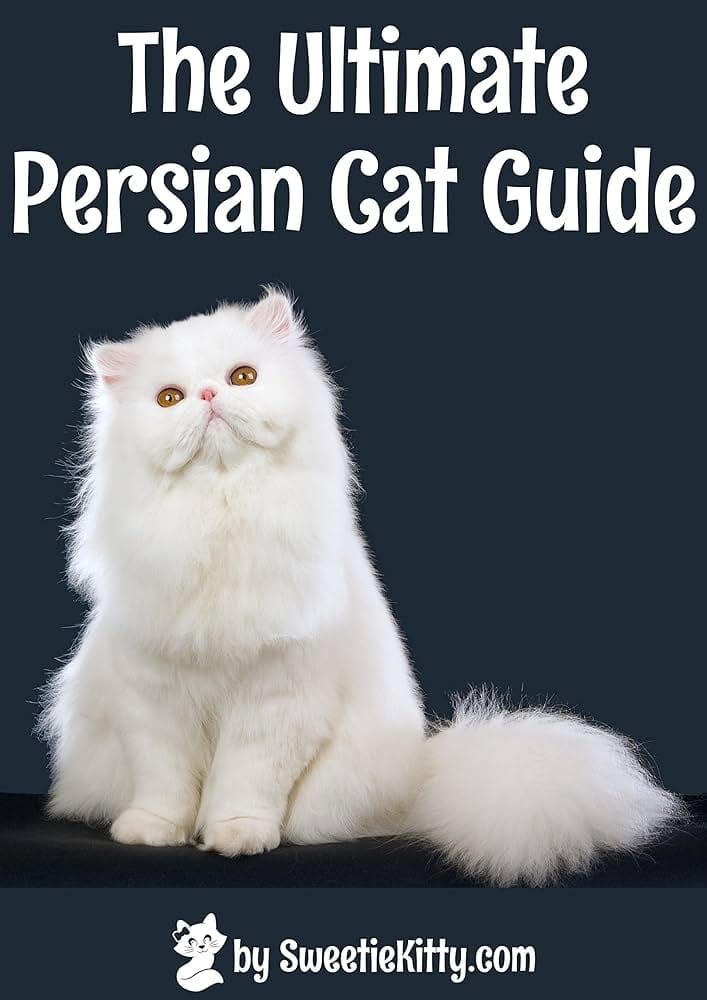
The Persian cat is renowned for its luxurious long coat, distinctive flat face, and sweet, gentle disposition. For those aspiring to breed, show, or simply appreciate the finer points of this beloved breed, understanding the official breed standards is crucial. These standards, established by feline associations, serve as a blueprint for the ideal Persian, guiding breeders and judges alike in evaluating the cats’ physical characteristics and overall conformation. This guide delves into the core aspects of the Persian Breed standard, providing a clear overview of what defines this magnificent feline.
General Appearance and Head Structure
The ideal Persian presents an image of a heavily boned, well-balanced cat exuding a sweet expression and possessing soft, rounded lines. Its overall appearance is softened by a luxurious, thick coat that accentuates its roundness. A key feature is the head: it must be round and massive, with a broad skull and a distinctly round face, supported by round underlying bone structure. The head is set on a short, thick neck. To the touch, the skull should feel smooth and round, without undue exaggeration from the forehead’s break to the back of the head or across the breadth between the ears. When viewed in profile, the prominent eyes are apparent, and the forehead, nose, and chin should align vertically.
The Persian’s nose is characteristically short, snub, and broad, with a noticeable “break” centered between the eyes. The nostrils must be sufficiently open to allow unrestricted breathing. Full cheeks are another defining feature, with a muzzle that is not overly pronounced, blending smoothly into the cheeks. Powerful, broad jaws and a full, well-developed, firmly rounded chin, indicative of a proper bite, are also essential.
Ears, Eyes, and Body Conformation
Ears on a Persian should be small, with rounded tips, tilted forward, and not excessively open at the base. They are set far apart and low on the head, complementing the rounded contour of the skull without distorting it. The eyes are a focal point, being brilliant in color, large, round, and full. They are set level and far apart, contributing significantly to the cat’s sweet expression.
The body of a Persian is described as “cobby,” meaning it is short and stocky, low on its legs, and broad and deep through the chest. It should be equally massive across the shoulders and rump, with a well-rounded mid-section and a level back. Good muscle tone is desired, without any hint of obesity. While size is not the primary consideration, Persians are typically medium to large in stature, with quality being the determining factor.
The legs are short, thick, and strong, with the forelegs being straight. When viewed from behind, the hind legs should also appear straight. Paws are large, round, and firm, with toes carried close together – five in front and four behind. The tail is short but in proportion to the body length, carried without a curve and at an angle lower than the back.
Coat and Color Standards
The Persian’s coat is one of its most defining characteristics. It is long and thick, standing off from the body, and of a fine texture, appearing glossy and full of life. The coat is long all over, including the shoulders, with an immense ruff that continues into a deep frill between the front legs. Ear and toe tufts should be long, and the tail brush very full.
The breed standard meticulously outlines numerous accepted colors and patterns, each with specific requirements for coat color, tipping, undercoat, nose leather, paw pads, and eye color. These range from solid colors like white, blue, and black, to intricate silver, golden, shaded, and smoke variations. Tabby patterns, parti-colors, calicos, bi-colors, and the distinctive Himalayan point pattern are also detailed, with precise descriptions for markings, color distribution, and eye color compatibility. For instance, solid white Persians should have pink nose leather and paw pads, and deep blue or brilliant copper eyes. Himalayans, characterized by their colorpoint pattern, must have deep vivid blue eyes, with specific color requirements for their points and body.
Disqualifications and Accepted Outcrosses
Certain conditions can lead to disqualification from championship status. These include lockets or buttons, kinked or abnormal tails, incorrect numbers of toes, apparent weakness in the hindquarters, deformities of the spine or skull resulting in asymmetry, a nose visibly set off-center, crossed eyes, and nose leather above the top line of a fully opened eye. Specific color-related disqualifications may also apply. Notably, the Persian breed has no allowable outcross breeds, emphasizing the importance of maintaining breed purity.
Understanding these detailed standards is essential for anyone involved with the Persian cat breed. They ensure consistency, promote health, and celebrate the unique beauty and temperament that make Persians so cherished worldwide.
