
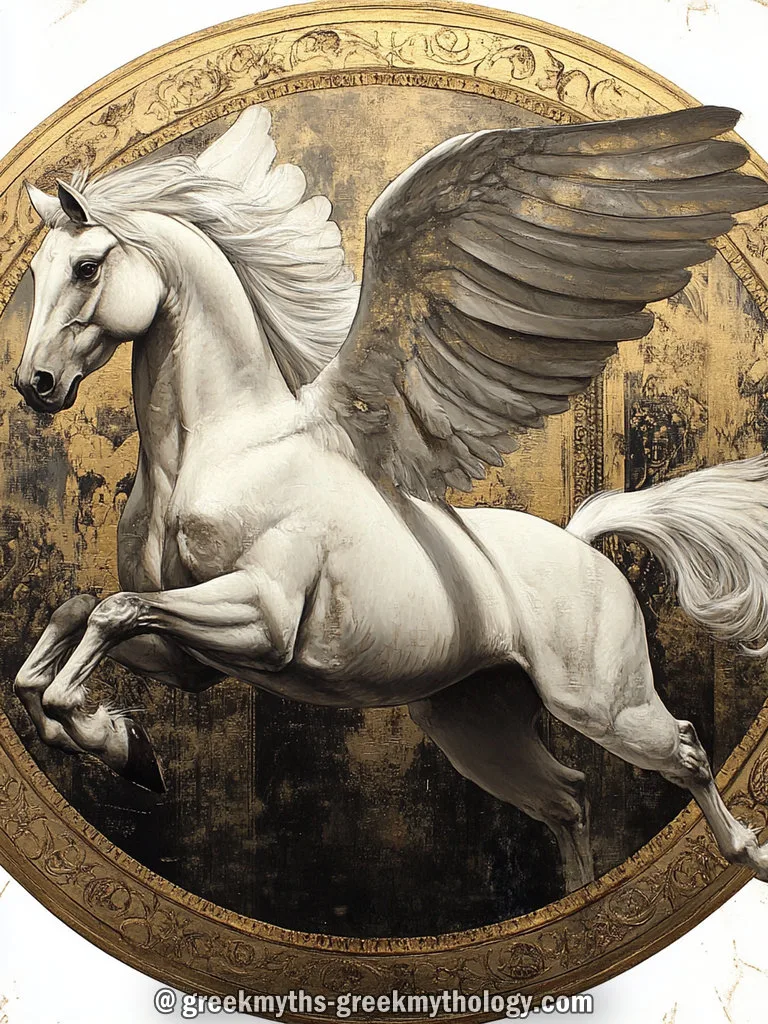
Pegasus, the magnificent winged horse, has galloped through the annals of mythology and art, captivating imaginations for centuries. More than just a mythical creature, Pegasus embodies freedom, inspiration, and the boundless potential of the human spirit. This story delves into the origins of this iconic steed, its pivotal role in ancient Greek myths, and its lasting legacy in modern culture, exploring why the tale of Pegasus continues to resonate so deeply.
The Birth of a Legend: From Medusa’s Blood to the Heavens
The genesis of Pegasus is rooted in one of the most dramatic myths of Greek antiquity: the tale of Perseus and Medusa. Medusa, a Gorgon with snakes for hair, possessed a gaze that could turn mortals to stone. Perseus, tasked with her slaying, famously beheaded her. From the blood that spouted from Medusa’s neck, Pegasus sprang forth, fully formed and ready to take flight. Some accounts also link his twin brother, Chrysaor, to his birth. This divine origin story immediately sets Pegasus apart as a creature of extraordinary power and celestial connection, foreshadowing his future role as a symbol of the extraordinary.
The Divine Steed of Heroes
Pegasus wasn’t merely a passive observer in the mythological landscape; he actively participated in the heroic deeds of mortals and gods. His most famous association is with Bellerophon, a hero destined for greatness but plagued by trials. Bellerophon, with the aid of the goddess Athena, managed to capture and tame Pegasus using a magical golden bridle.
Bellerophon and the Chimera
The most celebrated exploit of Bellerophon and Pegasus was their battle against the monstrous Chimera. This terrifying beast, a composite of a lion, a goat, and a serpent, was wreaking havoc upon the land. From the skies, Bellerophon, astride the mighty Pegasus, rained down arrows upon the Chimera, ultimately slaying it. This victory cemented Pegasus’s image as a steed of heroes, a symbol of triumph over adversity and monstrous evil. The ability to fly gave Bellerophon an insurmountable advantage, highlighting the power of divine aid and unique capabilities.
Other Mythological Encounters
Beyond the Chimera, Pegasus was instrumental in other mythological narratives. He is said to have struck Mount Helicon with his hoof, creating the sacred Hippocrene spring, a source of poetic inspiration for the Muses. This connection to the Muses further solidified Pegasus’s association with creativity, art, and divine inspiration. His presence often signified a turning point, a moment where the impossible became achievable through courage and celestial partnership.
The Journey to Olympus and Beyond
After his heroic deeds with Bellerophon, Pegasus’s path diverged. In some tellings, Bellerophon, overcome by hubris, attempted to fly Pegasus to Mount Olympus, the home of the gods. Zeus, angered by this presumption, sent a gadfly to sting Pegasus, causing Bellerophon to fall back to Earth, crippled and disgraced.
Pegasus, however, continued his flight to Olympus, where he became the divine messenger and charger of Zeus. He carried the thunderbolts of the king of the gods and was often depicted by his side. This ascension to Olympus marked the pinnacle of his mythical existence, elevating him from a creature of legend to a celestial being serving the highest deities.
Pegasus in Art and Literature: A Timeless Symbol
The captivating image of a winged horse has transcended its ancient origins, appearing in countless works of art, literature, and popular culture. From classical sculptures to Renaissance paintings and modern fantasy novels, Pegasus remains a potent symbol.
Artistic Interpretations Through the Ages
Artists have consistently been drawn to Pegasus’s graceful form and symbolic power. Early Greek pottery and friezes depicted his birth and exploits. During the Renaissance, artists like Albrecht Dürer and Benvenuto Cellini reinterpreted his myth, emphasizing his beauty and divine nature. Later, Romantic painters and modern illustrators have continued to capture the magic of the winged horse, often portraying him in epic scenes of flight or as a symbol of artistic aspiration. The visual representation of Pegasus consistently evokes a sense of wonder and the sublime.
Literary Inspirations and Modern Echoes
In literature, Pegasus has inspired tales of adventure, freedom, and the pursuit of dreams. His story is retold in epic poems, children’s books, and fantasy novels. In modern times, the name “Pegasus” has been adopted by various entities, from software companies to aircraft, reflecting the enduring association with speed, power, and transcendence. The “pegasus” constellation in the night sky serves as a celestial reminder of this beloved mythical creature.
The Enduring Appeal of the Winged Horse
Why does the story of Pegasus continue to capture our hearts and minds? Several factors contribute to its timeless appeal.
Symbol of Freedom and Aspiration
Foremost, Pegasus represents ultimate freedom – the ability to soar above earthly limitations, to escape the mundane and explore the boundless skies. This resonates with a universal human desire for liberation and the pursuit of higher goals. His effortless flight embodies the spirit of aspiration, encouraging us to reach for our own dreams, no matter how lofty they may seem.
Muse of Creativity and Inspiration
The link between Pegasus and the Hippocrene spring makes him a powerful symbol of artistic inspiration. For writers, poets, musicians, and artists, Pegasus embodies the spark of creativity, the divine muse that fuels imagination and artistic expression. His story suggests that great works can emerge from moments of divine connection and inspired insight.
A Guardian and Protector
In his role as a steed for heroes like Bellerophon and a servant of Zeus, Pegasus also embodies a protective and guiding force. He assists in overcoming formidable obstacles and stands by those who champion good. This aspect of his myth offers a sense of hope and reassurance, suggesting that help and strength can be found in unexpected, even mythical, forms.
Conclusion: The Eternal Flight of Pegasus
The legend of Pegasus, the winged horse born from myth, is far more than a simple fairytale. It is a rich tapestry woven with themes of divine birth, heroic deeds, celestial service, and enduring inspiration. From his dramatic emergence from Medusa’s blood to his eternal flight across the heavens, Pegasus has galloped through human culture, a steadfast symbol of freedom, creativity, and the power of the extraordinary. His story reminds us that even in the face of impossible challenges, the spirit can soar, and that inspiration can be found in the most majestic and wondrous of forms. The tale of Pegasus continues to inspire, encouraging us to look to the skies and believe in the magic of what lies beyond.
