
Welcoming a parakeet into your home brings joy and a unique companionship. A crucial aspect of ensuring their well-being is providing them with a balanced and appropriate diet. Understanding what to feed your parakeet, how often, and why is fundamental to their health and happiness. This guide will delve into the specifics of Parakeet Nutrition, mirroring their natural dietary habits to promote optimal health.
Understanding Parakeet Nutritional Needs
The primary goal when feeding your pet parakeet is to replicate the diet they would consume in their natural habitat. Wild budgerigars, native to Australia, primarily subsist on a diet rich in seeds, particularly grass seeds. Therefore, a high-quality seed mix should form the staple of your parakeet’s diet. However, a seed-based diet alone is insufficient. To ensure comprehensive nutrition, it’s essential to supplement their food with a mineral block and offer small portions of fresh foods regularly.
Seed-Based Diets vs. Pellets
While parakeet pellets are available and offer a complete nutritional profile, they are often recommended only if your birds were accustomed to them from a young age. For most pet parakeets, the modern recommendation leans towards a combination of quality seed mix and fresh foods. This approach aligns more closely with their natural foraging behaviors and can be more palatable for birds not raised on pellets.
Seed should always be readily available to your parakeet, with feeders needing daily replenishment. Treats, such as millet sprays or commercially available “seeds-on-a-stick,” should be given sparingly, no more than once a week, to avoid unbalancing their diet.
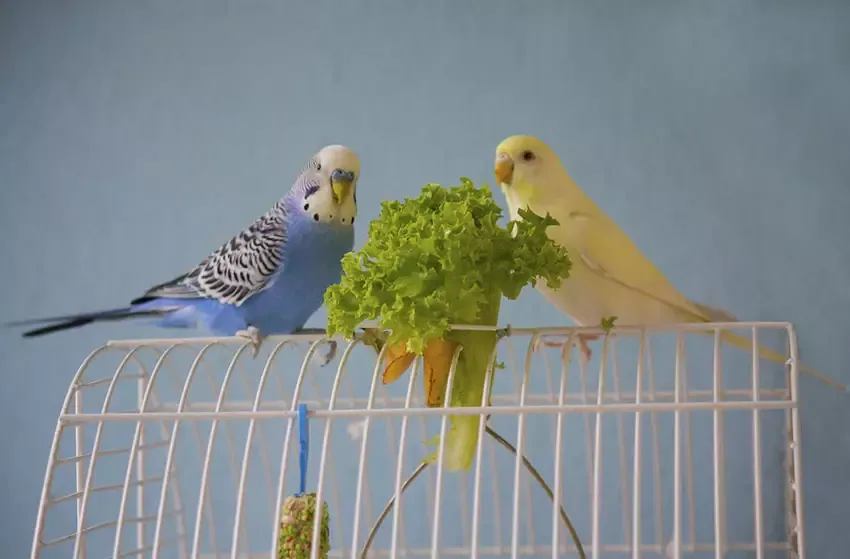 Parakeets ladder
Parakeets’ diets can be supplemented with greens.
Parakeet Feeding Times and Habits
Establishing a consistent feeding routine is vital for your parakeet’s well-being and can significantly aid in bonding and hand-taming efforts.
Establishing a Routine
Parakeets tend to visit their food bowls multiple times throughout the day. This is why topping up their seed supply each morning is so important. Birds are not always adept at distinguishing between fresh seed and husks, so it’s necessary to clean away the discarded husks regularly. By replenishing their food every morning, you create a predictable schedule that can help your bird feel secure and become more comfortable with your presence.
Cautious Eaters
You’ll observe that parakeets are cautious eaters. They typically nibble a seed and then immediately lift their heads to scan their surroundings. This behavior is an evolutionary adaptation from their wild ancestors, providing a defense mechanism against potential predators or rivals.
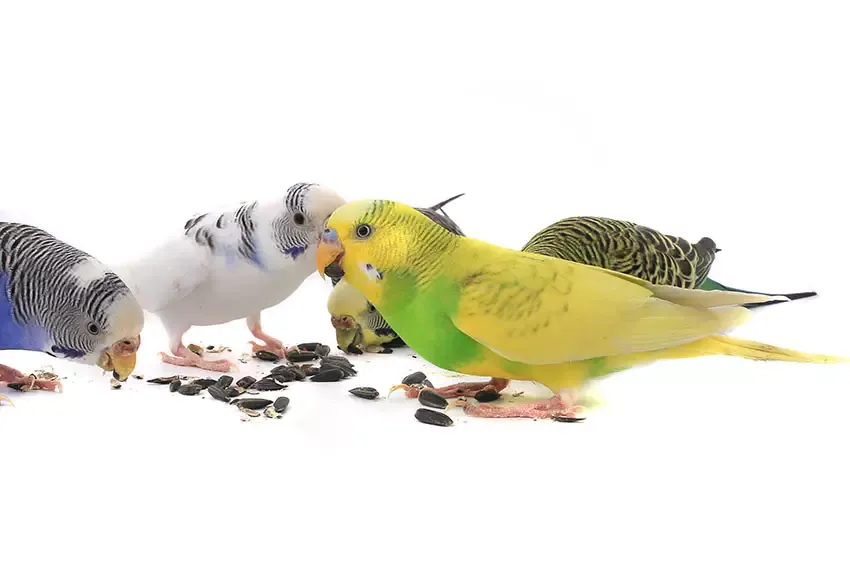 budgies_feeding_together
Parakeets are flock feeders in the wild and usually synchronize their feeding in a cage or aviary.
The Parakeet’s Beak and Digestion
The parakeet’s beak is a highly specialized tool, perfectly designed for efficiently removing seeds from their husks. Their tongue then helps scoop out the nutritious inner part of the seed. When a parakeet flaps its wings, especially during exercise, it can scatter small clouds of these discarded seed husks. Be prepared to regularly sweep up “parakeet bran” from your floor!
Understanding Social Feeding Behavior
In the wild, male parakeets exhibit a strong instinct to feed females, typically by regurgitating a semi-digested seed mixture. This is a significant part of their courtship ritual during the breeding season. If a male parakeet with a strong mating urge lacks a female companion, he may direct this feeding behavior towards reflective surfaces like mirrors or other favored objects. Offering a distraction in the form of a treat or a new toy can often help to redirect this energy.
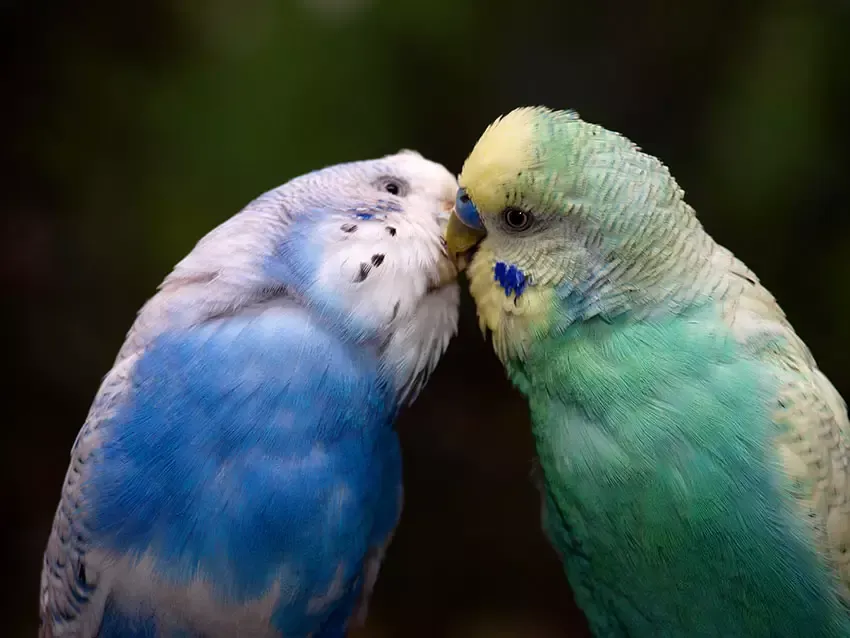 parakeets feeding each other
Male parakeets like to feed their mates.
The Parakeet’s Digestive System Explained
Like all avian species, parakeets lack teeth. They swallow their food whole, which then travels to the crop. The crop is a specialized organ located at the base of the throat and the top of the chest, serving as a temporary storage pouch. A full crop is often noticeable as a small bulge. While wild parakeets can fill their crops considerably, captive birds often eat in smaller portions and return for more later.
From the crop, food moves to the bird’s two-part stomach. After all the essential nutrients are extracted, waste products are expelled through the cloaca, an all-purpose opening for the urinary and digestive tracts. The white component of parakeet droppings consists of uric acid, which is the avian equivalent of urine. The darker, solid portion is feces, which tends to be lighter in color for birds fed primarily on pellets.
The Role of Grit in a Parakeet’s Diet
A common misconception is that parakeets require grit to aid digestion. However, the typical parakeet diet, especially a quality seed mix, contains very little indigestible material due to the removal of seed husks. Consequently, they do not need grit to help grind food in their gizzard. While many bird species benefit from grit, it is generally unnecessary and potentially harmful for parakeets.
In rare and unfortunate circumstances, consuming too much grit can lead to a blocked crop, which can be fatal for parakeets. Therefore, the safest approach is to never offer insoluble grit. It serves no nutritional purpose and can introduce significant health risks.
The gizzard, one of the two stomach compartments shared by all birds, is responsible for grinding food. Some commercial parakeet seed mixes may include insoluble grit, often in the form of oyster shell fragments. This is distinct from the insoluble grit mentioned earlier; these shell fragments are designed to dissolve over time, providing calcium. However, your pet parakeet’s calcium requirements are adequately met through a dedicated mineral block and/or cuttlefish bone, rendering even this soluble grit superfluous.
