
When encountering cats outdoors, it can be challenging to distinguish between stray and feral individuals. Both are considered “community cats,” meaning they are unowned and live outdoors, but their backgrounds and behaviors towards humans differ significantly. Understanding these distinctions is crucial for advocates, shelter workers, veterinarians, and anyone sharing their neighborhood with these felines, as it informs the best approach to their care and well-being. This guide will help you identify the key differences between stray and feral cats, both outdoors and after being trapped.
What is Socialization in Cats?
Socialization refers to a cat’s comfort level and enjoyment of human companionship. A socialized cat is accustomed to human touch, presence, and the general environment of human habitation. This process is heavily influenced by early life experiences. Kittens are typically socialized through regular interaction with people, including being held, spoken to, and played with, from a very young age. If this critical socialization window is missed, a kitten may grow up wary of humans and unsuited for indoor living. For kittens born to feral mothers, early socialization efforts are vital if they are to be adopted into homes.
Defining Stray and Feral Cats
While both stray and feral cats are domestic cats (Felis catus) living outdoors, their past experiences with humans set them apart.
Stray Cats
A stray cat is a domestic cat that was once socialized to people and lived indoors but has become lost, abandoned, or left its home. Consequently, they no longer have regular human contact. Over time, a stray cat’s socialization can diminish, and they may begin to exhibit behaviors closer to those of feral cats. However, with positive human interaction and appropriate circumstances, a stray cat can often be re-acclimated to indoor living. They may initially be frightened and wary in a new home environment but can adjust with patience.
Feral Cats
Feral cats are unsocialized outdoor cats. They have either never had any physical contact with humans or their human contact has diminished to the point where they are no longer accustomed to it. Most feral cats are fearful of people and are unlikely to ever be comfortable living indoors or becoming lap cats. Kittens born to feral cats can be socialized at an early age and potentially adopted into indoor homes. However, socializing feral kittens older than four months is generally not recommended due to the time investment and uncertain results.
The Importance of Identification
Recognizing the differences between stray and feral cats is vital for determining the most appropriate way to help and protect them. Stray cats are often candidates for adoption into indoor homes, provided individuals have the resources to foster and adopt them. This can involve a period of re-acclimation. Understanding a cat’s socialization level is key to making informed decisions.
Adult feral cats, due to their lack of socialization, are generally not adoptable into indoor homes. If taken by animal control or brought to shelters, they face a high risk of euthanasia. Therefore, for their own welfare, it is often best for them to continue living outdoors. Trap-Neuter-Return (TNR) programs are a humane and effective way to manage feral cat populations, ensuring their lives are protected and improved.
Distinguishing Between Stray and Feral Cats Outdoors
Observing cats in their outdoor environment can provide clues to their socialization level. It’s important to remember that there is a wide spectrum of behaviors, and cats may not fit neatly into one category.
Socialization to Humans
- Stray: May approach people, houses, porches, or cars.
- Feral: Will actively avoid people and seek hiding places.
Socialization to Other Cats
- Stray: Typically lives alone and is not part of a group.
- Feral: May be part of a colony and exhibit social behavior with other cats.
Body Language
- Stray: Might display behaviors similar to pet cats, such as walking with a tail held high (a sign of friendliness) and making eye contact or blinking.
- Feral: May crouch low to the ground, crawl, and use their tail to protect their body. They are unlikely to make direct eye contact.
Vocalization
- Stray: May vocalize, meow, or respond when spoken to.
- Feral: Generally silent; they do not typically meow, beg, or purr.
Schedule
- Stray: Often visible during daylight hours.
- Feral: More likely to be nocturnal, though they may occasionally be seen during the day.
Physical Appearance
- Stray: May appear dirty or disheveled and will likely not have an eartip.
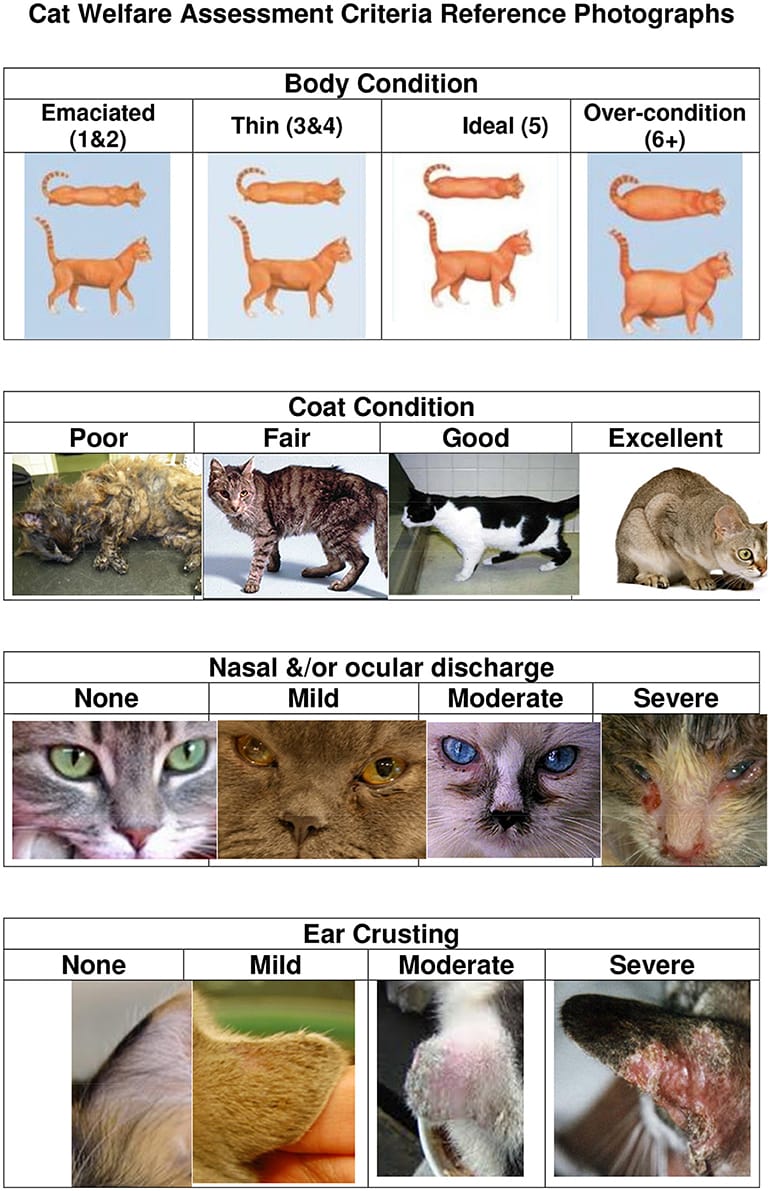
- Feral: Often have a clean, well-kept coat. Unneutered males may have a robust build, a thick neck, muscular body, and scars from fighting. They might also display a spiky coat due to high testosterone levels and less time spent grooming, or “stud tail” (greasiness and hair loss at the base of the tail). Feral cats that have undergone TNR may have a tipped ear as a surgical marking.
Pregnancy, Nursing, Kittens
- A female cat who is pregnant or nursing is more likely to be feral, as fewer feral cats are neutered compared to pet cats.
It is important to note that even if a community cat displays familiarity, such as a raised tail when interacting with a known caregiver, this does not necessarily mean they are suited for indoor living. These behaviors often develop over time with a specific caregiver and are limited to that interaction.
Identifying Cats After Trapping
When cats are trapped or confined in a stressful environment like a shelter, even a friendly stray can exhibit behaviors similar to a feral cat due to fear and anxiety. Here’s how to differentiate them:
Touch Barrier
- Stray: May eventually tolerate some touching, perhaps with an object, or allow themselves to be touched after a period of adjustment.
- Feral: Will not allow any physical contact, even from a caregiver.
Cage Behavior
- Stray: Might approach the front of the cage and, over time, may rub against it in a friendly manner.
- Feral: Will retreat to the farthest corner of the cage. If startled, they may thrash, climb the cage, or injure themselves by hitting the sides.
Level of Relaxation
- Stray: May begin to relax and show signs of comfort over time.
- Feral: Will remain consistently tense and unsocialized.
Responsiveness
- Stray: May investigate toys or food placed near the cage and respond to familiar household sounds like the opening of food containers.
- Feral: Will likely ignore people, toys, and possibly even food, showing no interest in household sounds.
Fear and Anxiety
- Stray: May hiss or growl as a defensive measure when anxious.
- Feral: If threatened or cornered, they will exhibit aggression, including flattened ears and dilated pupils.
Next Steps in Helping Community Cats
After evaluating a cat’s level of socialization, the crucial next step is to arrange for them to be spayed or neutered. Based on your evaluation, you can then determine the best course of action for the cat’s welfare. This might include returning a feral cat to their outdoor home through a TNR program, or providing foster care and adoption opportunities for a stray cat. Alley Cat Allies is dedicated to protecting and improving the lives of all cats through humane advocacy, care, and policy initiatives. For more comprehensive resources on cat socialization and community cat care, visit www.alleycat.org.
