
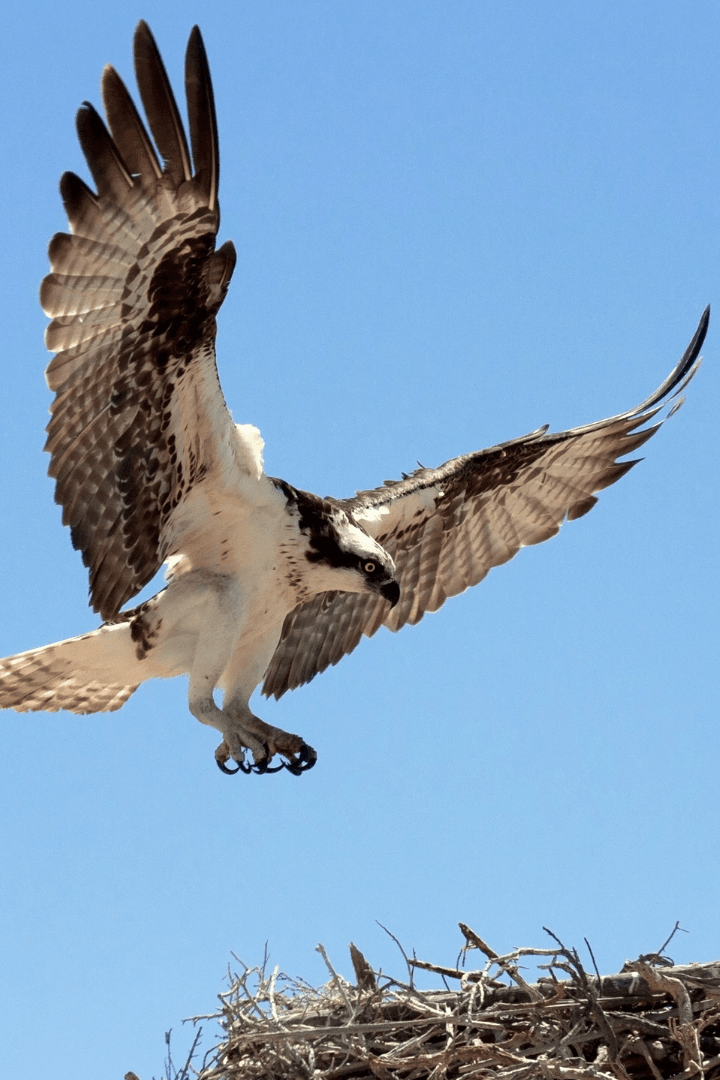
Ospreys, those magnificent raptors with a diet almost exclusively of fish, engage in a fascinating nesting and breeding cycle each year. Many observers wonder about the timing and frequency of their family-raising efforts. This article delves into the typical Osprey mating and nesting season, addressing common questions about their family structure and the reasons behind late-season nest building.
Ospreys typically form mating pairs for life, but their union is primarily during the nesting season. The male Osprey is usually the first to return to the nesting site in the spring, where he begins making repairs to the previous year’s nest and awaits his mate. Once the female arrives, courtship and mating commence. The nesting season officially begins in April, with the pair working together to build or reinforce their nest.
The female Osprey usually lays an average of three eggs, and while she undertakes most of the incubation, the male will share the duty, allowing her to take breaks for foraging or rest. The incubation period and the subsequent growth of the chicks demand a significant amount of parental attention. Both parents are dedicated to feeding their young a diet consisting solely of fish. This intensive period of nurturing, feeding, and growth lasts for nearly two months before the young Ospreys are ready to fledge.
Unlike many smaller bird species that leave the nest permanently upon gaining flight, young Ospreys tend to remain in or near the nest area for an extended period. They continue to rely on their parents for food, slowly developing their own hunting skills. This phase can last for several weeks, during which the young birds are often more adept at begging for food than catching it themselves. By mid-August, the adult female often departs for warmer climates, leaving the male to care for the remaining young. He continues to provide food and guidance until he too migrates south, typically around Labor Day. This leaves the young Ospreys to eventually embark on their own migratory journey.
Given this established timeline, the question arises: why might some Osprey pairs be observed building new nests in late August? One possibility is the sighting of juvenile Ospreys. While Ospreys typically reach sexual maturity and breed between the ages of three and four, younger birds may sometimes engage in pair bonding and premature nest construction without actually laying eggs.
A more plausible explanation for late-season nest building is the impact of severe weather events. For instance, a hurricane or strong storm occurring mid-season can destroy established nests, including eggs or chicks. In such unfortunate circumstances, the Osprey pair may attempt to build a “frustration nest.” This is usually a less elaborate, half-hearted effort, as it is too late in the season to successfully raise a brood. The primary purpose of this late nest construction is often to have a ready-to-go site for the following spring’s nesting season.
Therefore, while the nest observed in August might not produce any chicks that year, it holds the promise of a productive nesting season the following summer, provided it withstands the elements and any potential competition. It’s a testament to the resilience and forward-planning of these remarkable birds.
Beyond nesting, it’s important for bird enthusiasts to be aware of potential issues with birdseed. Summer is also the breeding season for meal moths, which are attracted to both warmth and birdseed. To mitigate the risk of infestation, it is advisable to purchase birdseed in smaller quantities, use it promptly, and avoid storing it indoors for extended periods. This practice helps prevent the seed from becoming contaminated with webs, moths, and larvae.
References
- Osprey Nesting Habits. Bird Watcher’s General Store. (n.d.). Retrieved from https://www.birdwatchersgeneralstore.com/osprey-nesting-habits/
