
Bringing a new kitten into a home with an existing feline resident can be a delicate balancing act, requiring careful consideration for both the newcomer and the established pet. This guide, offered from a cat’s point of view, outlines essential strategies to ensure a harmonious introduction and a peaceful multi-cat household.
The Importance of First Impressions
The initial encounter between your resident cat and a new kitten is paramount. This first impression significantly influences their future relationship and the overall atmosphere of your home. It’s crucial for humans to manage this stage closely, supervising interactions to establish boundaries for the kitten and helping the resident cat learn to tolerate a new housemate. A positive start makes it far easier for cats to eventually become companions. Many owners conduct extensive research on how to introduce cats to each other, focusing on key elements such as:
- Individual Resources: Ensuring each cat has their own dedicated bed, food bowls, and litter trays prevents competition and fosters a sense of security.
- Gradual Introduction: Allowing cats to acclimate to each other’s presence slowly, without direct supervision initially, and only leaving them together when they show signs of comfort is essential.
- Maintaining Personal Space: Providing the resident cat with a safe haven, such as a room the kitten cannot access, allows them to retreat and maintain their sense of territory.
- Environmental Enrichment: Utilizing calming pheromone diffusers, like FELIWAY Optimum, in shared spaces can help create a serene environment, making cats more receptive to new meetings.
A common oversight by owners is neglecting scent swapping before the kitten arrives. While humans rely heavily on sight and sound, cats use their sense of smell for recognition and acceptance. Exchanging old bedding between cats before the introduction can significantly ease the transition, allowing them to become accustomed to each other’s scent beforehand.
Even with careful planning, the kitten’s exuberance can be challenging. They may need to learn to respect the older cat’s need for space, understand that not all interactions are play, eat their own food, and refrain from teasing.
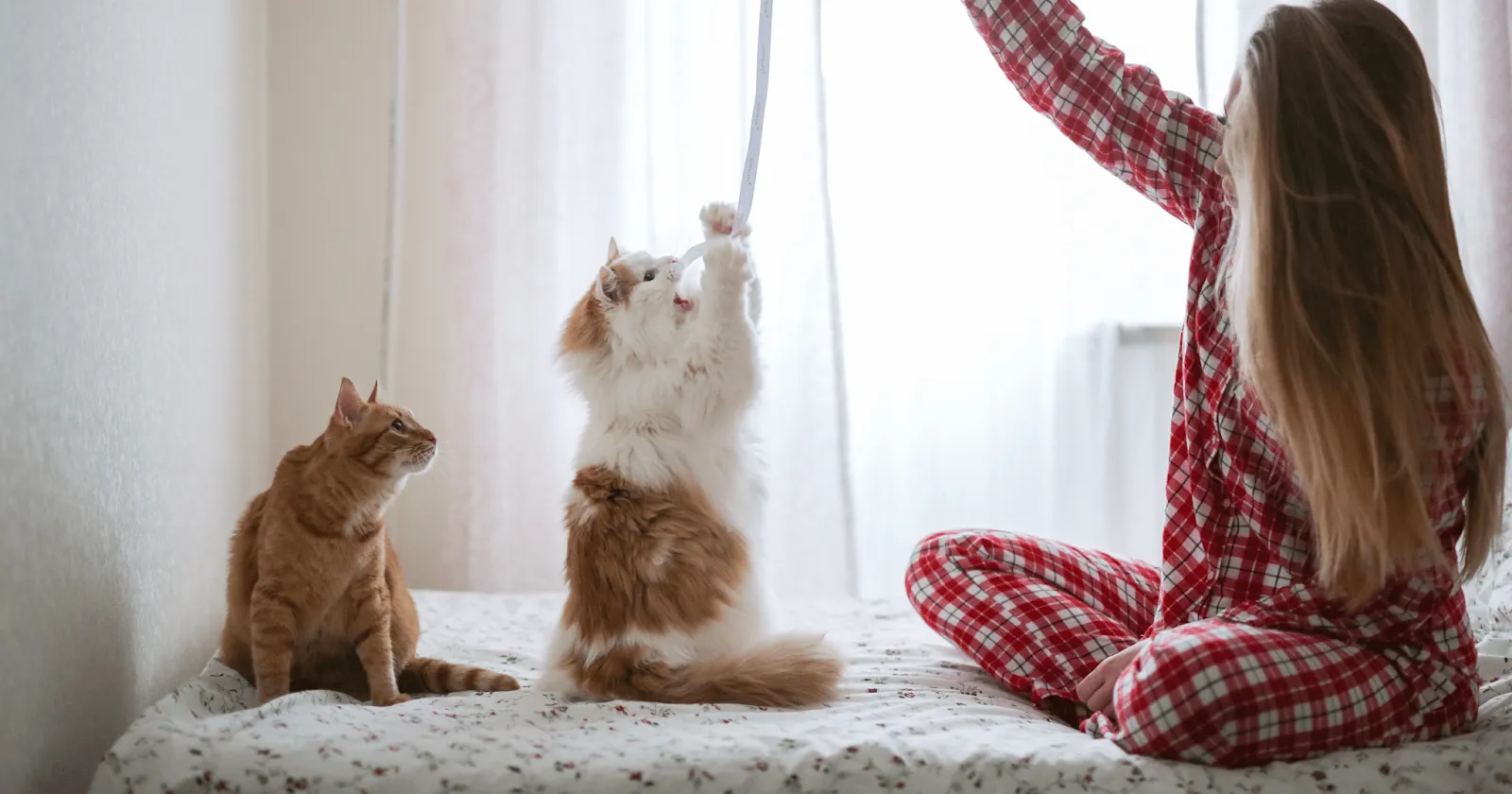 Woman sitting on bed playing with two cats and a long string toy
Essential Do’s for a Harmonious Home
- Consider Individual Needs: Recognize that kittens and adult cats have different energy levels and requirements. Kittens need ample stimulation through toys, climbing structures, and frequent play sessions to prevent them from disturbing the older cat.
- Provide Sufficient Resources: Ensure there are enough separate sleeping areas, litter boxes, and feeding stations to accommodate all cats. Sharing can lead to stress and conflict.
- Minimize Household Changes: Avoid making other significant changes to the home environment simultaneously with the introduction of a new kitten. Adjusting to a new feline housemate is often enough of a disruption.
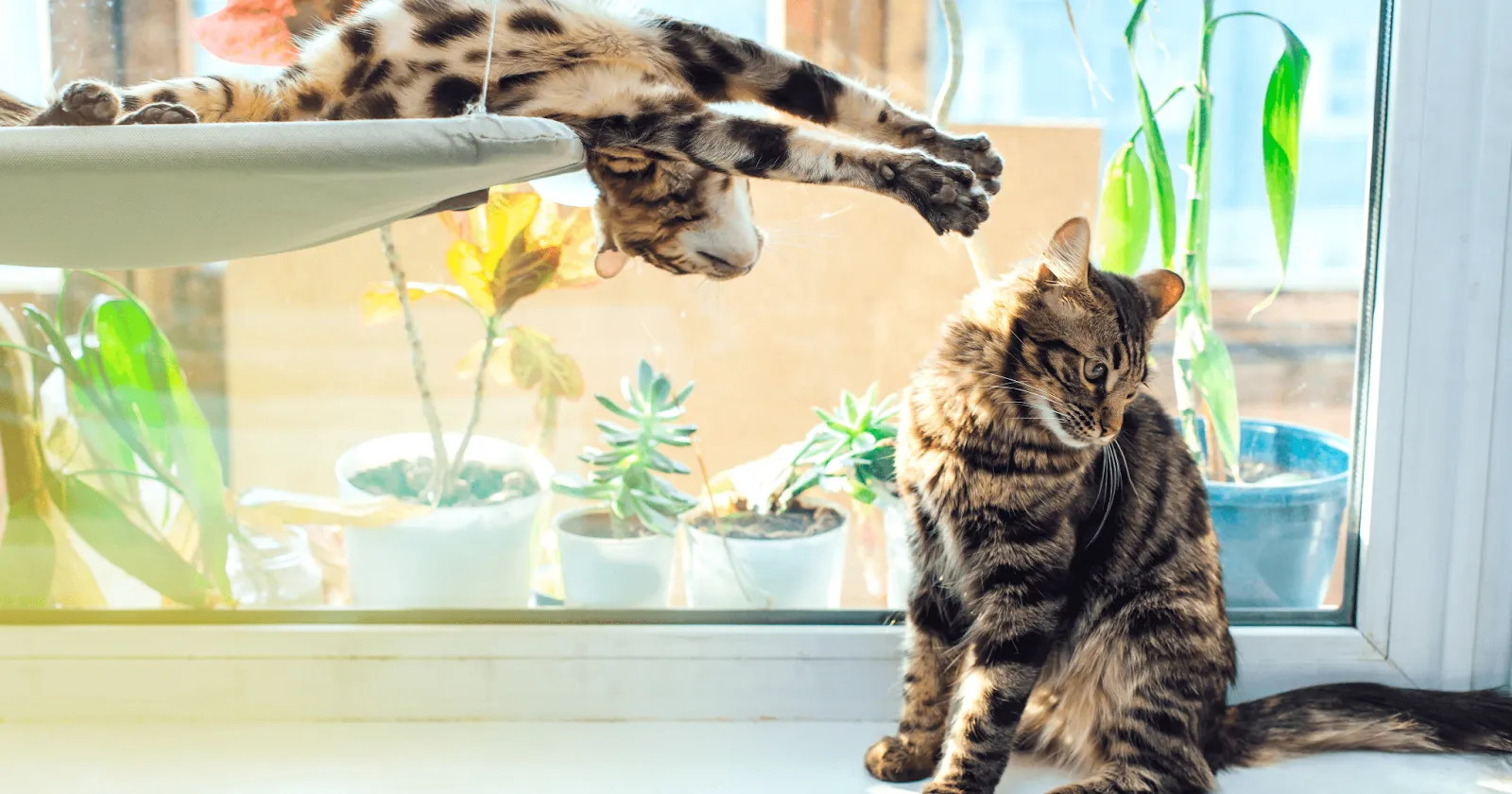 Cat in window bed stretching to reach tabby cat seated on the windowsill
Crucial Don’ts to Avoid Conflict
- Don’t Assume They’ll Figure It Out: Never leave cats to resolve conflicts on their own. If disputes arise, separate them and allow them time to cool down. Continued supervision of their interactions is vital.
- Don’t Neglect Your Resident Cat: Continue to dedicate quality time to your older cat, engaging in play and grooming. Their bond with you remains important, even with a new kitten demanding attention.
- Don’t Introduce Too Many Changes at Once: Introducing a new kitten is a major change. Combining it with other household alterations, such as new furniture or redecorating, can be overwhelming for cats who dislike change. You can learn more about how cats dislike change in our related article.
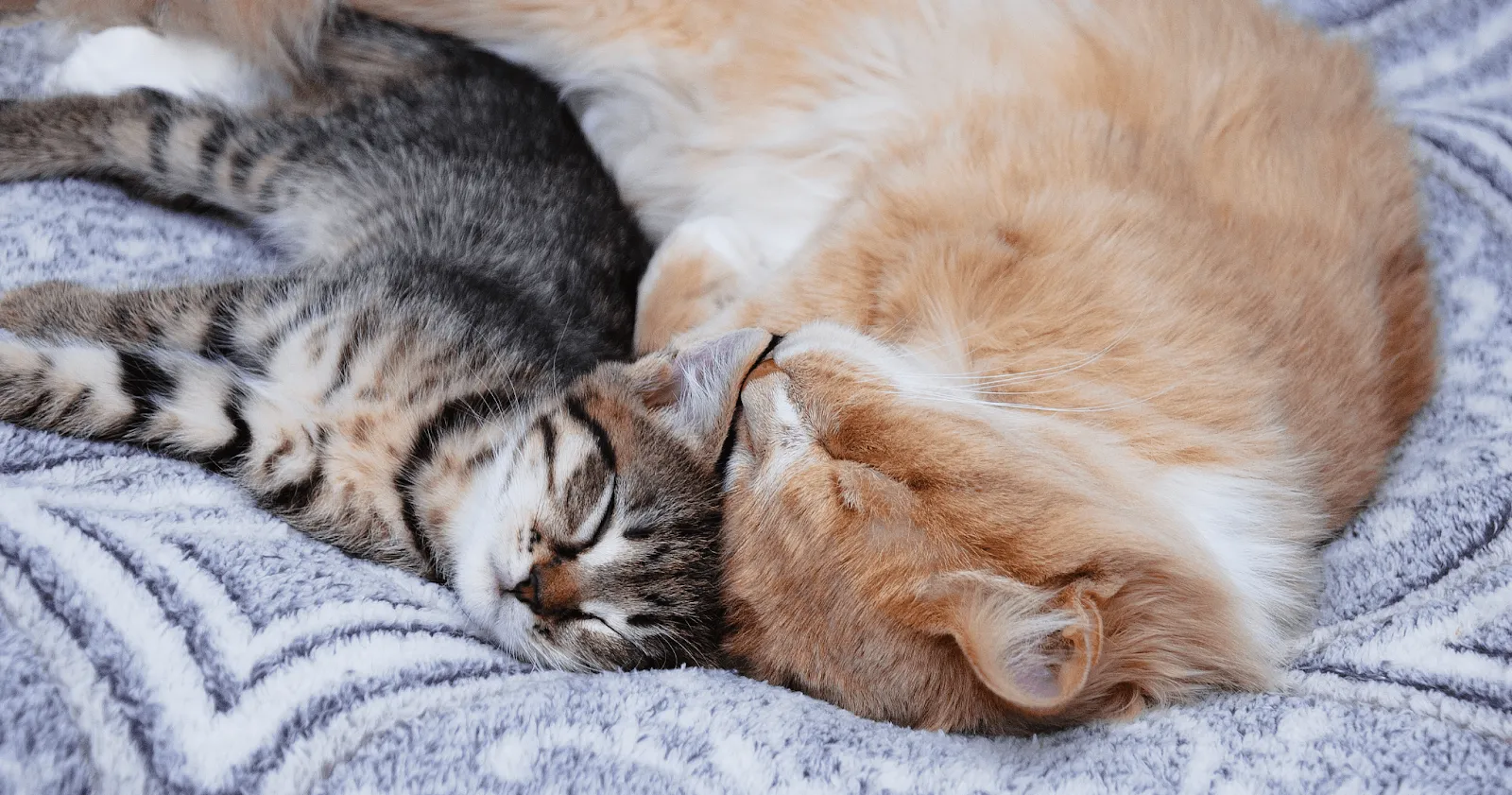 Large orange cat snuggling with tabby kitten on blankets
When a new kitten is successfully integrated, the ideal outcome is a resident cat who happily accepts their new companion. While it may take time and effort, with consistent management and a focus on each cat’s needs, harmonious cohabitation is achievable. If you observe persistent tension or concern regarding your cats’ relationship, consulting with your veterinarian is recommended. They can help rule out any underlying health issues that might contribute to intolerance and, if necessary, refer you to a qualified animal behaviorist for further guidance.
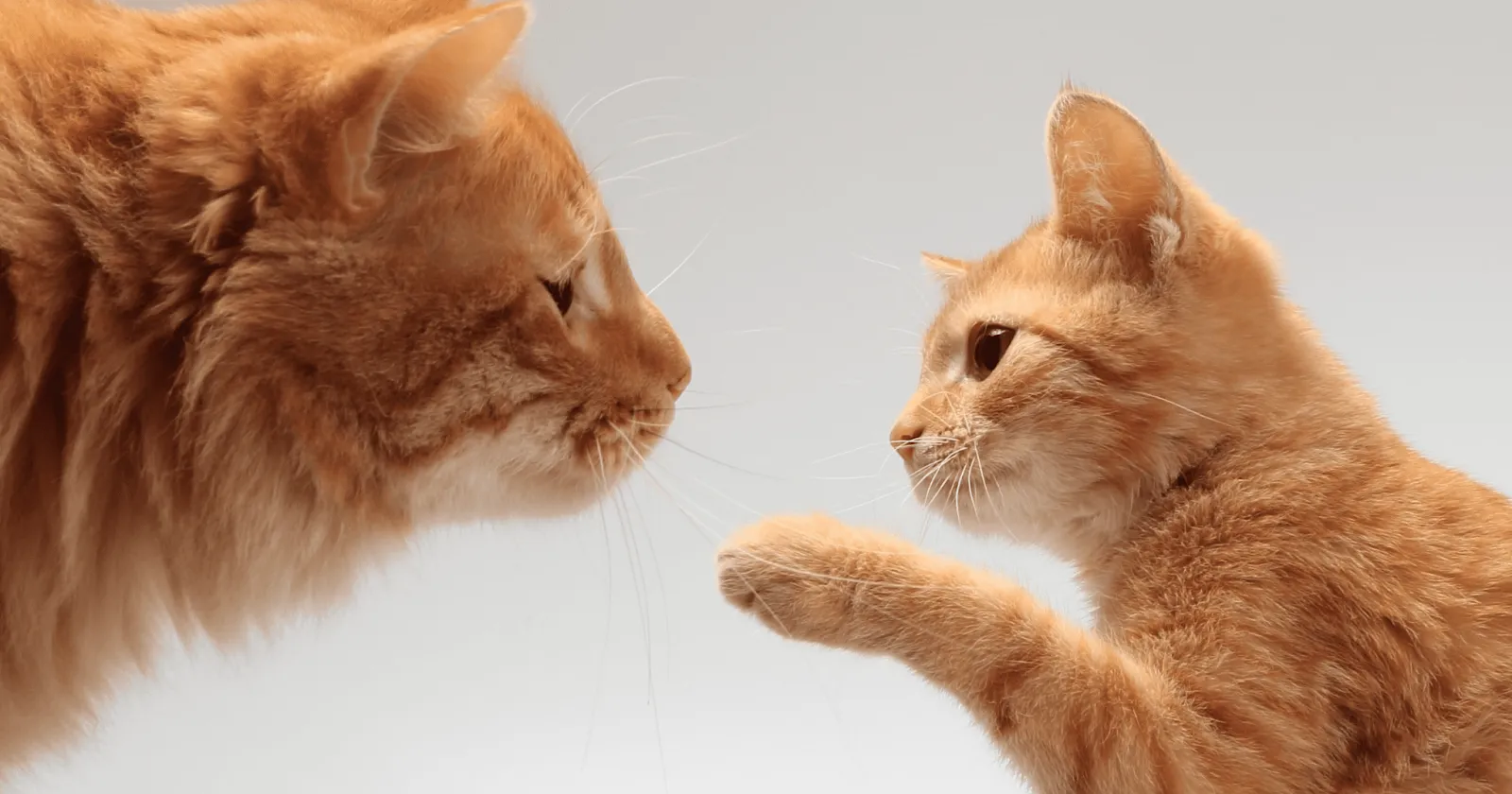 Orange tabby kitten reaching paw out gently toward adult orange tabby
As a feline myself, I can attest that with patience and understanding from our human companions, both old and new cats can learn to coexist peacefully, and perhaps even become the best of friends.
