
Has your feline friend recently taken to spending more time out of sight? While it might be a cause for concern, understanding why your cat is hiding can help you address potential underlying issues. This behavior, while not always a sign of distress, often signals that something is amiss. This article delves into the common reasons behind hiding behavior in cats, ranging from temporary adjustments to more serious health concerns, and provides guidance on how to help your cat feel secure again.
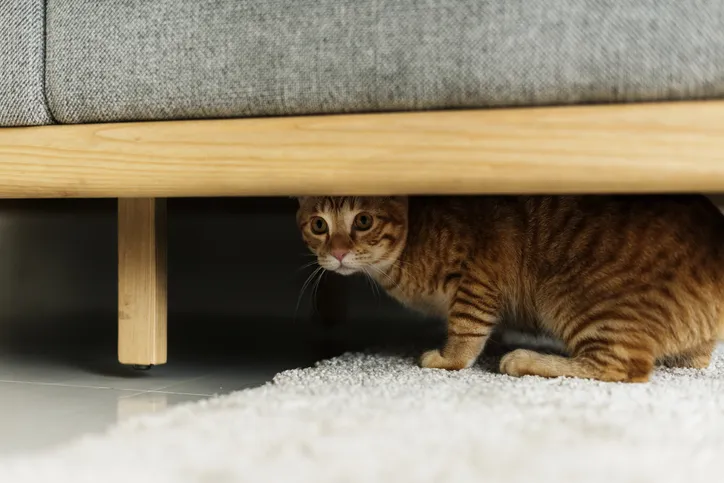 Cat hiding under a bed
Fear and Anxiety Triggers
Temporary hiding due to fear is a natural feline response. A sudden loud noise or an unfamiliar event might cause your cat to dart under the furniture for a brief period. Typically, a cat will feel safe enough to emerge within a few hours. However, if your cat displays frequent fearfulness, it could indicate a more persistent anxiety. In such cases, consulting a veterinarian is recommended. They can assess the situation and may prescribe anti-anxiety medication to help your cat feel calmer and reduce their fear responses.
Addressing Pain and Discomfort
Pain is a significant and common reason for cats to hide. When experiencing discomfort, a cat’s instinct is to seek a secluded spot, often under furniture or in a closet, to avoid interaction and potential disturbance. They might even exhibit fear or aggression if approached or if an attempt is made to coax them out. Identifying the source of pain is crucial. If there are no visible injuries, a veterinary examination is necessary to diagnose the underlying cause of their discomfort.
Recognizing Signs of Illness
Sick cats are also prone to hiding, a behavior rooted in their wild ancestry. In nature, a vulnerable, ill animal would hide to protect itself from predators. While domestic cats are safe from such threats, this instinct persists. Observing your cat for other symptoms of illness is important. Checking their temperature for a fever can also be a helpful indicator. If you suspect your cat is unwell or have confirmed a fever, seek veterinary attention promptly.
Hiding Due to Pregnancy
For unspayed female cats, hiding can be a sign of pregnancy. If your cat is not spayed, consider the possibility that she might be seeking a safe and quiet place to give birth. If you discover an unexpected pregnancy, it is essential to collaborate with your veterinarian to create a care plan for her and her upcoming kittens.
Adjusting to Environmental Changes
Significant changes in a cat’s environment, such as moving to a new home, the introduction of a new pet, the arrival of a baby, or even major household rearrangements, can lead to a temporary increase in hiding. This behavior is a way for your cat to cope and adjust to the new circumstances. While this period of adjustment is normal, if your cat continues to hide excessively and for an extended period, it may be beneficial to consult your veterinarian. They can offer guidance and potentially prescribe temporary anxiety medication to ease the transition.
The Role of Old Age
As cats age, an increase in hiding behavior can sometimes be observed. Senior cats may hide more frequently as they approach the end of their lives, perhaps seeking a sense of comfort and security. While this can be a difficult realization for pet owners, it is a potential reason for increased seclusion in older felines. If you suspect your aging cat is hiding due to their stage of life, discuss with your veterinarian how to ensure their remaining time is as comfortable and happy as possible. They can provide valuable suggestions for senior cat care.
What to Do When Your Cat is Hiding
Understanding the various reasons for hiding behavior in cats empowers you to better interpret your pet’s needs. Hiding is often a signal that something requires attention. It’s important to observe your cat closely and try to identify the root cause. If you are struggling to pinpoint the reason or suspect a serious issue, do not hesitate to seek professional help from your veterinarian. They may need to conduct tests to accurately diagnose the problem and recommend the appropriate course of action.
For expert advice and to determine why your cat is hiding and how best to assist them, consider booking an appointment with the veterinarians at Heart + Paw.
