
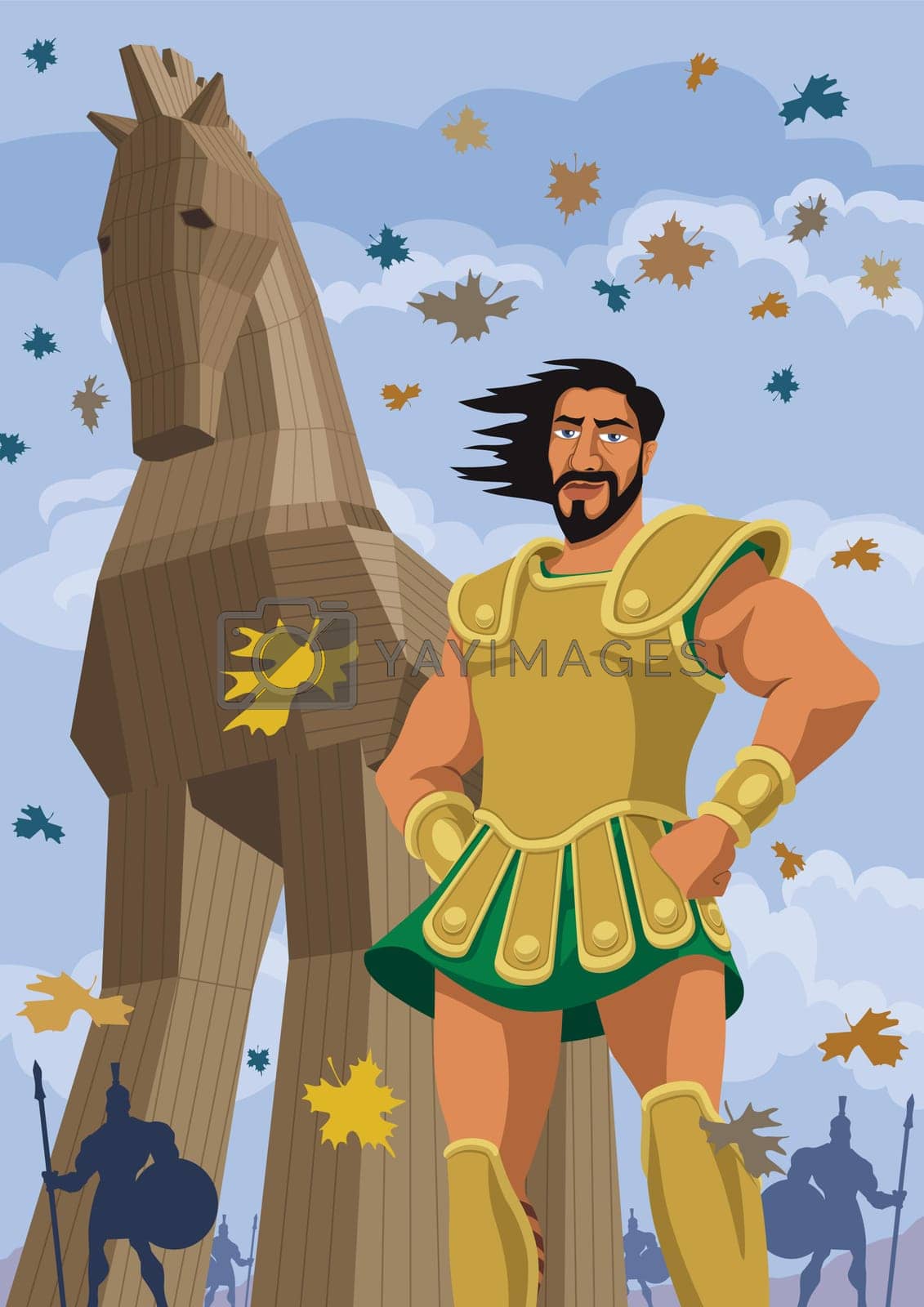
For ten long years, the mighty walls of Troy had stood defiant against the might of the Greek army. A decade of brutal warfare, heroic duels, and tragic losses had led to nothing but a bitter stalemate. The city was impenetrable, the Greeks were weary, and hope was beginning to fade. It was in this moment of despair that a new kind of weapon was forged, not of bronze or iron, but from the brilliant mind of a single man. This is the Odysseus And The Trojan Horse Story, a timeless tale of cunning, deception, and the genius that finally ended the Trojan War.
While many heroes of the war were known for their strength, Odysseus of Ithaca was celebrated for his intellect. He saw that Troy could not be taken by force and that victory required a strategy of unparalleled guile. His plan was as audacious as it was brilliant: the Greeks would feign retreat, but they would leave behind a parting “gift” for the Trojans. This gift would be their doom. You can explore a similar tale of grand strategy in the trojan horse myth story.
The Birth of a Deceptive Masterpiece
The core of Odysseus’s plan was the construction of a colossal wooden horse. A master builder named Epeius was tasked with its creation, fashioning it from fir planks under the guidance of the goddess Athena herself. The structure was immense, hollowed out to secretly house a select force of the bravest Greek warriors. On its side, an inscription was carved: “For their return home, the Greeks dedicate this thank-offering to Athena.” The message was designed to prey on the Trojans’ piety and their relief at the war’s apparent end.
Once the magnificent structure was complete, Odysseus, along with other heroes like Menelaus and Diomedes, climbed inside. The rest of the Greek army burned their camps, boarded their ships, and sailed away, seemingly in defeat. However, they only went as far as the nearby island of Tenedos, where they waited under the cover of darkness for the signal to return. One man, a cousin of Odysseus named Sinon, was left behind to play the most critical role of all.
Ignored Warnings and a City’s Doom
As the Trojans awoke to find the Greek camps empty and the strange, giant horse standing before their gates, they were overcome with joy. They believed the war was finally over. Sinon, playing his part perfectly, allowed himself to be captured. He spun a masterful tale of woe, claiming he had been abandoned by a cruel Odysseus and that the horse was an offering to appease an angry Athena. He told the Trojans that the horse was made deliberately large so that they could not bring it into their city, for if they did, the protection of Athena would pass to them.
Despite this convincing performance, not everyone was fooled. The Trojan priest Laocoön frantically warned his people, famously declaring, “I fear the Greeks, even when they bear gifts!” To prove his point, he hurled a spear into the horse’s flank, and a groan from the hidden soldiers could be heard within. But at that moment, two monstrous sea serpents, sent by the gods who favored the Greeks, rose from the ocean and devoured Laocoön and his two sons. The Trojans interpreted this horrific event as a sign of divine displeasure with Laocoön’s sacrilege, sealing their fate. The princess Cassandra, who was blessed with the gift of prophecy but cursed never to be believed, also foresaw the city’s destruction, but her desperate pleas were dismissed as madness.
The Trojans, now convinced of the horse’s divine nature, tore down a section of their mighty walls to bring the offering inside. This act, symbolic of their broken defenses, had a similar narrative weight to the events described in helen of troy trojan horse story.
The Fall of a Great City
That night, Troy celebrated its apparent victory with feasting and revelry, oblivious to the danger within its walls. Once the city was cloaked in a drunken slumber, Sinon released the hidden Greeks. Odysseus and his men crept out of the horse, silent instruments of death in the quiet streets. They slaughtered the city’s sentries and threw open the gates to the rest of the Greek army, which had sailed back from Tenedos under the cover of night.
What followed was a night of unimaginable horror. The Trojans, caught completely by surprise, were massacred. The city that had stood for a decade was plundered and burned to the ground. By sunrise, Troy was nothing but smoldering ruins. The cunning plan of one man had accomplished what the might of an entire army could not. The story of Odysseus and the Trojan Horse story was complete, a brutal testament to the power of intellect over brute force. The details of the great wooden structure are central to this tale, much like in the wooden horse of troy story.
The legacy of this event is immense. The term “Trojan horse” has become a universal metaphor for any trick that involves introducing a destructive element from the inside by disguising it as something desirable. This ancient strategy, born from the mind of a mythological hero, continues to resonate in our modern world, from computer security to political tactics. It reminds us that the greatest threats often come from where we least expect them, a lesson as relevant today as it was in the age of heroes. The specifics of Odysseus’s involvement are further explored in the tale of the trojan horse odysseus story.
Frequently Asked Questions
Who came up with the idea for the Trojan Horse?
The plan was conceived by Odysseus, the king of Ithaca, who was known for his cunning intelligence and strategic mind. His idea was to use deception to get inside the impenetrable walls of Troy when a decade of direct assault had failed.
Was the Trojan Horse a real historical event?
There is no definitive archaeological evidence that the Trojan Horse existed as described in the myths. Most historians believe the story is a poetic allegory, possibly inspired by ancient siege engines that were covered with damp horsehides to protect them from flaming arrows, which may have resembled animals.
How many soldiers were hidden inside the horse?
The exact number varies across different ancient accounts. Some sources say as few as 30 men, while others suggest up to 50. What is consistent is that it was an elite force of Greece’s best warriors, led by Odysseus himself.
What is the primary ancient source for this story?
While the Trojan War is the subject of Homer’s Iliad, the poem ends before the city falls. The story of the Trojan Horse is mentioned briefly in Homer’s Odyssey, but it is told in its greatest detail in the Roman epic, the Aeneid, written by Virgil.
What does the phrase “Beware of Greeks bearing gifts” mean?
This famous saying originates from the warnings of the Trojan priest Laocoön, who tried to convince the Trojans not to accept the wooden horse. It has become a timeless proverb that advises suspicion of an enemy who suddenly appears to be offering a gift or acting with kindness.
