
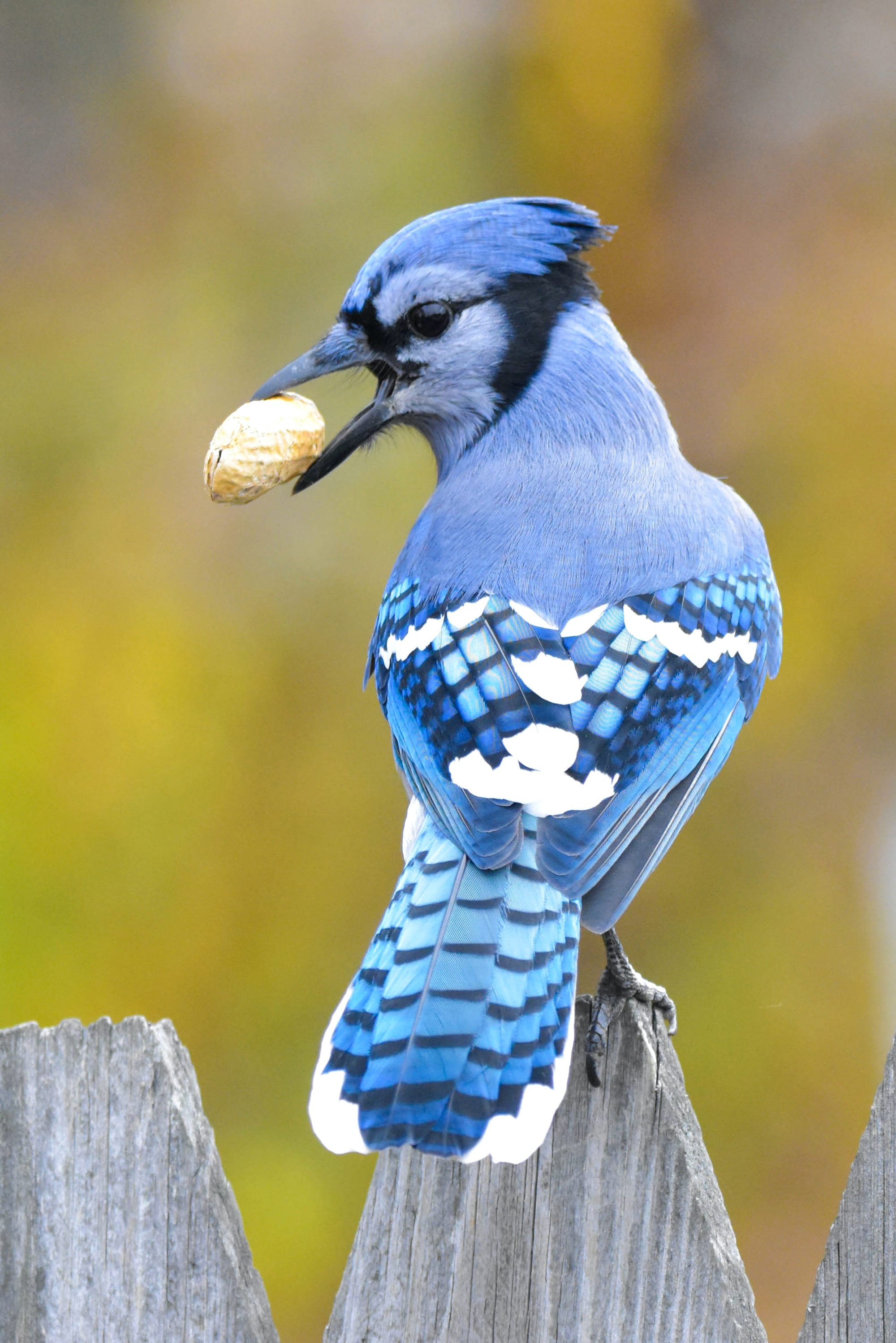
The early morning chorus of birds is a familiar sound to many, and among the most recognizable residents of the backyard is the Blue Jay (Cyanocitta cristata). With its striking blue feathers, white breast, and distinctive crest, this corvid member is a captivating sight. Beyond its visual appeal, the Blue Jay exhibits a complex social structure, remarkable intelligence, and a significant ecological role, making it a subject of ongoing fascination for ornithologists and backyard observers alike. This article delves into the intriguing behaviors and characteristics of the Blue Jay, exploring its social dynamics, intelligence, and impact on its environment.
Social Structure and Migration Patterns
Blue Jays, like other members of the corvid family, possess a relatively intricate social system, largely centered around monogamous breeding pairs. Unlike some territorial birds, Blue Jays are not strictly territorial, allowing multiple pairs to share feeding grounds harmoniously. Interestingly, towards the end of the breeding season in late summer, they form larger flocks. While many Blue Jays from the northern United States migrate south for the winter, a smaller population remains year-round. Studies in bird sanctuaries have revealed that these resident groups form stable social bonds, with banded jays and their offspring returning to the same feeding stations over successive winters, suggesting social connections extend beyond mere food acquisition. The migratory patterns of Blue Jays are not fully understood, with ongoing debate among ornithologists regarding whether young birds predominantly migrate for better winter foraging or if migration rates are equal across age groups.
Dominance and Aggression in Social Interactions
Within breeding pairs, males are typically dominant over females. A four-year study in south-central Florida revealed that females rarely won interactions against males, with males being slightly larger in body size. However, researchers attribute this dominance primarily to the males’ more aggressive nature, as they are generally more involved in social interactions. A fascinating shift occurs just before the breeding season in March, where males become less aggressive, and females become more so, likely due to increased nutritional demands for nesting. Despite this temporary shift, male dominance is maintained. This social hierarchy can be difficult to discern from a distance, as male and female Blue Jays appear nearly identical, often posing a challenge even for professional ornithologists to differentiate without close inspection.
Remarkable Intelligence and Resourcefulness
The intelligence of the Blue Jay is perhaps one of its most compelling traits. Studies, including one at the University of Massachusetts, have demonstrated their ability to create and use tools to obtain food. In controlled experiments, Blue Jays were observed using materials like newspaper, paper clips, and plastic ties to retrieve food pellets that were otherwise out of reach. When presented with these materials, a significant majority of the jays were able to fashion and utilize them as tools, showcasing a remarkable capacity for problem-solving and adaptation.
Vocalizations and Mimicry
Blue Jays possess a diverse range of calls and are known for their impressive ability to imitate other birds. This mimicry is often employed as a clever tactic for kleptoparasitism. By mimicking the call of a hawk, a Blue Jay can startle other birds, causing them to abandon their food, which the jay then claims. It remains unclear whether this behavior evolved primarily as a defensive warning to other birds about nearby predators or as a manipulative device for acquiring food. Regardless of its origin, this imitative ability highlights the Blue Jay’s cognitive prowess.
Ecological Significance: Seed Dispersal
Beyond their observable behaviors, Blue Jays play a crucial role in their ecosystem, particularly in seed dispersal. They are known to actively collect and cache nuts and acorns for later consumption, with estimates suggesting that a significant percentage of nut crops are dispersed by these birds. Blue Jays are even considered instrumental in the widespread dispersal of certain beech tree species across eastern North America following the glacial period. Their practice of transporting seeds over considerable distances, often forgetting their caches, allows these seeds to germinate, contributing to forest regeneration and expansion.
Conclusion: A Deeper Appreciation for the Blue Jay
While once admired primarily for their striking blue plumage, a closer examination reveals the Blue Jay to be a creature of remarkable intelligence, complex social structures, and significant ecological importance. Despite sometimes being overlooked or misunderstood due to their domineering behavior and mimicry, Blue Jays lead a fascinating and impactful life. Paying closer attention to their intricate behaviors and their vital role in the environment offers a newfound respect for these captivating birds.
References
Stewart PA. 1982. Migration of Blue jays in eastern North America. North American Bird Bander 7:107-112.
Racine RN and Thompson NS. 1983. Social organization of wintering blue jays. Behaviour 87:237-255.
Tarvin KA and Woolfenden GE. 1997. Patterns of dominance and aggressive behavior in blue jays at a feeder. Condor 99:434-444.
Jones, T.B. and Kamil, A.C. 1973. Tool-making and tool-using in the northern blue jay. Science 180: 1076-1078.
Lofton, RW. 1991. Blue jay imitates hawk for kleptoparasitism. Fla. Field Nat. 19(2): 55.
Clench, MH. 1991. Another case of blue jay kleptoparasitism. Fla. Field Nat. 19(4): 109-110.
Johnson, W.C. and Webb, T. III. 1989. The role of blue jays (Cyanocitta cristata) in the postglacial dispersal of fagaceous trees in eastern North America. Journal of Biogeography 16: 561–571.
