
Embarking on nosework training with your dog is more than just a fun activity; it’s a journey into unlocking their incredible natural abilities and strengthening your bond. Dogs possess a sense of smell that is exponentially more powerful than ours, capable of detecting scents at concentrations we can barely imagine. Nosework harnesses this innate talent, turning it into a rewarding mental exercise that can benefit dogs of all breeds, ages, and temperaments. Whether you’re looking to provide an outlet for a high-energy pup, build confidence in a shy dog, or simply engage in a new and exciting activity together, nosework training offers a wealth of benefits.
The Science Behind a Dog’s Superpower: Understanding Their Olfactory World
To truly appreciate nosework, it’s crucial to understand the astounding capabilities of a dog’s nose. While humans have around 5 million olfactory receptors, dogs can have anywhere from 100 million to 300 million, depending on the breed. This anatomical advantage translates into a vastly different sensory experience of the world. A dog doesn’t just smell; they taste the air, with scent particles being drawn into their nasal passages and stimulating specialized organs that send information directly to their brain’s olfactory bulb – an area proportionally much larger in dogs than in humans.
“A dog’s sense of smell is so powerful that if you were to dissolve a teaspoon of sugar in two Olympic-sized swimming pools, a dog could still detect it.” – Dr. Sophia Lee, Canine Behaviorist
This incredible olfactory prowess means that dogs can differentiate between individual scents, track a scent trail over long distances and time, and even detect subtle changes in a scent that might indicate emotion or health status in humans. Nosework training taps into this remarkable ability, providing a structured and engaging way for dogs to use their noses purposefully.
Getting Started with Nosework: Your First Steps to Detective Training
The beauty of nosework is its accessibility. You don’t need a specialized facility or extensive equipment to begin. The core principle is to teach your dog to find a specific scent and indicate its location.
Essential Equipment: Keeping it Simple
For initial training, you’ll need very little:
- High-Value Treats: Small, delicious treats that your dog absolutely loves.
- A Scent: For beginners, the easiest scent to start with is your dog’s own food or a favorite treat. Later, you can introduce specific target odors like birch, anise, or clove, which are common in formal nosework competitions.
- A Play “Hide”: This could be a small container, a Kong toy, or even just a hiding spot where you place the scent.
The Foundation: Teaching the “Find It” Cue
The first step is to teach your dog a clear cue to search for the scent.
- Get Your Dog Excited: Hold a treat in your hand and let your dog see and sniff it.
- Introduce the Cue: As your dog shows interest, say your chosen cue, such as “Find it!” or “Search!”
- Reward Exploration: Immediately toss the treat a short distance away. When your dog finds and eats it, praise them enthusiastically.
- Repeat and Build: Practice this in various locations, gradually increasing the distance you toss the treat. The goal is for your dog to associate the cue with the exciting activity of finding a reward.
Elevating the Game: Introducing Hides and Indications
Once your dog reliably understands the “Find It” cue, you can start introducing actual hides.
Basic Hides: Setting the Stage
- Low and Easy: Begin with simple hides at dog level, in plain sight, or just slightly obscured. For example, place a treat inside a small box or behind a table leg.
- Positive Reinforcement: Guide your dog towards the general area of the hide. When they investigate and find the scent, mark the behavior with praise and a treat.
- Building Association: The key is to make finding the scent a highly rewarding experience.
Developing the Indication: How Your Dog Tells You They Found It
An indication is how your dog communicates that they’ve located the target scent. Common indications include:
- Alert/Sit: The dog sits in front of the source of the scent.
- Paw Target: The dog places a paw on or near the scent source.
- Nose Target: The dog touches the scent source with their nose.
The most important aspect is to choose an indication that is natural for your dog and to consistently reward it. For beginners, a simple alert or sit can be a good starting point. You’ll reinforce this indication by rewarding your dog only when they perform it at the hide.
Common Nosework Scenarios and Training Tips
As you progress, you’ll encounter various scenarios that can be used for training.
Container Hides
Place a scent (like kibble or a treat) inside a series of containers (e.g., plastic tubs, cardboard boxes).
- How to train: Start with one container holding a scent and your dog’s “Find It” cue. Gradually introduce more empty containers alongside the scented one. Reward your dog for indicating the correct, scented container.
- Why it works: This teaches your dog to discriminate between different containers and focus on the target odor.
Quad Hides (Search Pattern)
Set up four identical containers in a line or square, with the scent in only one.
- How to train: This is a progression from single container hides. It challenges your dog to systematically search each container and indicate the correct one.
- Pro Tip: Ensure your dog understands the “Find It” cue and has a reliable indication before moving to this more complex search pattern.
Vertical Hides
Hiding scents at different heights, such as on a doorframe, window sill, or even a higher shelf.
- How to train: Start with low vertical hides your dog can easily reach. Use your cue and reward any interest shown towards the scented area. Gradually increase the height as your dog gains confidence and skill.
- Considerations: This type of hide is excellent for encouraging your dog to use their entire body to scent, including their head and neck.
Troubleshooting Common Nosework Challenges
Even with the best intentions, you might face a few bumps along the road.
My Dog is Not Interested in the Scent
- Is the reward high-value enough? Try using something even more enticing than their usual treats.
- Is the scent strong enough? Ensure the scent is potent and close to your dog initially.
- Is your dog stressed or distracted? Choose a quiet training environment and ensure your dog isn’t tired or overly anxious.
My Dog Just Eats the Treat and Doesn’t Indicate
- Timing of Reward: Ensure you are rewarding the indication behavior, not just the act of eating. If your dog eats the treat before you can mark or reward the indication, the hide was too easy, or the treat was too accessible.
- Clearer Indication Training: Go back to basics and reinforce the specific indication you want your dog to perform.
My Dog is Rushing Through the Search
- Slow Down: Encourage your dog to be more methodical. Use a leash initially if needed, and reward them for slower, more deliberate sniffing.
- Increase Difficulty Gradually: Make the hides slightly more challenging so your dog has to work harder to find them, naturally slowing their pace.
The Broader Benefits of Nosework for Your Dog
Beyond the fun and the mental stimulation, nosework training offers profound benefits for your canine companion:
- Builds Confidence: For shy or fearful dogs, successfully finding a scent can be a huge confidence booster.
- Reduces Stress and Anxiety: The focus required for nosework can be incredibly calming for anxious dogs, providing a positive outlet for pent-up energy.
- Enhances the Human-Animal Bond: Working together towards a common goal, communicating through scent and indication, strengthens the connection between you and your dog.
- Provides Mental Stimulation: It’s a fantastic way to tire out a dog mentally, which is often more exhausting than physical exercise alone.
- Accessible for All Dogs: Whether you have a spry puppy or a senior dog with mobility issues, nosework can be adapted to suit their abilities.
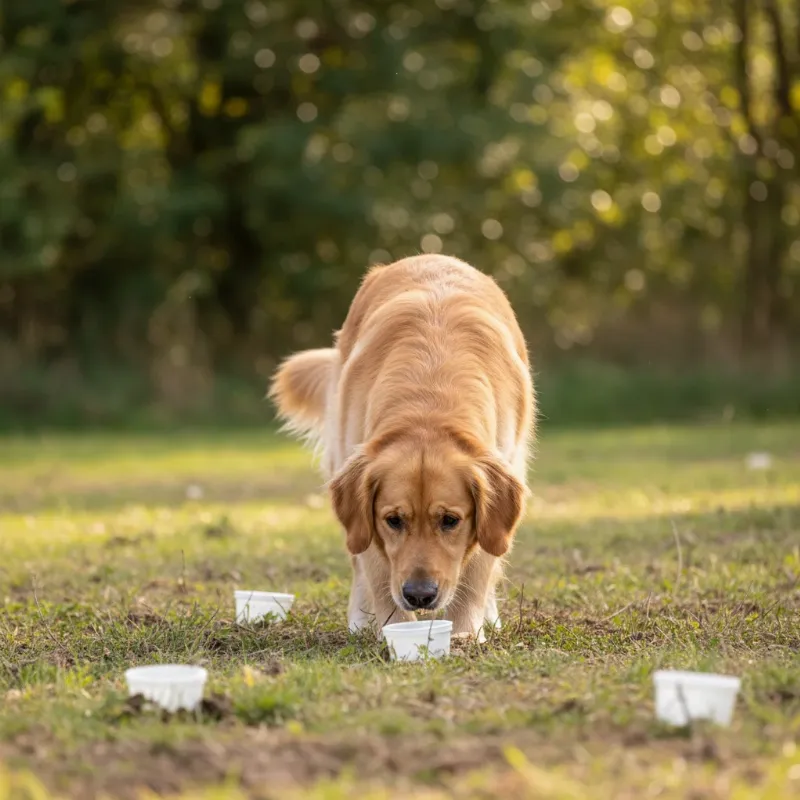 A dog with its nose to the ground, intently searching for a scent during a nosework training session, showcasing its detective skills.
Taking Nosework to the Next Level: Competition and Beyond
For those who find joy in nosework, there are organized sports and competitions that offer a structured path for further training and challenges. Organizations like NACSW (National Association of Canine Scent Work) and AKC (American Kennel Club) Nose Work offer various levels of competition, testing dogs’ abilities to find specific target odors in different environments (interiors, exteriors, vehicles, and containers).
Participating in nosework competitions can provide:
- Clear Training Goals: A structured progression and defined objectives.
- Socialization: Opportunities to meet and interact with other dog enthusiasts.
- A Fun Challenge: A way to test your dog’s skills and your training partnership in a supportive environment.
Even if competition isn’t your goal, the principles of nosework can be applied to everyday life. You can create fun scent games in your backyard, hide your dog’s toys, or even use nosework to help your dog become more comfortable in new environments by letting them “scent” their way around.
Conclusion: The Rewarding World of Canine Nosework
Nosework Training For Dogs is a profoundly rewarding activity that taps into a dog’s most powerful sensory gift. It’s a versatile, adaptable, and engaging pursuit that benefits dogs mentally and emotionally, while simultaneously deepening the incredible bond they share with their human companions. By understanding the science behind their amazing noses and implementing simple, positive training methods, you can open up a world of discovery for your dog, transforming them into a confident and capable canine detective. So, grab some treats, find a scent, and let the nosework adventure begin!
