
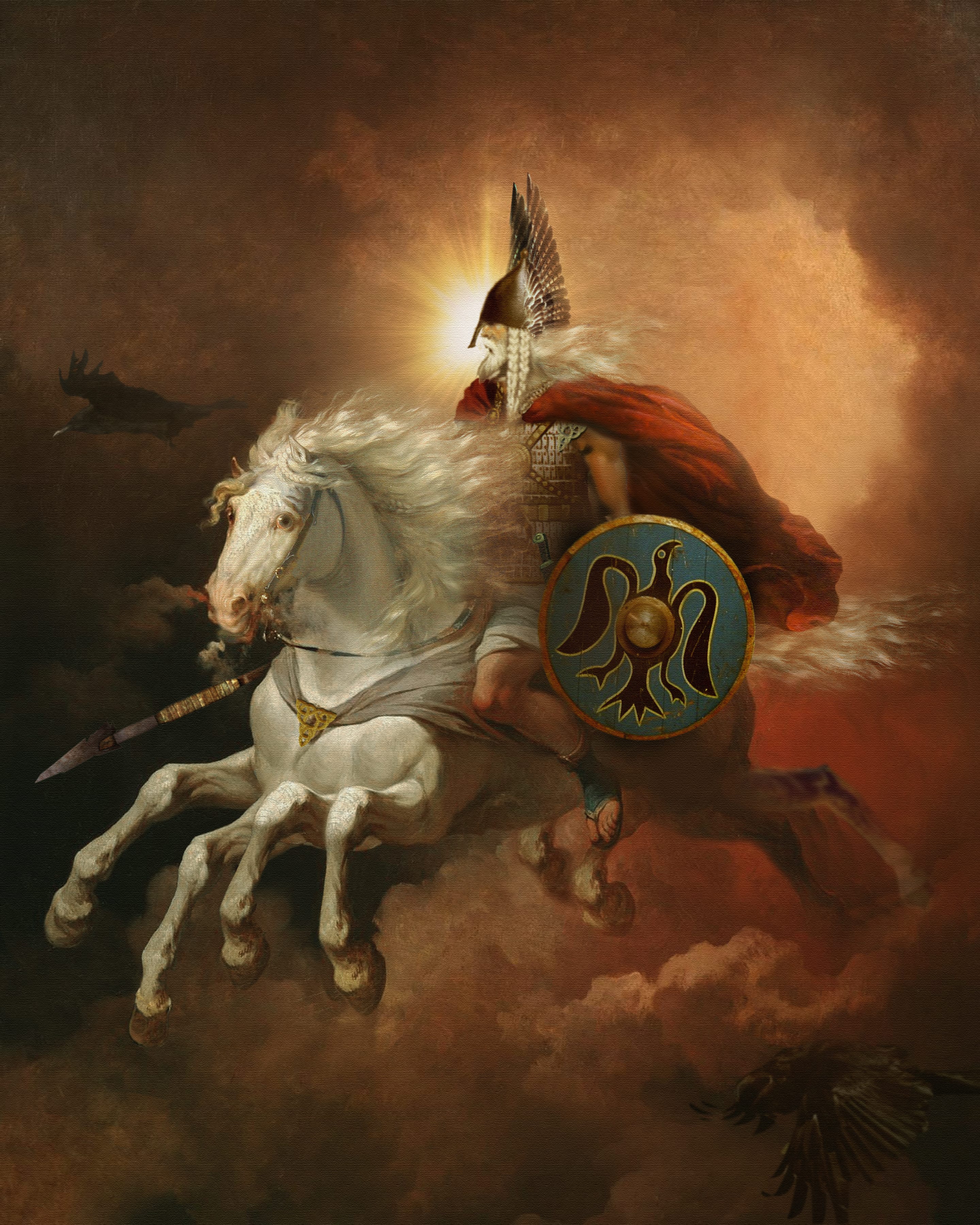
Norse mythology is a treasure trove of captivating tales, and among its most intriguing figures is Loki, the trickster god. While often associated with mischief and chaos, Loki’s saga also includes a rather extraordinary encounter with a horse – or rather, a series of transformations that led to a very unique offspring. This story, rooted in the heart of Asgard, showcases Loki’s cunning, his capacity for both trouble and surprising creation, and ultimately, the creation of one of the most magnificent beasts in all of Norse lore: the eight-legged horse, Sleipnir.
The Great Betrayal: A Builder’s Bargain
The tale begins with a seemingly simple task: rebuilding the defenses of Asgard, which had been damaged by giants. The gods, in their wisdom, sought the help of a master builder, a nameless giant who promised to complete the walls within a single season. His price? The goddess Freyja, along with the sun and the moon. This was a bargain the gods, desperate for protection, agreed to, though they had no intention of parting with Freyja.
Loki, ever the instigator, was instrumental in brokering this deal, perhaps seeing it as a challenge to his own wit. However, as the builder made swift progress, aided by his colossal stallion, Svaðilfari, the gods grew increasingly uneasy. They realized the giant would indeed complete his task, and Freyja would be lost to them. They turned to Loki, demanding he find a way to thwart the builder, threatening him with dire consequences if he failed.
Loki’s Cunning Transformation: A Mare’s Seduction
Faced with an impossible situation, Loki, in his characteristic fashion, devised a plan that was both audacious and deeply unconventional. He transformed himself into a beautiful, magnificent mare. With his newfound equine form, Loki galloped out into the night and sought out Svaðilfari, the builder’s powerful stallion.
The narrative here takes a decidedly strange turn. Loki, as a mare, actively lured Svaðilfari away from his master. The stallion, utterly smitten by the alluring mare, abandoned his work and followed Loki into the forest. This act of supreme distraction was precisely what the gods had hoped for. Without his horse’s strength and tireless effort, the builder could not possibly finish the walls of Asgard within the agreed-upon time.
The Builder’s Rage and Odin’s Judgment
When dawn broke and the builder realized he had been tricked, his fury knew no bounds. He revealed himself as a true giant, his true, terrifying form emerging. The gods, now exposed and vulnerable, called upon Thor, the mighty god of thunder, to deal with the enraged giant. A fierce battle ensued, and Thor, with his trusty hammer Mjolnir, ultimately defeated the builder, effectively ending the threat to Asgard.
However, Loki’s deception had an unforeseen consequence. While he was away in his mare form, consorting with Svaðilfari, he had become pregnant. Returning to Asgard in his true form, Loki was soon to give birth. This was, to say the least, a scandalous and unprecedented event.
The Birth of Sleipnir: A Marvel of Eight Legs
The offspring of Loki and Svaðilfari was no ordinary foal. What emerged was a magnificent, grey horse with eight legs, a creature of unparalleled speed and grace. This extraordinary steed was named Sleipnir, and he quickly became renowned throughout the Nine Worlds.
Odin, the Allfather, was so impressed by Sleipnir’s magnificence and prowess that he claimed the horse as his own. Sleipnir became Odin’s personal mount, carrying him across the realms, a symbol of speed, power, and the uncanny origins that even the chief of the gods could produce through the machinations of the trickster. Sleipnir is often depicted as the best of all horses, capable of traversing the heavens, the earth, and the underworld with equal ease.
“Then Loki bore Sleipnir, Odin’s horse, which has eight feet.” – Prose Edda, Gylfaginning
Loki’s Legacy: Mischief, Creation, and the Unconventional
The story of Loki and Sleipnir is a powerful illustration of the complex nature of Norse mythology. Loki, the embodiment of chaos and deceit, is also capable of incredible acts of creation, albeit through unconventional and often scandalous means. Sleipnir, the eight-legged horse, stands as a testament to this duality – a creature of immense beauty and power born from trickery and a god’s bizarre transformation.
This tale highlights several key aspects of Norse belief:
- The Power of Curses and Bargains: The initial deal with the builder, and the gods’ fear of its consequences, drives the plot. Bargains in Norse mythology are often binding and dangerous.
- Loki’s Multifaceted Nature: He is not merely a villain but a complex character whose actions, while disruptive, can also lead to unexpected outcomes, sometimes even beneficial ones for the gods (like Sleipnir becoming Odin’s mount).
- The Strange and Wonderful Pantheon: Norse gods are not perfect beings. They engage in schemes, make poor decisions, and face consequences, making their stories relatable despite their divine status.
- Supernatural Offspring: The birth of Sleipnir underscores the Norse fascination with powerful, often monstrous or uniquely gifted offspring arising from unusual unions.
The story of Loki’s horse is more than just a bizarre anecdote; it’s a deep dive into the character of the trickster god and the imaginative world of Norse mythology. It reminds us that even in tales of gods and monsters, there’s a human (or perhaps, divine) element of cleverness, desperation, and the unexpected consequences that can arise when a god decides to play mare. Sleipnir’s legend endures, galloping through the sagas as a symbol of Loki’s wild ingenuity and the enduring magic of the ancient Norse tales.
