
Welcome to the world of Nora’s Dog Training, a philosophy centered on building a stronger, more joyful bond between you and your canine companion. If you’ve ever felt frustrated with traditional, command-based training methods, you’re in the right place. This approach moves beyond simple obedience, focusing instead on mutual understanding, communication, and positive reinforcement to foster a relationship built on trust and respect. It’s about learning to speak your dog’s language and creating a partnership that lasts a lifetime. For a deeper look into the core of our brand, check out our story at nora’s dog training company.
What Makes Nora’s Dog Training Different?
At its heart, Nora’s Dog Training is a science-based and humane methodology that rejects the use of fear, intimidation, and punishment. Instead, it leverages the principles of positive reinforcement, where desired behaviors are marked and rewarded, making your dog an enthusiastic participant in their own learning journey. This isn’t about “tricks”; it’s about shaping behavior and building confidence in your dog.
The core difference lies in the mindset. We shift from asking “How do I stop my dog from doing this?” to “What do I want my dog to do instead, and how can I make that the most rewarding option for them?” This subtle but powerful change transforms training from a chore into a fun and engaging activity that both you and your dog will look forward to.
The Philosophy: Connection Over Correction
The central pillar of this method is the belief that a well-behaved dog is a happy dog who understands what is expected of them. Correction-based methods can create anxiety and fear, which often lead to more behavioral problems down the line. Nora’s Dog Training focuses on building a “bank” of positive experiences.
Key tenets include:
- Empathy First: We strive to understand the “why” behind a dog’s behavior. A dog that barks excessively isn’t being “bad”; they might be bored, anxious, or trying to communicate a need.
- Clear Communication: Using clear cues, body language, and consistent rewards, we eliminate confusion for the dog.
- Building Confidence: A confident dog is less likely to be reactive or fearful. Every successful training session is a deposit in your dog’s confidence bank.
- Patience and Consistency: Real, lasting change doesn’t happen overnight. This method champions patience and consistent application across all members of the household.
The Science of Positive Reinforcement
Nora’s Dog Training is firmly rooted in behavioral science, particularly the work of B.F. Skinner on operant conditioning. The concept is simple: a behavior followed by a pleasant consequence is more likely to be repeated. In dog training, this “pleasant consequence” can be anything your dog values: a tasty treat, a favorite toy, verbal praise, or a good scratch behind the ears.
This is not “bribery.” A bribe is offered to induce a behavior, whereas a reward is given after a behavior has been performed. By rewarding the choices we like, we are actively teaching our dogs what we want them to do. For instance, instead of scolding a dog for jumping on guests, we teach them that sitting politely earns them the attention and treats they crave. The jumping, which gets them nothing, naturally fades away.
“Positive reinforcement training doesn’t just change behavior; it changes the underlying emotional state of the animal. You’re creating a dog that is not only obedient but also genuinely happy and eager to please,” states Dr. Sarah Miller, a leading expert in canine behavior.
This approach is particularly effective because it makes learning an enjoyable game. Your dog learns to think and problem-solve, offering behaviors in the hope of earning a reward. This cognitive engagement is crucial for a dog’s mental health and well-being.
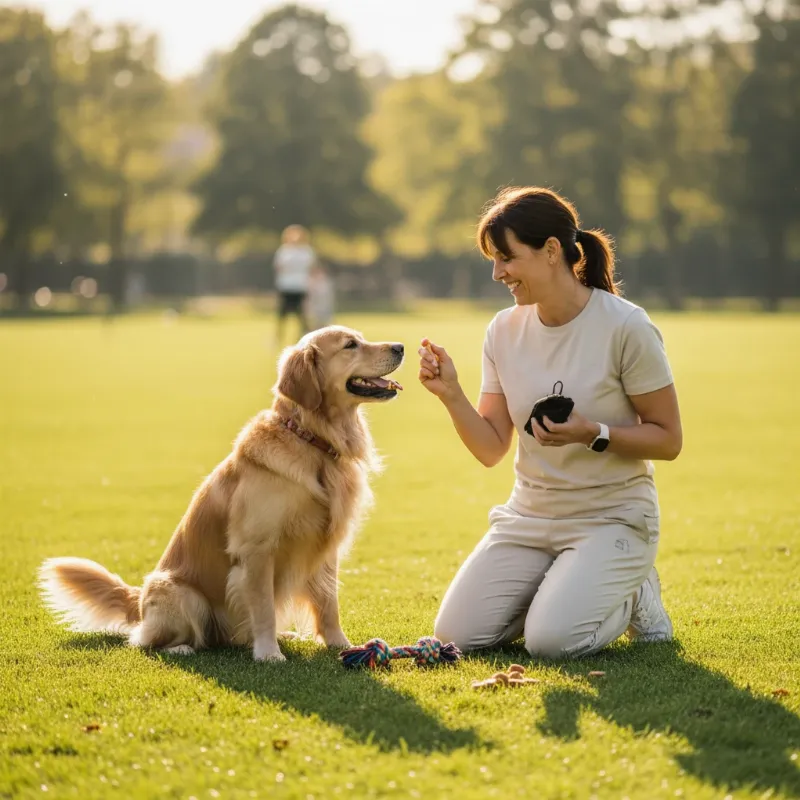 A smiling woman giving a high-value treat to a golden retriever who is sitting calmly on the grass, showcasing Nora's Dog Training method.
Common Behavior Problems Solved by Nora’s Method
Many of the most common and frustrating dog behaviors stem from fear, anxiety, or a simple lack of communication. Nora’s Dog Training provides the tools to address the root cause, not just the symptoms.
Leash Pulling
Instead of using choke chains or prong collars, which cause pain and can damage the dog’s neck, we teach “loose-leash walking.” This involves rewarding the dog for being in the correct position (by your side) and making it more appealing to stay there than to pull ahead. We use games and rewards to teach the dog that walking calmly with their human is the best thing ever.
Excessive Barking
First, we identify the trigger. Is it boredom? Fear? Alerting? Once we know the “why,” we can implement a plan. For a bored dog, we increase mental and physical enrichment. For a fearful dog, we use desensitization and counter-conditioning to change their association with the trigger from scary to positive. We also teach a “quiet” cue as an alternative behavior.
Jumping on People
Dogs jump to greet and get attention. We solve this by teaching an incompatible behavior, like “sit.” We manage the environment so the dog doesn’t have a chance to practice the unwanted jumping and heavily reward the polite sit. Soon, the dog learns that sitting is a much more effective way to get that coveted affection from visitors. This process has similarities to the patience required when you how to train your rescue dog, as both involve building new, positive associations.
Recall Issues
A reliable recall is crucial for safety. The key to a lightning-fast recall is making your return the absolute best thing that can happen. This means never punishing your dog for coming back (no matter how long it took) and always rewarding them generously. We turn recall into the most exciting game, ensuring your dog will choose to come back to you over any distraction. Mastering this is foundational, much like learning how to train recall in dogs is a building block for more advanced skills.
Getting Started with Nora’s Dog Training
Beginning your journey is easier than you think. It starts with the right tools and a positive mindset.
Essential Tools
- High-Value Treats: These are extra-special treats your dog loves, reserved only for training. Think small pieces of chicken, cheese, or freeze-dried liver.
- A Clicker (Optional): A clicker is a tool used to “mark” the precise moment your dog does the right thing. The “click” is followed by a treat. It provides crystal-clear communication.
- A Standard Leash and Harness: A comfortable harness that clips on the front can help manage pulling without causing discomfort.
- Patience: This is your most important tool. Remember, you are teaching a different species a new skill.
Your First Training Session
- Choose a Quiet Space: Start in a low-distraction environment, like your living room.
- Keep it Short and Fun: Sessions should be no longer than 5-10 minutes, especially for puppies or beginner dogs. Always end on a high note!
- Start with Something Simple: Teach a basic “touch” (having your dog touch their nose to your hand) or “sit.”
- Mark and Reward: The moment your dog performs the action, mark it with a “Yes!” or a click, and immediately give a treat.
- Be Consistent: Practice for a few minutes every day. Consistency is more effective than one long weekly session.
Once you and your dog have mastered the basics, you can explore more exciting activities. For those interested in a fun and engaging dog sport, consider looking into beginning agility training for dogs, which builds on the foundational skills of focus and teamwork you’ll develop.
 A well-behaved black Labrador sitting patiently next to its owner on a park bench, demonstrating the results of Nora's Dog Training.
Frequently Asked Questions (FAQ)
Is positive reinforcement training suitable for all dog breeds?
Yes, absolutely. Nora’s Dog Training is based on the universal principles of how animals learn. It is effective for all breeds, ages, and temperaments, from a tiny Chihuahua to a giant Great Dane. The key is to find what motivates your individual dog.
What if my dog isn’t motivated by food?
While most dogs are food-motivated, it’s not the only option. A reward is anything your dog values. For some dogs, the best reward might be a game of tug, a squeaky toy, or enthusiastic praise. The trick is to find what your specific dog finds irresistible and use that in your training.
Can I use this method to train an older dog with set behaviors?
Definitely. The saying “you can’t teach an old dog new tricks” is a myth. It might take a bit more time and patience to undo established habits, but older dogs can absolutely learn new behaviors and thrive with positive reinforcement training. It’s a wonderful way to build a new bond with an adult rescue dog.
How long does it take to see results with Nora’s Dog Training?
You will likely see small successes and increased engagement from your very first session. However, changing long-standing behavioral issues requires consistency and time. Some behaviors may improve in a matter of weeks, while more complex issues like reactivity or separation anxiety could take several months of dedicated work.
Is it ever okay to say “no” to my dog?
Of course. Saying “no” isn’t inherently bad, but it doesn’t teach your dog what you want them to do instead. We prefer to use a “negative marker” like “uh-oh” or “too bad” in a neutral tone to signal that a reward isn’t coming, and then immediately guide the dog to the correct behavior and reward that. The focus is always on redirection rather than punishment.
A Lifelong Partnership Awaits
Choosing a training philosophy is one of the most important decisions you’ll make as a dog owner. By embracing Nora’s Dog Training, you are committing to a path of kindness, understanding, and communication. You’re not just training a dog; you’re nurturing a relationship. The result is more than just an obedient pet; it’s a confident, happy, and devoted family member who understands their place in your world. The journey you’ll take together will strengthen your bond in ways you never imagined, proving that true partnership is built on trust, not dominance. Begin your journey with Nora’s dog training today.
