
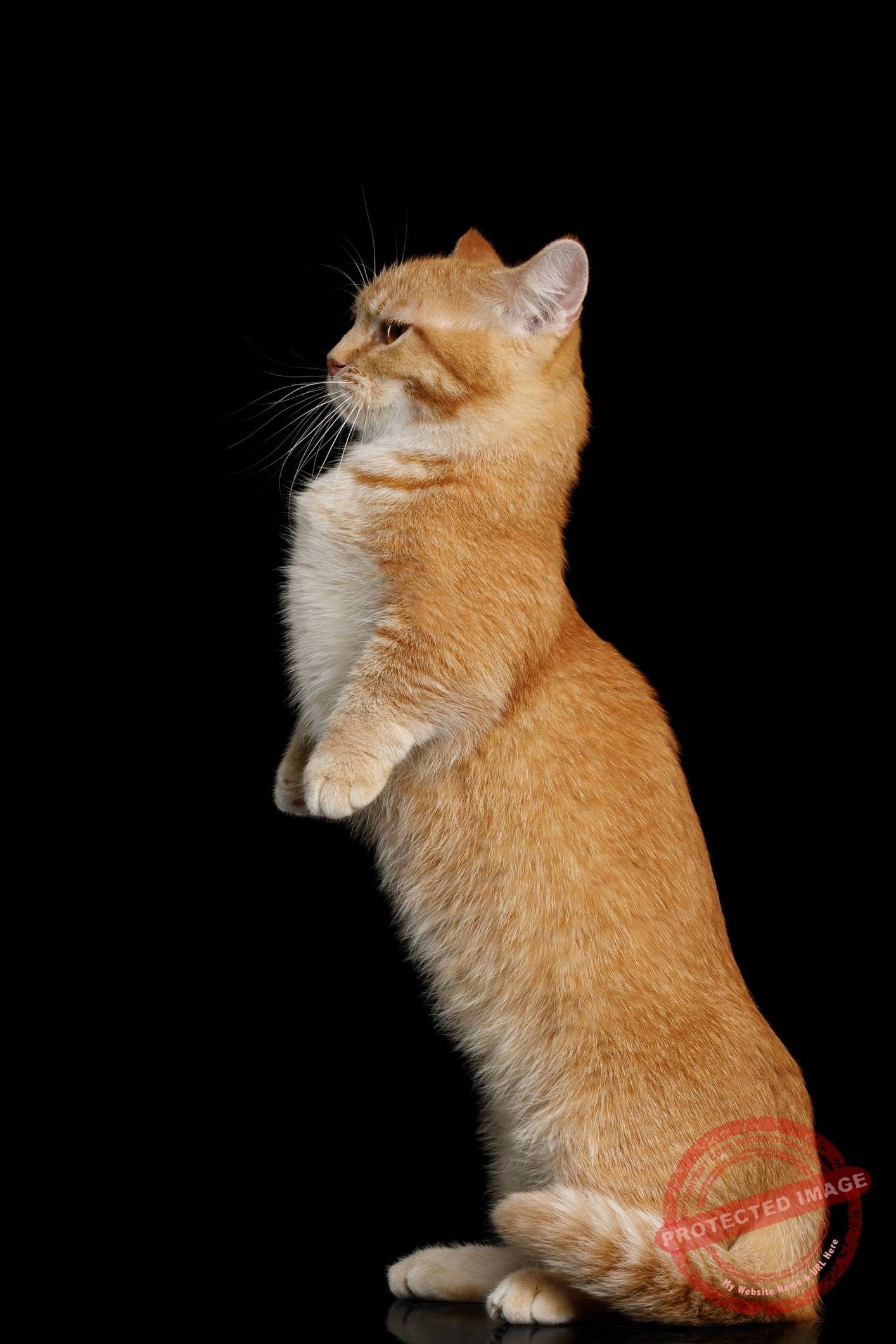
This article delves into the genetic underpinnings of the characteristic dwarfism observed in Munchkin cats, presenting findings from comprehensive genomic analysis. The study focuses on identifying genetic variants associated with the breed’s unique phenotype, drawing from whole genome sequencing and haplotype analysis.
Genomic DNA Isolation and Sample Collection
The research involved the isolation of genomic DNA from various feline biological samples, including EDTA-blood, hair roots, and tissue specimens. A total of 42 standard Munchkin cats and 15 non-standard Munchkin cats, representing diverse subtypes such as Genetta, Napoleon, Dwelf, Bambino, Lambkin, longhaired, and shorthaired varieties, were sampled. For control purposes, DNA from 203 non-Munchkin cats across numerous breeds, including British Shorthair, Bengal, Ragdoll, and Maine Coon, was also utilized.
Clinical Examination of a Segregating Munchkin Cat Family
A detailed clinical investigation was conducted on members of a Munchkin cat family of the Genetta subtype. This included a 4-year-old standard Munchkin tomcat and three of his offspring (two standard and one non-standard Munchkin kittens). The adult tomcat underwent a CT scan for comprehensive anatomical assessment. Furthermore, specific bone measurements—absolute total length, diaphyseal length, and diaphyseal diameter of the humerus, radius, ulna, femur, tibia, metacarpals, and metatarsals—were meticulously recorded following established methodologies. The relative length of individual bones was calculated by comparing the length of each bone to the overall length from the proximal humerus to the distal third metacarpal.
Haplotype and Whole Genome Sequencing Analysis
Haplotype analysis was performed using Kompetitive Allele Specific PCR (KASP) assays to refine a critical genome-wide associated region on Felis catus chromosome B1 (FCA B1). Fourteen single nucleotide polymorphisms (SNPs) were selected for genotyping in a cohort of standard Munchkin cats, a non-standard Munchkin cat, and unrelated control cats.
For Whole Genome Sequencing (WGS), DNA samples from a Munchkin cat family, including standard Munchkin parents and two of their offspring (one standard and one non-standard Munchkin), were processed. DNA libraries were prepared using the NEBNext Ultra II DNA Library Prep Kit and sequenced on an Illumina NextSeq500 platform.
Data Processing and Variant Calling
Raw sequencing reads were subjected to quality control using fastqc and trimming with PRINSEQ. The processed reads were then mapped to the Felis catus 8.0 reference genome using BWA. Post-mapping procedures, including sorting, duplicate marking, and indexing, were carried out using Picard tools and SAMtools. Variant calling was performed using the Genome Analysis Toolkit (GATK), incorporating Base Quality Score Recalibration, Haplotype Caller, and Variant Recalibrator. Variant data was cross-referenced with WGS data from 16 other feline individuals from various breeds.
Filtering and Candidate Gene Identification
Variants were filtered based on read depth and quality scores. Specifically, variants that were heterozygous in the standard Munchkin cats, homozygous wild type in the non-standard Munchkin cat and all controls, and consistent with autosomal monogenic dominant inheritance were selected for further investigation. Only variants with high or moderate predicted effects, as determined by SNPEff, were considered. A curated list of candidate genes associated with chondrodysplasia from previous research was used to identify potential causative genes within the filtered variant list.
Structural Variant Detection and Mutation Analysis
Structural variant detection was performed using LUMPY software, integrating multiple structural variation signals across all sequenced Munchkin cats and control samples. Structural variants located on FCA B1, heterozygous in standard Munchkin cats, and homozygous wild type in the non-standard Munchkin cat and controls were specifically filtered.
To assess the transcriptional activity of a 108 bp insertion, RNA was isolated from hair roots of standard Munchkin and domestic shorthair cats. Complementary DNA (cDNA) was synthesized, and primer pairs were designed using Primer3. These primers were intended to amplify specific regions to detect the presence of the mutant allele, differentiate between transcribed and non-transcribed insertions, and confirm wild-type alleles.
RT-PCR and Sequencing
Reverse transcription polymerase chain reaction (RT-PCR) was conducted to analyze RNA expression. Primer pairs were designed to generate PCR products of expected sizes for mutant and wild-type alleles, as well as specifically for transcribed mutant alleles. Sanger sequencing was performed on selected samples to validate the presence and nature of the identified variants and insertions. Open reading frames were predicted using ORF Finder, and protein domains were analyzed using InterProScan. Comparative species alignments were generated using Clustal Omega, and primer specificity was confirmed using NCBI nucleotide blast. The sequence of the 108 bp insertion was compared against the Felis catus 8.0 and Felis catus 9.0 reference genomes to assess its similarity and alignment scores.
Validation of Structural Variants
The identified structural variant, comprising a 3303 bp deletion and a 108 bp insertion within the critical region on FCA B1, was validated using Sanger sequencing and a duplex PCR approach. This validation was carried out on a cohort of 260 individuals, including standard Munchkin, non-standard Munchkin, and control cats. Forward and reverse primers were designed to flank the deletion and insertion sites. Duplex PCR reactions were optimized for efficient amplification, and the products were visualized on agarose gels. Breakpoint validation using WGS data was also performed in three standard Munchkin cats. Evaluation of Sanger sequences was conducted using Sequencher software.
References
- Jones JM, Jolly R. Dwarfism in Hereford cattle: a genetic morphological and biochemical study. N Z Vet J. 1982;30(12):185–9.
- Struck A-K, Dierks C, Braun M, Hellige M, Wagner A, Oelmaier B, et al. A recessive lethal chondrodysplasia in a miniature zebu family results from an insertion affecting the chondroitin sulfat domain of aggrecan. BMC Genet. 2018;19(1):91.
