
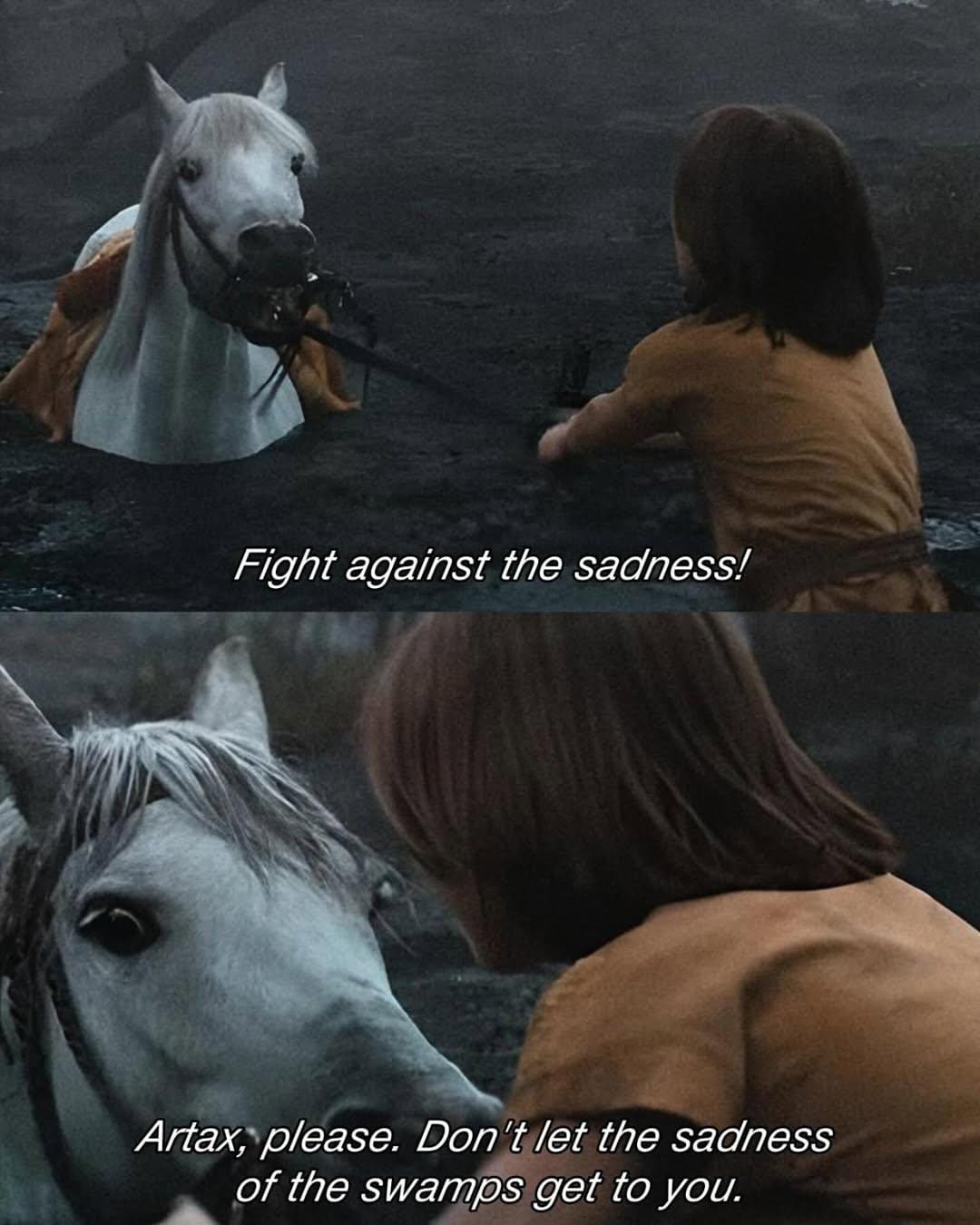
For an entire generation, a single cinematic moment is seared into their collective memory, a scene so emotionally devastating that it has become a cultural touchstone for childhood trauma. We’re talking, of course, about the Neverending Story Horse Sinking scene. In the beloved 1984 fantasy film The NeverEnding Story, the death of the hero’s loyal horse, Artax, in the Swamp of Sadness is a masterclass in heartbreak. It wasn’t a monster or a villain that claimed him, but something far more insidious: despair. This moment transcended the screen, teaching young viewers a harsh lesson about loss, grief, and the crushing weight of hopelessness in a way few films dared to.
But why does this scene continue to resonate so deeply decades later? It’s more than just the death of an animal companion. It is a profound and terrifyingly real metaphor for the internal battles we all face. It’s about the struggle to keep moving forward when a hidden, formless sadness threatens to pull you under. This article delves into the layers of meaning behind this iconic scene, exploring the symbolism, the behind-the-scenes reality, and the lasting psychological impact of watching Atreyu lose his best friend to the murky depths of despair.
The Unbreakable Bond: Atreyu and Artax
Before we can understand the depth of the loss, we must first appreciate the bond that was broken. The hero of the story-within-a-story is Atreyu, a young warrior from the Grassy Plains tasked with an impossible quest: to find a cure for the Childlike Empress and save the land of Fantasia from a creeping, destructive force known as “The Nothing.”
Atreyu is not alone on this journey. By his side is his horse, Artax, more than a mere mount, but his closest companion and a silent confidant. Their relationship is established wordlessly, through shared glances and the simple fact of their constant togetherness. Artax is Atreyu’s link to home, his symbol of strength, and his unwavering partner against the encroaching emptiness. This deep connection is the emotional bedrock that makes the neverending story horse sinking so utterly gut-wrenching. The loss isn’t just a plot device; it’s the tearing away of Atreyu’s last piece of comfort and security in a world dissolving into nothingness.
A Quagmire of Feelings: The Swamp of Sadness Explained
Fantasia is a world built on dreams and imagination, and its landscapes are often physical manifestations of abstract concepts. The Swamp of Sadness is perhaps the most powerful example of this. It is not a normal swamp with quicksand or dangerous creatures. Its peril is entirely psychological. The swamp’s waters don’t drown you in the traditional sense; they infect you with an inescapable sorrow.
As the ancient turtle Morla explains, the Swamp of Sadness makes you give up. “The swamp is a place of deep sadness. The sadness will overcome you, and you will simply let yourself sink.” Anyone who allows these feelings of hopelessness and despair to take root in their heart will lose the will to live, succumbing to the murky depths.
This is a terrifyingly sophisticated concept for a children’s movie. It teaches that the most dangerous monsters aren’t always external threats with claws and teeth. Sometimes, the greatest danger lies within our own minds. Artax doesn’t fight an enemy; he succumbs to an emotion. The swamp is a metaphor for depression, a force that can paralyze even the strongest among us, making every step forward feel impossible until, eventually, we stop trying altogether. The story of what happens when one gives in is a tragic one, deeply connected to how the horse in neverending story died.
Why Did Artax Sink When Atreyu Didn’t?
This is the question that haunts viewers. Why could Atreyu push through while his strong, beautiful horse could not? The answer lies in the nature of their respective burdens. Atreyu is armed with the Auryn, a powerful amulet that grants him guidance and protection. While it doesn’t make him immune to the sadness, it symbolizes his mission and the hope of all of Fantasia that rests on his shoulders. This sense of purpose, this desperate hope, is what keeps him moving. He has a reason to fight the despair.
Artax, however, has no such protection. He is just a horse—a loyal, brave creature, but a creature nonetheless. He isn’t driven by a quest or protected by ancient magic. He is simply a companion in a place that weaponizes sadness. He feels the full, unfiltered weight of the swamp’s despair and, lacking a higher purpose to cling to, he lets it consume him.
The scene is agonizingly slow. Atreyu, realizing his friend is sinking, pleads, begs, and screams at him to fight. “Artax, you’re sinking! Come on, turn around! You have to try! Artax! Please!” His desperate cries are the cries of anyone who has ever watched a loved one succumb to depression, feeling helpless to pull them out. Atreyu’s survival and Artax’s death create a powerful, painful dichotomy: hope and purpose can be a shield against despair, but not everyone has that shield. Sometimes, sadness wins.
Behind the Scenes: Was the Real Horse in Danger?
The realism of the neverending story horse sinking scene led many viewers to worry about the well-being of the animal actor. The fear and panic appeared so genuine that rumors swirled for years about the horse’s fate. Thankfully, the reality of the filmmaking process is far less tragic.
The horse, a beautiful white steed named Clyde, was never in any danger. The scene was filmed on a specially constructed set. Clyde was placed on a hydraulic platform that was slowly lowered into the muddy-looking water, which was just deep enough for the effect. The trainers were just off-camera at all times, ensuring the horse’s safety and comfort. According to reports from the set, the most difficult part was getting the horse to stand still on the platform.
“Filming such a scene requires immense trust between the animal and the handlers,” explains Dr. Sarah Miller, a fictional expert in animal behavior in film. “The illusion of distress is created through careful training, editing, and the actor’s performance. The animal’s safety is always the paramount concern on a professional set.” Knowing that the horse was safe provides some relief, but it doesn’t diminish the raw emotional power of the scene as it appears on screen. The visual of the neverending story horse head disappearing beneath the dark water remains a haunting image.
The Cultural Scab: Why We Never Got Over Artax
Decades after its release, the death of Artax remains a pivotal and frequently discussed moment in film history. It’s often ranked among the most traumatic scenes from a children’s movie, alongside the death of Mufasa in The Lion King. But what makes it unique is its abstract nature. Artax wasn’t killed by a stampede or a villain; he was killed by a feeling.
This introduced a complex and mature theme to a young audience: the idea that sadness itself can be fatal. For many children, this was their first on-screen encounter with the concepts of depression and hopelessness. It was raw, unfiltered, and lacked a magical, last-minute rescue. The finality of it was shocking. There was no bringing Artax back. Atreyu had to grieve and, more importantly, he had to keep going. The journey didn’t stop because of his heartbreak.
This scene served as an accidental but powerful lesson in resilience. It showed that devastating loss is a part of life, even for a hero. The true test of character is not whether you can avoid sadness, but whether you can push through it. Atreyu honors Artax’s memory by continuing the quest, carrying the weight of his grief with him. This reflects the difficult truth that life moves on, even when our hearts are broken. The complex emotions surrounding this event are similar to those explored when considering the fate of the horse on neverending story.
Frequently Asked Questions (FAQ)
What was the horse’s name in The NeverEnding Story?
The horse’s name was Artax. He was the loyal companion and best friend of the main protagonist, Atreyu.
Did the horse Artax really die during filming?
No, absolutely not. The horse actor, named Clyde, was perfectly safe. The neverending story horse sinking scene was filmed using a hydraulic lift that was slowly lowered into a pool of water and mud on a controlled set. Animal safety professionals were present at all times.
Why couldn’t Atreyu save Artax?
Atreyu couldn’t save Artax because the danger in the Swamp of Sadness was not physical but psychological. The swamp’s power causes its victims to be overcome by hopelessness and despair, making them give up. While Atreyu was protected by his mission and the magical Auryn, Artax had no such defense and succumbed to the overwhelming sadness.
What does the Swamp of Sadness represent?
The Swamp of Sadness is a powerful metaphor for depression, grief, and hopelessness. It represents the internal struggle against overwhelming sorrow that can paralyze a person, making them lose the will to move forward or even to live.
Is The NeverEnding Story too scary for kids?
This is a subjective question that parents must decide for themselves. The film contains mature themes of loss, despair, and the end of the world. While it is a fantasy adventure, scenes like the death of Artax and the menacing Gmork can be very intense and emotionally challenging for younger or more sensitive children.
A Lesson That Never Ends
The neverending story horse sinking scene is far more than just a sad movie moment. It is a defining piece of storytelling that dared to confront its young audience with the complexities of emotional pain. It taught that bravery isn’t the absence of fear or sadness, but the act of persevering in spite of it. Artax’s death was tragic, but it was not meaningless. It gave Atreyu’s quest a new depth and a heavier weight, transforming him from a boy on an adventure into a true hero marked by loss.
For those who saw it as children, the memory is a scar that reminds us of a time when a movie showed us that the world contains real sorrow, and that sometimes, even in a land called Fantasia, there are no easy answers or magical fixes. And that, ultimately, is a lesson that truly never ends.
