
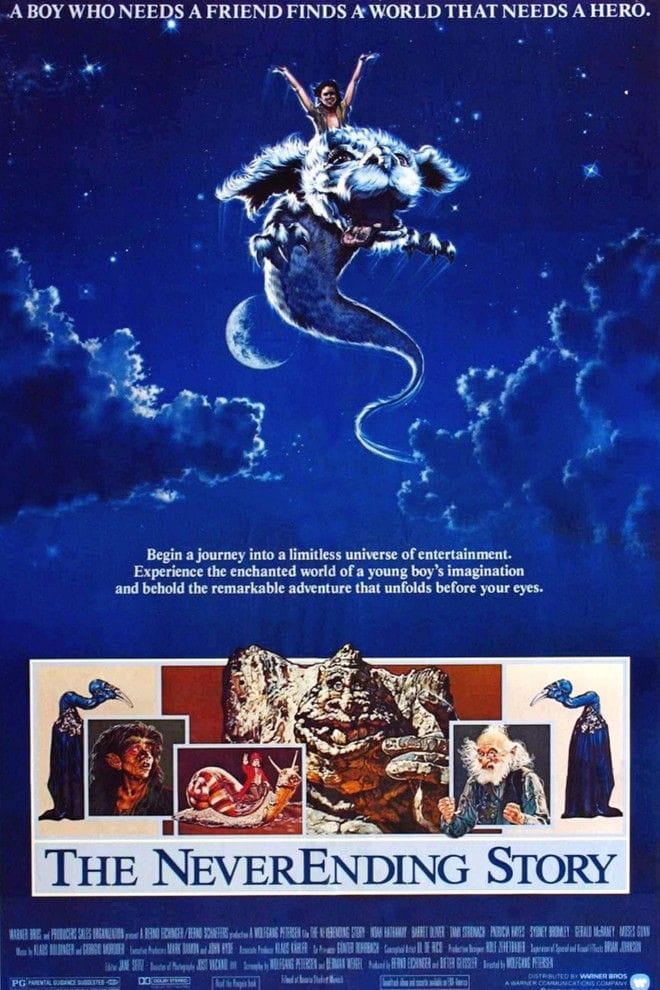
For many who grew up in the ‘80s and ‘90s, a single scene from a beloved fantasy film remains indelibly etched in their minds. It wasn’t the heroic flight on a luckdragon or the appearance of the Childlike Empress; it was the heartbreaking moment of the Neverending Story horse dying. The loss of Artax in the Swamp of Sadness was more than just a plot point; it was a profound, and for many, a traumatic introduction to the concepts of grief, depression, and hopelessness, masterfully woven into a children’s adventure.
The powerful bond between the young warrior Atreyu and his loyal horse, Artax, is established early on, making their shared journey feel personal to the audience. This connection is precisely what makes the subsequent events so devastating. Understanding the layers behind this iconic scene reveals why it continues to resonate so deeply decades later. Much like the complex emotions explored in other powerful narratives, such as the surprising depth found in the story of the horse dying in neverending story, this moment teaches us about resilience in the face of absolute despair.
A Journey into the Swamp of Sadness
Atreyu’s quest to save the magical land of Fantasia from a creeping void known as “The Nothing” leads him and Artax to the Swamp of Sadness. As the narrator explains, this is no ordinary marsh. It has a grim, mystical power: “Whoever let the sadness overtake him would sink into the swamp.” While Atreyu is shielded by the magical Auryn amulet, his faithful companion Artax has no such protection.
What begins as a slow trek through murky water quickly turns to horror. Atreyu notices Artax has stopped, beginning to sink into the mud. At first, Atreyu’s reaction is one of encouragement, not panic. But as the horse sinks deeper, his pleas become more desperate. He screams, “You have to try. You have to care. You are my friend. I love you.” But Artax remains still, his eyes filled with a quiet despair as the swamp slowly consumes him, leaving Atreyu utterly alone with the empty rein in his hand.
Why the Scene is So Emotionally Devastating
The death of Artax isn’t violent or glorious. He isn’t struck down by a fearsome monster. Instead, he simply gives up. The Swamp of Sadness is a powerful metaphor for depression, a force that doesn’t attack from the outside but erodes the will to live from within. Artax doesn’t die from a physical wound, but from an emotional one. He is overcome by a sadness so profound that he loses the strength to fight for his own survival.
This depiction of an internal struggle is what makes the scene so uniquely painful and effective.
For a young audience, it’s a raw and unfiltered lesson that the most dangerous monsters aren’t always the ones with claws and fangs; sometimes, they are the feelings inside us.
Atreyu’s powerlessness is central to the trauma. He can’t fight the swamp. He can’t physically pull his best friend to safety. All he can do is beg and plead, watching as the being he trusts most in the world succumbs to an invisible force. This sense of helplessness resonates with anyone who has ever watched a loved one struggle with their own battles, feeling unable to intervene. The finality of the dead horse neverending story moment is a stark contrast to the otherwise fantastical elements of the film.
The Lasting Impact on an Entire Generation
Most children’s stories, even those with dark elements, provide a safety net. They teach us that with enough willpower, friendship, and hope, we can overcome any obstacle. The death of Artax brazenly defies this trope. It presents a situation where love and encouragement are not enough. It’s a harsh dose of reality delivered in a world of fantasy, teaching a difficult lesson about the nature of loss and despair.
This moment serves as a pivotal point in Atreyu’s journey, stripping him of his innocence and his closest companion. It raises the stakes of his quest, forcing him to confront the true nature of The Nothing, which is not just an external threat but the embodiment of hopelessness itself. For the viewers, the scene acts as a cultural touchstone, a shared memory of childhood cinematic trauma that sparked countless playground discussions and, later, online analyses. It remains a benchmark for emotional depth in family filmmaking. The focus on the horse in the neverending story makes its fate all the more impactful.
Behind the Scenes: Was the Horse Actually Harmed?
The scene’s realism led to a persistent urban legend that the horse playing Artax was actually harmed or even died during filming. This rumor circulated for decades, adding a layer of real-world horror to the on-screen tragedy. However, director Wolfgang Petersen and others involved in the production have repeatedly debunked this myth.
In reality, the role of Artax was played by two highly trained, identical white horses. A special hydraulic platform was built in the swamp set, which allowed the crew to lower the horse into the water and mud safely and gradually. It was a complex and challenging sequence to film, requiring months of training to get the horse to remain calm in such an unnatural situation, but no animals were harmed.
Frequently Asked Questions (FAQ)
What was the horse’s name in The Neverending Story?
The horse’s name is Artax. He is the loyal and brave companion of Atreyu, the young hero tasked with saving Fantasia.
Does Artax come back to life?
Yes. At the end of the film, after Bastian uses his imagination to wish Fantasia back into existence, everything destroyed by The Nothing is restored. We see Atreyu joyfully reunited with a very much alive Artax, riding across the newly restored plains.
What does Artax’s death symbolize?
Artax’s death in the Swamp of Sadness is a powerful metaphor for succumbing to depression, grief, and hopelessness. It illustrates how these feelings can overwhelm one’s will to live, even when loved ones are trying desperately to help.
Why is the Artax scene so famous?
The scene is famous for its raw emotional impact, especially within a children’s film. It directly confronts themes of loss and despair in a way that is both heartbreaking and unforgettable, leaving a lasting impression on viewers.
Was the horse really sinking in mud?
No, the horse was not in any real danger. The filmmakers used a hidden hydraulic lift to safely and slowly lower the horse into the water and specially prepared, non-hazardous mud. The scene was carefully choreographed with professional animal trainers to ensure the horse’s well-being.
The Enduring Legacy of a Heartbreaking Farewell
The Neverending Story horse dying is more than just a sad movie moment; it is a masterful piece of storytelling that imparts a crucial lesson about the human (and animal) spirit. While Artax does succumb to the swamp, his eventual return serves as a reminder that even after the deepest despair, hope and rebirth are possible. This is why, for all its pain, the scene is an essential part of the film’s enduring power. It teaches us that acknowledging sadness is necessary, but allowing it to consume us is a choice we must fight against. It’s a profound message wrapped in a fantasy adventure, and it’s why the story of Artax, much like the tales found in my horse stories online, will truly never end in our collective memory.
