
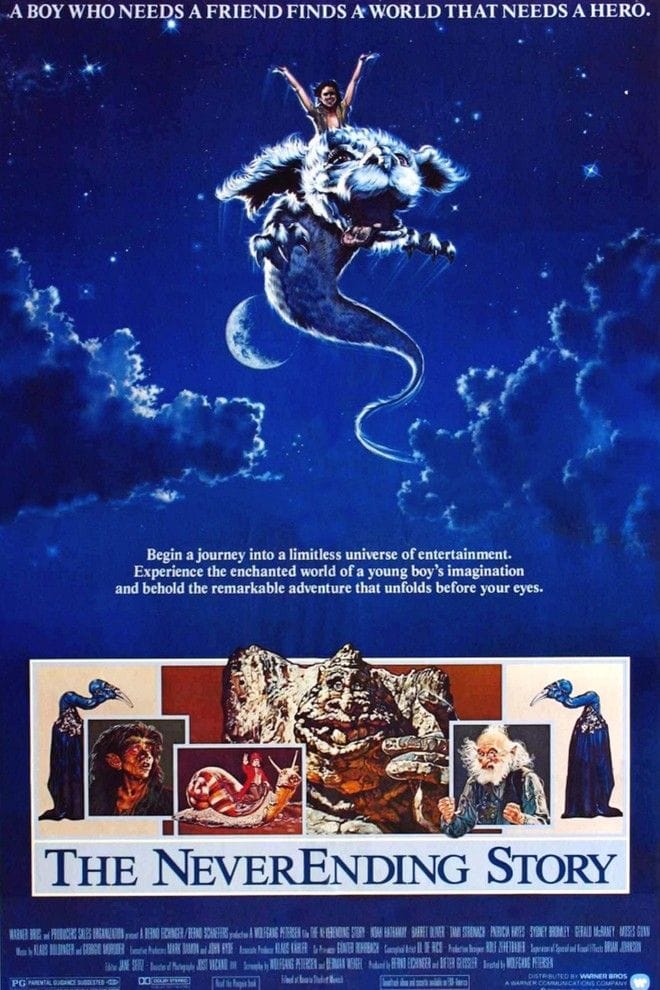
For countless people who grew up in the 80s, a single cinematic moment is seared into their collective memory. It involves a brave young warrior, his noble steed, and a swamp that didn’t just swallow its victims, but drowned them in pure despair. The scene from The Neverending Story featuring Atreyu’s horse is more than just a sad movie moment; it was a profound, often first, introduction to the concepts of grief, hopelessness, and the crushing weight of depression. Even decades later, the question of the Neverending Story Atreyu Horse evokes a powerful emotional response, a testament to its enduring impact on storytelling and its audience.
This moment was a defining part of the hero’s journey, forcing both Atreyu and the viewer to confront a devastating loss that felt all too real. It established the stakes of his quest, demonstrating that the “Nothing,” the film’s antagonist, wasn’t a monster to be fought with swords, but a force that consumed hope itself. To understand the story is to understand the tragedy of this magnificent creature and the boy who loved him. A deep dive into the story reveals more than just a sad scene, it uncovers layers of meaning about resilience, a theme just as relevant as the mystery surrounding the name of atreyu’s horse in neverending story.
Who Was Atreyu’s Horse in The Neverending Story?
Let’s get the heart-wrenching formality out of the way. The name of Atreyu’s beloved white horse was Artax.
Artax was more than just a means of transportation for the young hero from the Grassy Plains. He was Atreyu’s companion, his confidant, and his closest friend. Their bond was evident from the moment they appeared on screen, a silent understanding passing between boy and beast. As Atreyu was tasked by the Childlike Empress to find a cure for her mysterious illness and stop the Nothing from consuming their world of Fantasia, Artax was his steadfast partner on this lonely and perilous quest. He was a symbol of innocence, loyalty, and the pure spirit of adventure that the quest began with.
The Heartbreaking Scene: Artax in the Swamp of Sadness
The turning point of the narrative, and the source of so much childhood trauma, occurs when Atreyu and Artax must cross the Swamp of Sadness. This is no ordinary marsh. The swamp is a physical manifestation of despair, and anyone who allows the sadness to overcome them will be pulled down into the murky depths, unable to move.
Atreyu, protected by the magical auryn necklace, is immune to the swamp’s emotional pull. Artax, however, is not. As they wade deeper, the weight of all the world’s sorrows begins to settle on the noble horse. He slows, his head bows, and he begins to sink. What follows is a desperate, agonizing sequence where Atreyu pleads, screams, and begs his friend to fight back.
“You have to fight the sadness, Artax! Artax, please! You’re my friend! I love you!”
Atreyu’s cries are raw and filled with the panic of a child watching his best friend give up. But Artax cannot fight it. The sadness is too strong. He sinks slowly beneath the mud, leaving Atreyu utterly alone in the swamp, weeping. The scene is brutal in its quietness and emotional honesty. There is no monster, no villain—just the silent, inexorable pull of despair. For many viewers, this was an unforgettable lesson in the finality of loss and the pain of being powerless to stop it. This pivotal moment is often what people remember when they search for the atreyu neverending story horse name.
Why Couldn’t Atreyu Save Artax?
This is the question that haunts viewers. The tragic answer lies in the nature of the swamp itself. The Swamp of Sadness is a metaphorical battleground. You cannot physically pull someone from despair; they must find the will to move forward themselves. Atreyu’s love and encouragement were not enough to overcome the magical, all-consuming sorrow that gripped Artax.
The scene serves as a powerful allegory for depression. It illustrates how someone can be surrounded by love and support but still be unable to escape the crushing weight of their internal struggle. Atreyu’s inability to save him underscores the cruel reality that some battles must be fought from within, and sometimes, those battles are lost.
The Deeper Meaning Behind Artax’s Death
The loss of the Neverending Story Atreyu horse is far more than a simple plot device to make the audience sad. It is central to the film’s entire thematic structure. It represents the first major sacrifice on Atreyu’s quest and symbolizes the loss of innocence required to confront the harsh realities of the world.
A Symbol of the Fight Against Despair
Artax’s death is the audience’s first true understanding of what the “Nothing” really is. It isn’t an army or a dragon; it’s a force that erodes hope and belief. The Nothing gains power when people give in to despair. Artax is its first significant victim in the narrative.
Dr. Eleanor Vance, a fictional child psychologist and media analyst, explains it this way: “Artax’s death teaches a difficult but vital lesson. It shows that the forces of nihilism don’t always arrive with a bang. Often, they creep in as a slow, sinking feeling of hopelessness. Atreyu’s journey forward from that point is a story of resilience. He has to learn to continue the quest even after his heart has been broken, carrying the weight of that sadness without letting it consume him as it did his friend.”
The loss of his companion forces Atreyu to find a new, more profound strength within himself. He can no longer rely on the comfort and companionship of his friend; he must face the darkness alone, making his eventual triumph all the more meaningful. This deepens the audience’s connection to the neverending story atreyu’s horse and the boy who must carry on without him.
Does Artax Come Back?
For those who carry the trauma of Artax’s death, there is a glimmer of hope. In the film’s conclusion, the protagonist, Bastian, uses his imagination and the last grain of sand from Fantasia to wish the world back into existence. As Fantasia is reborn, many of the characters Atreyu encountered are seen alive and well again, including Artax.
At the very end, Atreyu is seen joyfully reunited with a clean, vibrant Artax, galloping across the newly restored Grassy Plains. While this doesn’t erase the pain of his initial death, it reinforces the story’s ultimate message: that even after the deepest despair and loss, hope and imagination can restore what was lost. The world can be rebuilt, and friendships can be rekindled. The question of what was atreyu’s horse’s name in the neverending story is answered not just with a name, but with a story of loss and rebirth.
The Lasting Legacy of Artax
It’s remarkable that a secondary character from a 1980s fantasy film continues to be such a significant cultural touchstone. The death of Artax is frequently cited in articles, social media posts, and forums as one of the most traumatic movie scenes of all time.
Why did it affect so many so deeply?
- Target Audience: It was a children’s film that didn’t shy away from mature themes. For many kids, it was their first on-screen encounter with the concept of death being tied to an emotional state rather than violence.
- The Power of Helplessness: Viewers felt Atreyu’s desperation. We wanted him to succeed, and his powerlessness in that moment became our own.
- Animal Companion Bond: The connection between a child and their animal is a pure and powerful one. The story leveraged this deep-seated empathy to devastating effect.
The legacy of the Neverending Story Atreyu horse is a testament to the power of storytelling. It taught an entire generation that courage isn’t about the absence of fear or sadness, but about persevering in spite of it. Artax had to fall so that Atreyu, and by extension the audience, could learn how to get back up.
Frequently Asked Questions (FAQ)
What was the name of Atreyu’s horse?
The name of Atreyu’s horse in The Neverending Story was Artax. He was a loyal and noble white horse who accompanied Atreyu on his quest.
How does Artax die in The Neverending Story?
Artax dies in the Swamp of Sadness. The magical properties of the swamp cause anyone who succumbs to sadness and despair to sink into the mud. Artax is overcome by this feeling and drowns, despite Atreyu’s desperate attempts to save him.
Why did Artax have to die in the story?
Artax’s death is a crucial plot point symbolizing the loss of innocence and the true nature of the film’s antagonist, the Nothing. It establishes that the enemy is not a physical being but the force of hopelessness itself, forcing Atreyu to find a deeper strength to continue his quest alone.
Is The Neverending Story too scary for kids?
While it is a beloved family film, The Neverending Story contains several scenes and concepts—like the death of Artax and the menacing Gmork—that can be intense and emotionally challenging for younger children. Parental guidance is often recommended.
Does Atreyu get his horse back?
Yes, at the end of the film, when Fantasia is restored by Bastian’s wishes, Artax is brought back to life. He and Atreyu are shown happily reunited and galloping through the reborn Grassy Plains.
A Story That Never Truly Ends
The tale of Atreyu and Artax remains one of cinema’s most poignant portrayals of friendship and loss. It elevated a fantasy film into a profound exploration of the human (and equine) spirit. The Neverending Story Atreyu horse is not just a character; he is a symbol of the hope we fight to keep alive in the face of overwhelming sorrow. His story reminds us that while we may sometimes sink into our own Swamps of Sadness, the journey forward, however difficult, is what defines us. And in the end, through hope and imagination, what was lost can be found again.
