
The gentle pull of mud, the sinking hooves, and a hero’s desperate cries—for many, the scene of the Never Ending Story Horse Drowning is an unforgettable, deeply etched cinematic memory. It’s a moment that transcended the screen, becoming a shared childhood trauma and a profound lesson in loss. We’re talking, of course, about the heartbreaking demise of Artax, the loyal horse of the young hero Atreyu, in the Swamps of Sadness. This single scene from the 1984 film The NeverEnding Story has sparked conversations for decades, forcing audiences to confront themes of despair, hope, and the harsh realities of facing insurmountable grief. But why does this moment remain so powerful, and what deeper meanings are submerged in that murky swamp?
This sequence is more than just a sad movie moment; it’s a pivotal plot point that symbolizes one of the story’s core messages. The Swamps of Sadness are a physical manifestation of despair, a place where the weight of sorrow becomes a literal, deadly force. Anyone who allows sadness to overcome them will sink into the mire. Artax, a creature of pure spirit and innocence, succumbs to the melancholy, leaving a devastated Atreyu to press on alone. This harrowing event is a brutal introduction to the true nature of the Nothing, the antagonist of the story, which represents not just emptiness, but the death of hope and dreams. Understanding the atreyu neverending story horse dynamic is key to grasping the film’s emotional core.
The Symbolism of the Swamps of Sadness
The Swamps of Sadness are not just a geographical location in the land of Fantasia; they are a powerful metaphor for depression and hopelessness. The film explains that the swamp’s murky water has a crushing effect on those who let sorrow consume them. It’s a brilliant and terrifyingly simple concept: give in to your sadness, and you will be physically dragged down into oblivion. This is why Atreyu, driven by the urgency of his quest and his love for the Childlike Empress, can push through the swamp. He is burdened by sadness, yes, but he refuses to let it conquer him.
Artax’s struggle is a visual representation of this internal battle. As a noble and brave companion, his inability to resist the swamp’s pull is shocking. He isn’t weak; rather, he is a pure creature who cannot rationalize or compartmentalize his sorrow in the way a human might. The swamp’s magic affects him on a fundamental level, and he simply cannot fight its influence. The scene masterfully illustrates how depression can claim even the strongest and most beautiful spirits, often without a clear reason or a tangible enemy to fight. It’s an invisible force that suffocates from within, a concept that the movie brings to life with devastating clarity. The imagery of the horse swamp neverending story is a powerful depiction of this internal struggle.
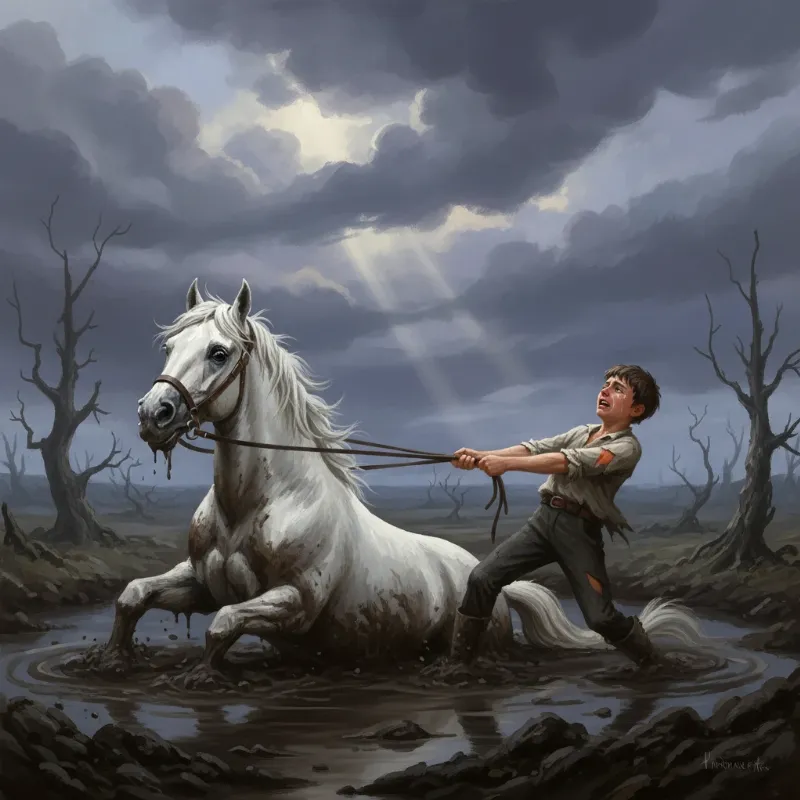 The iconic and heartbreaking scene of the never ending story horse drowning, with Atreyu desperately trying to save Artax from the Swamp of Sadness.
Atreyu’s Helplessness and a Generation’s Trauma
What makes the never ending story horse drowning scene so profoundly disturbing, especially for young viewers, is Atreyu’s utter powerlessness. We watch as this brave young warrior, who has faced down other monsters, is reduced to a weeping child. He screams, he pleads, he begs his best friend to fight, but his words are useless against the silent, creeping despair that claims Artax. “You have to try! You have to care!” he yells, a desperate mantra against the encroaching emptiness.
This powerlessness mirrors the real-world experience of watching a loved one succumb to depression or grief. You can offer support, love, and encouragement, but you cannot fight their internal battle for them. The scene teaches a harsh lesson: some fights cannot be won with strength or willpower alone. This was a stark departure from the typical children’s films of the era, where the hero’s courage could almost always save the day. Here, Atreyu fails, and the loss is absolute and final. This raw depiction of failure and grief is a primary reason why the memory of the horse dies in neverending story has lingered with so many for so long.
Filming the Unforgettable Scene: How Was It Done?
The practicalities of filming the never ending story horse drowning sequence were as challenging as the scene’s emotional weight. The filmmakers were tasked with creating a moment of genuine peril and distress without ever actually harming the animal actor. The horse, a purebred Andalusian stallion named O’Higgins, was carefully guided onto a submerged hydraulic platform.
Here’s a breakdown of how the effect was achieved:
- A Hidden Elevator: A special lift was built just below the surface of the muddy, dark water. The horse was positioned on this platform.
- Controlled Descent: The platform was slowly lowered, creating the illusion that Artax was sinking into the thick mud of the swamp.
- Safety First: Animal welfare experts and handlers were present at all times to ensure the horse remained calm and safe throughout the process. The water was not actual mud but a mixture of water, clay, and other non-toxic materials.
- Intense Training: The horse and the young actor, Noah Hathaway (Atreyu), spent weeks bonding and training for the scene to build trust and ensure the animal would not panic during the filming.
Despite the careful planning and safety measures, the shoot was emotionally taxing for everyone involved, including Hathaway, who formed a real bond with the horse. This genuine connection translated to the screen, making Atreyu’s desperation and heartbreak feel painfully real.
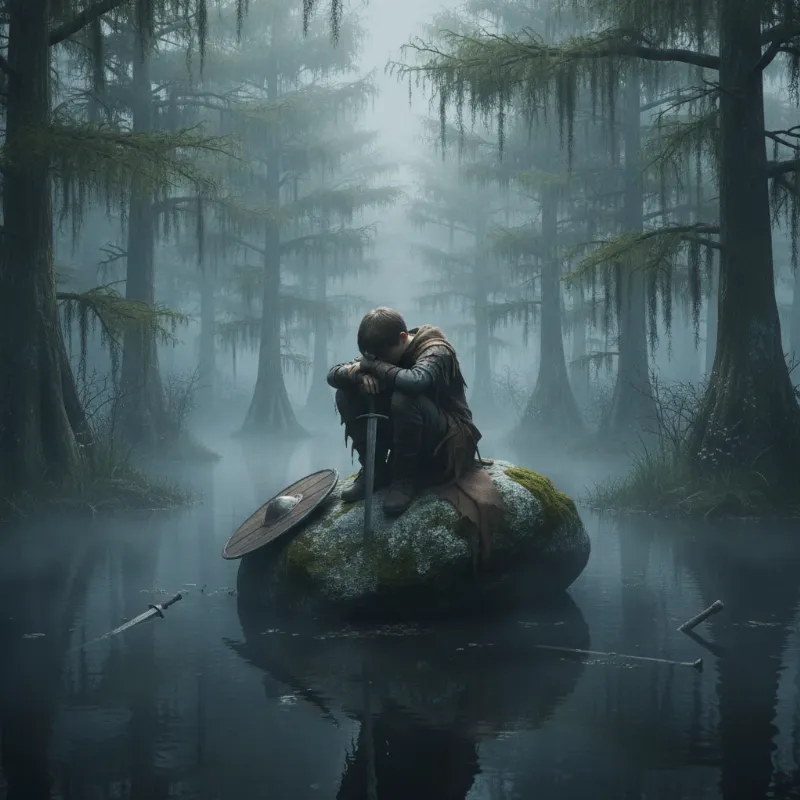 A somber image representing Atreyu's grief after the never ending story horse drowning, showing the young hero alone in the desolate swamp.
Comparing the Movie to the Book
While the film scene is iconic, its depiction differs slightly from the original 1979 novel by Michael Ende. In the book, the conversation between Atreyu and Artax is telepathic. Artax speaks to Atreyu, explaining that he cannot move on, that the sadness has taken hold of him and he has lost all hope, making his submission to the swamp a conscious, albeit tragic, decision.
“I can’t make it, Atreyu,” the horse’s voice says in the novel. “I’m overcome by sadness… It’s all pointless. I’m letting myself sink, Atreyu. Leave me.”
This dialogue adds another layer of heartbreak to the event. In the book, Atreyu is not just fighting the swamp; he is fighting Artax’s own decision to give up. The film adaptation chose to make Artax’s struggle a silent one, focusing instead on Atreyu’s external pleading. This change arguably makes the scene more visceral and horrifying for a visual medium, as Artax’s silence makes his plight feel more sudden and animalistic, heightening the sense of a senseless tragedy. Both versions are devastating, but they emphasize different aspects of the same core theme: the lethal nature of despair.
The Lasting Legacy of Artax’s Death
Why, after all these years, do we still talk about the never ending story horse drowning? Because it was a formative experience that taught a generation of kids about some of life’s most difficult truths in a way that was unfiltered and profound. It taught us that:
- Sadness is a powerful force: It isn’t just an emotion but something that can have a real, physical impact on our lives.
- Loss is inevitable: Sometimes, despite our best efforts and deepest love, we cannot save the ones we care about.
- Resilience is crucial: Atreyu’s journey doesn’t end with Artax’s death. He must process his grief, pick himself up, and continue his quest alone. His ability to move forward is a testament to the strength of the human (or, in this case, Fantasian) spirit.
The scene serves as a rite of passage. It is a moment where fantasy storytelling refuses to coddle its audience, instead presenting them with a raw, painful truth about the world. It’s a beautifully tragic sequence that elevates The NeverEnding Story from a simple children’s adventure into a complex fable about life, death, and the importance of never letting the darkness win. The story of what happened to the horse drowning neverending story is, ultimately, a crucial part of Atreyu’s—and our own—journey.
Frequently Asked Questions (FAQ)
1. Why did the horse die in The NeverEnding Story?
Artax, the horse, dies because he is overcome by the magical influence of the Swamps of Sadness. The swamp causes any creature who gives in to despair and sorrow to sink into the mud. Artax, unable to fight off the overwhelming sadness, succumbs to it and drowns.
2. Is the horse drowning scene in the book?
Yes, the scene is in Michael Ende’s novel, but it is portrayed differently. In the book, Artax can speak telepathically to Atreyu and verbally expresses his decision to give up and let the sadness consume him, adding a different layer of tragedy to the event.
3. Was the horse actually harmed during filming?
No, the horse was not harmed. The filmmakers used a submerged hydraulic platform to safely lower the horse into the water, creating the illusion of sinking. Animal safety experts were on set at all times to ensure the well-being of the animal actor.
4. What does Artax’s death symbolize?
Artax’s death is a powerful symbol of how depression and hopelessness can overwhelm even the purest of spirits. It also represents a pivotal moment of loss for the hero, Atreyu, teaching him (and the audience) a harsh lesson about helplessness and the necessity of resilience in the face of tragedy.
5. Why is this scene considered so traumatic?
The scene is considered traumatic for many because it depicts the slow, agonizing death of a beloved animal companion while the hero is completely powerless to stop it. For many children, this was their first cinematic exposure to such a raw and realistic portrayal of loss, grief, and the harsh reality that courage alone cannot always save the day.
