
For many of us, our first on-screen heartbreak didn’t involve people. It involved an animal. If you grew up in the 80s or discovered its cinematic gems later, there’s one scene that likely seared itself into your memory: the moment in The NeverEnding Story when the horse dies. It’s a profound, gut-wrenching sequence that has haunted audiences for decades, a cinematic touchstone for childhood trauma and a powerful lesson in loss. This moment transcends mere plot; it explores the depths of despair and the resilience of the heart, themes that resonate deeply with anyone who has ever loved an animal. Understanding this scene is about more than just a movie; it’s about understanding a story of profound loss. For a deeper dive into similar themes, the concept of a lost horse story often explores these universal feelings of grief and hope.
The Unforgettable Scene: Drowning in Sadness
The scene in question takes place in the Swamps of Sadness, a bleak, unforgiving landscape that Atreyu, the young hero, must traverse to find a cure for the ailing Childlike Empress. His only companion is his beloved white horse, Artax. The swamp has a cruel, magical property: its murky waters cause anyone who lets sadness and despair consume them to sink into the mud, lost forever.
Atreyu is protected by the Auryn, a magical amulet that grants him immunity. Artax, however, has no such protection. As they wade deeper into the swamp, the overwhelming sadness begins to affect the noble steed. He slows, his head bows, and he stops moving. Atreyu, panicked, pleads, begs, and screams at his friend to fight the encroaching despair.
“Artax, you’re sinking! Come on, turn around! You have to!” he cries, pulling desperately at the reins. “Fight against the sadness, Artax! Artax, please! I love you!”
But it’s too late. The sadness is too strong. In a slow, agonizing sequence, Artax succumbs to the swamp, sinking beneath the muddy water as Atreyu watches, helpless and sobbing. For countless viewers, this was a brutal introduction to the concepts of hopelessness and the finality of death.
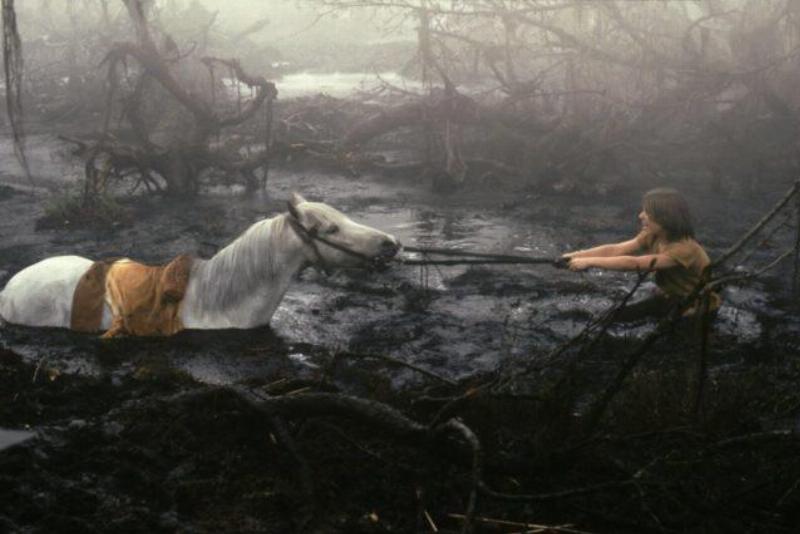 A symbolic image representing the moment the Never Ending Story horse dies in the Swamp of Sadness, evoking feelings of loss.
Artax’s Death: A Deeper Look into the Symbolism
Why does this scene hit so hard? Because it’s not just about a horse dying; it’s a powerful metaphor for battling depression and despair. The Swamp of Sadness represents the crippling nature of hopelessness. It’s a force that doesn’t attack you physically but drains your will to live, making you give up.
Dr. Eleanor Vance, a fictional narrative psychologist, explains, “Artax’s death is a masterclass in narrative symbolism. The horse represents innocence, companionship, and the pure spirit of the hero’s journey. When he dies, it signifies Atreyu’s loss of innocence. He can no longer rely on his loyal friend; he must face the darkness alone. The sadness literally becomes the monster.”
This moment forces the young hero—and the audience—to confront a difficult truth: sometimes, love and encouragement aren’t enough to save someone from their own internal battles. Atreyu’s desperation is palpable because it’s a feeling we all recognize: the helplessness of watching a loved one suffer from something you cannot fight for them. This narrative device is crucial for Atreyu’s growth, hardening him for the trials that lie ahead on his quest.
The NeverEnding Story: Book vs. Movie Differences
For those who have only seen the film, it might be surprising to learn that the book by Michael Ende handles this pivotal moment quite differently. The fundamental narrative of the story of horse companions often varies between adaptations, and Artax is no exception.
In the novel, Artax does indeed struggle in the Swamps of Sadness, but he does not die there. Both he and Atreyu are overcome by the swamp’s influence, but they are eventually saved by the giant turtle, Morla. Artax dies much later in the book, succumbing to exhaustion after a frantic race to escape the monstrous Gmork.
However, the book offers a consolation the movie doesn’t. After Bastian enters the world of Fantasia, he uses his creative powers to bring Artax back to life. The film’s director, Wolfgang Petersen, made a conscious decision to make the death more immediate and permanent to raise the emotional stakes for Atreyu and the audience. This change is arguably why the scene became so iconic; its raw finality makes the threat of “The Nothing” feel terrifyingly real.
Behind the Scenes: The Making of a Heartbreaking Moment
The emotional weight of the scene is amplified by the incredible performance of its young actor, Noah Hathaway. His tears and desperate pleas were heartbreakingly real, and the behind-the-scenes story reveals why. The filming of the Swamp of Sadness sequence was notoriously difficult and emotionally taxing for everyone involved.
The horse, a beautiful white stallion named Clydie, was placed on a submerged hydraulic platform in a deep, muddy pool. The crew slowly lowered the platform, creating the illusion of sinking. While animal welfare advocates were on set and the horse was never in any real danger, the process was stressful. Hathaway has stated in interviews that he formed a deep bond with the horse and that the intensity of the scene, combined with the cold water and long shooting days, created a genuine emotional response.
This commitment to practical effects and authentic reactions is what makes the scene feel so visceral. There was no CGI to hide behind; the audience witnesses a real boy’s desperate attempt to save his real companion from a seemingly real threat, making the fact that the horse in Neverending Story died a core memory for a generation.
Why Artax’s Death Resonates So Deeply
Decades after its release, the death of Artax remains a frequent topic of discussion in forums and social media. Why has it stuck with us for so long? The answer lies in the purity of the human-animal bond it portrays.
- Innocence Lost: For many children, Artax was their first encounter with the death of a beloved character. It was shocking, unfair, and unexplained by a typical villain. He wasn’t killed by a monster; he was killed by a feeling. This abstract concept is a heavy load for a young mind and leaves a lasting impression.
- The Power of Companionship: Atreyu and Artax’s bond is simple and profound. Artax is more than a mount; he is Atreyu’s friend and confidant in a vast, lonely world. His loss represents the fear of facing our greatest challenges utterly alone.
- A Metaphor for Mental Health: As adults, many viewers re-watch the scene and see a powerful allegory for depression. The “sadness” is an invisible illness, an overwhelming weight that can drown someone even when help is right there. It’s a sophisticated theme for a children’s movie and one that resonates on a much deeper level with age.
The scene serves as a powerful testament to how stories about animals can teach us the most human lessons. They prepare us for loss, teach us empathy, and show us the incredible strength it takes to keep going after a tragedy.
Frequently Asked Questions (FAQ)
Did the horse really die in The NeverEnding Story?
No, the horse actor, Clydie, was not harmed during the filming of the movie. The sinking effect was achieved using a special underwater hydraulic lift. The scene was carefully monitored to ensure the animal’s safety at all times.
What is the name of the horse in The NeverEnding Story?
The horse’s name is Artax. He is Atreyu’s loyal companion and a key character in the first part of the story, symbolizing innocence and courage.
Why did Artax give up in the Swamp of Sadness?
Artax gave up because he was overcome by the magical sadness that permeates the swamp. Unlike Atreyu, who was protected by the Auryn amulet, Artax was vulnerable to the overwhelming despair, which caused him to stop fighting and sink.
What does the Swamp of Sadness represent?
The Swamp of Sadness is a metaphor for depression, despair, and hopelessness. It represents an internal struggle rather than an external enemy. It symbolizes the kind of profound sadness that can paralyze an individual, making them lose the will to move forward.
Is The NeverEnding Story too scary for kids?
This is subjective and depends on the child’s sensitivity. While it’s a beloved family film, it features several intense and thematically mature scenes, including the death of Artax, the menacing Gmork, and the concept of “The Nothing” destroying the world. These elements can be frightening for younger viewers.
The Enduring Power of a Sad Story
The legacy of Artax’s death is a testament to the power of storytelling. It’s a scene that is simultaneously beautiful and brutal, teaching a generation of children about the harsh realities of life and loss within a fantastical world. It validates feelings of grief and shows that true bravery isn’t about never feeling sad or scared, but about finding the strength to continue on even when your heart is broken. The enduring discussion around the moment the Never Ending Story Horse Dies proves that the most powerful tales are those that dare to show us darkness so we can better appreciate the light.
