
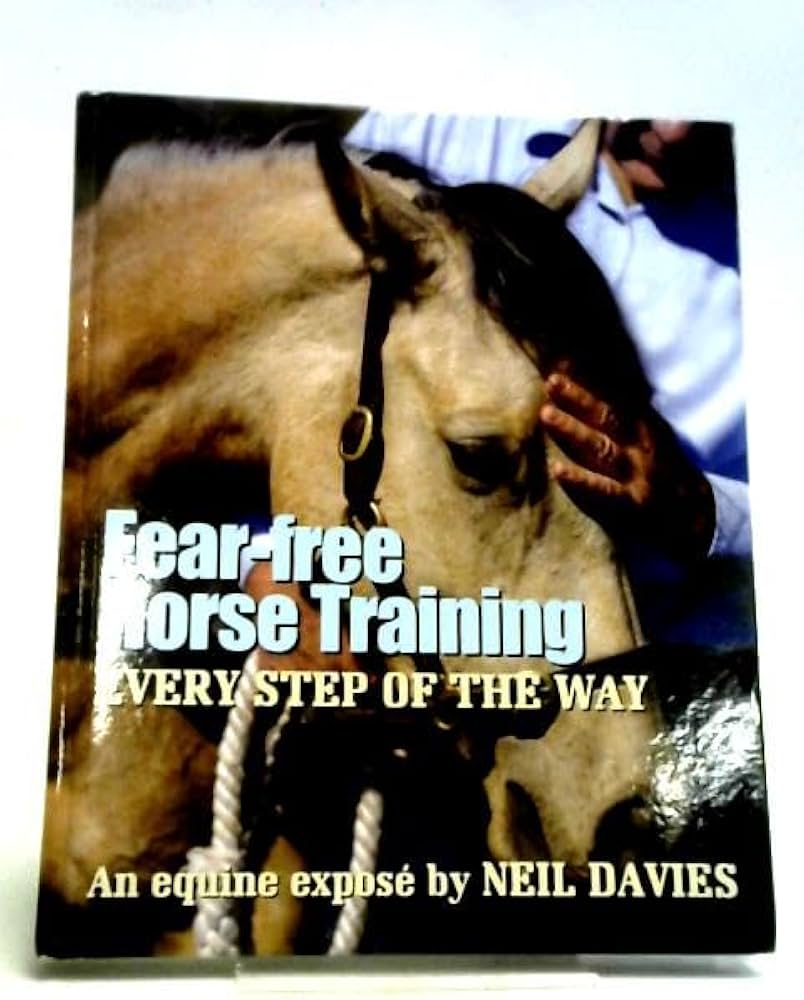
Neil Davies has emerged as a significant figure in the equestrian world, championing a philosophy of “fear-free” horse training that emphasizes trust, confidence, and understanding over traditional dominance-based methods. His approach, detailed in his book “Fear-Free Horse Training Every Step of the Way,” aims to create a harmonious partnership between horse and human, ensuring that training is a positive and enriching experience for both.
The Philosophy of Fear-Free Training
At the core of Neil Davies’ training method is the belief that horses should never be frightened during any stage of their development. He advocates for introducing all aspects of training in a way that the horse can comprehend and accept without fear. This contrasts with some popular training methods that rely on instilling fear or asserting dominance. Davies likens his approach to an artist with a blank canvas, where the trainer’s input shapes the final outcome. He stresses the importance of overcoming human arrogance, impatience, and imperfections to truly connect with a horse.
Davies’ own journey began on his father’s dairy farm in rural Australia, where he learned from a young age by working with horses and cattle daily. By his teenage years, he had accumulated extensive riding experience. In the mid-1980s, he began giving clinics and exhibitions across Australia, New Zealand, and the USA, showcasing his unique horse training abilities. However, he became increasingly disheartened by the trend of using fear and intimidation in horse training, observing methods that involved chasing horses in round pens until exhaustion or using devices like flags and whips to terrify them. This led him to develop and promote his own gentler, more effective way.
Key Principles and Techniques
A signature element of Davies’ method is a gentle rub on the horse’s forehead and neck. This simple action serves as a greeting and a way to reassure the horse, communicating that the interaction will be pleasant and easy. He emphasizes that this touch cannot be overdone and is a crucial tool for building trust.
Davies’ training focuses on teaching horses “everything you want him to do.” This involves a step-by-step process that builds confidence and cooperation. His methods are designed to create a horse that is eager to work with its handler, as evidenced by horses that “LOVE it” and would stand at the gate waiting for training sessions.
Groundwork and Handling
Ground lessons are fundamental in Davies’ approach. These lessons are designed to build the horse’s confidence and cooperation. For instance, teaching a horse to stand still and bring its head around is crucial for safety during leg handling, mounting, or veterinary procedures. If a horse becomes worried, it learns to seek relief by bringing its head around rather than resorting to kicking or rushing away.
Davies also emphasizes the importance of teaching a horse to move forward willingly. Using a long stick to apply gentle pressure to the hindquarters encourages the horse to move forward while keeping its head with the handler. This method ensures that the horse understands that moving forward is a positive experience associated with calm and pleasant interactions.
Starting Under Saddle
When it comes to starting horses under saddle, Davies advocates for a process that avoids confrontation, fear, fight, or force. His approach ensures that every horse learns step-by-step, fostering a positive attitude towards being ridden. This contrasts with methods that might involve chasing, bucking, or fighting to establish control.
Recognition and Impact
Despite initial rejections from major publishing houses, Neil Davies self-published his book, “Fear-Free Horse Training,” with the help of his wife. The book has since become a bestseller, selling thousands of copies monthly and garnering a significant following on social media. His methods have been described as “quietly but surely revolutionizing the horse world.”
Davies’ work has been praised by many for its sensitivity and insight. Reviewers often highlight the effectiveness of his techniques in building trust and a deep understanding between horse and human. His approach is seen as a more ethical and effective way to train horses, leading to willing partners rather than submissive or fearful ones.
Conclusion
Neil Davies’ “Fear-Free Horse Training” offers a comprehensive and compassionate approach to working with horses. By prioritizing trust, understanding, and the removal of fear, his methods empower both horse and handler, fostering a stronger, more harmonious relationship. His success underscores the growing demand for training philosophies that value the horse’s well-being and psychological state.
