
Bringing home a new cat is an exciting time, filled with anticipation for a life of purrs and cuddles. You’ve prepared their favorite toys, a cozy bed, and even a stylish collar. However, upon arrival, your new companion might transform into a creature of the shadows, disappearing under furniture or into the furthest corners of the room. This behavior can be concerning, leaving you to wonder, “Why is my new cat hiding from me?” The immediate answer is that for a cat in a new or unfamiliar environment, hiding is a perfectly normal and healthy response. When you met your cat at the shelter, they were in a familiar territory, surrounded by other felines and the staff who provided care. They felt secure and knew where to retreat if they felt threatened. Now, in your home, it’s a different world, and they need time to adjust. This comprehensive guide will help you understand and manage your new cat’s hiding behavior, ensuring a smooth transition into their forever home.
The Importance of Patience and Understanding
When your new kitty chooses to hide, the most crucial step is to be patient. Resist the urge to coax them out by reaching under furniture or making loud noises. This will only intensify their fear and make them retreat further. Allow them the space and time they need to acclimate to their new surroundings. Cats are inherently territorial creatures, and it takes time for them to perceive your home as their own safe haven. It’s not just about the visual familiarity; it’s also about the scents. Your home might carry the scents of previous pets or even unfamiliar outdoor smells, which can be unsettling for a new cat.
Cats mark their territory and establish a sense of ownership by rubbing their scent glands, located on their forehead, cheeks, and chin, against objects and people. This is their way of saying, “This is mine.” Initially, they might be too fearful to engage in this behavior. However, as they begin to feel safe and confident, you’ll notice them rubbing against furniture, walls, and eventually, you. This “head-butt” is a clear sign that your cat is starting to feel at home and views you as part of their secure environment. Common cat behavior like scent marking is a positive indicator of their growing comfort.
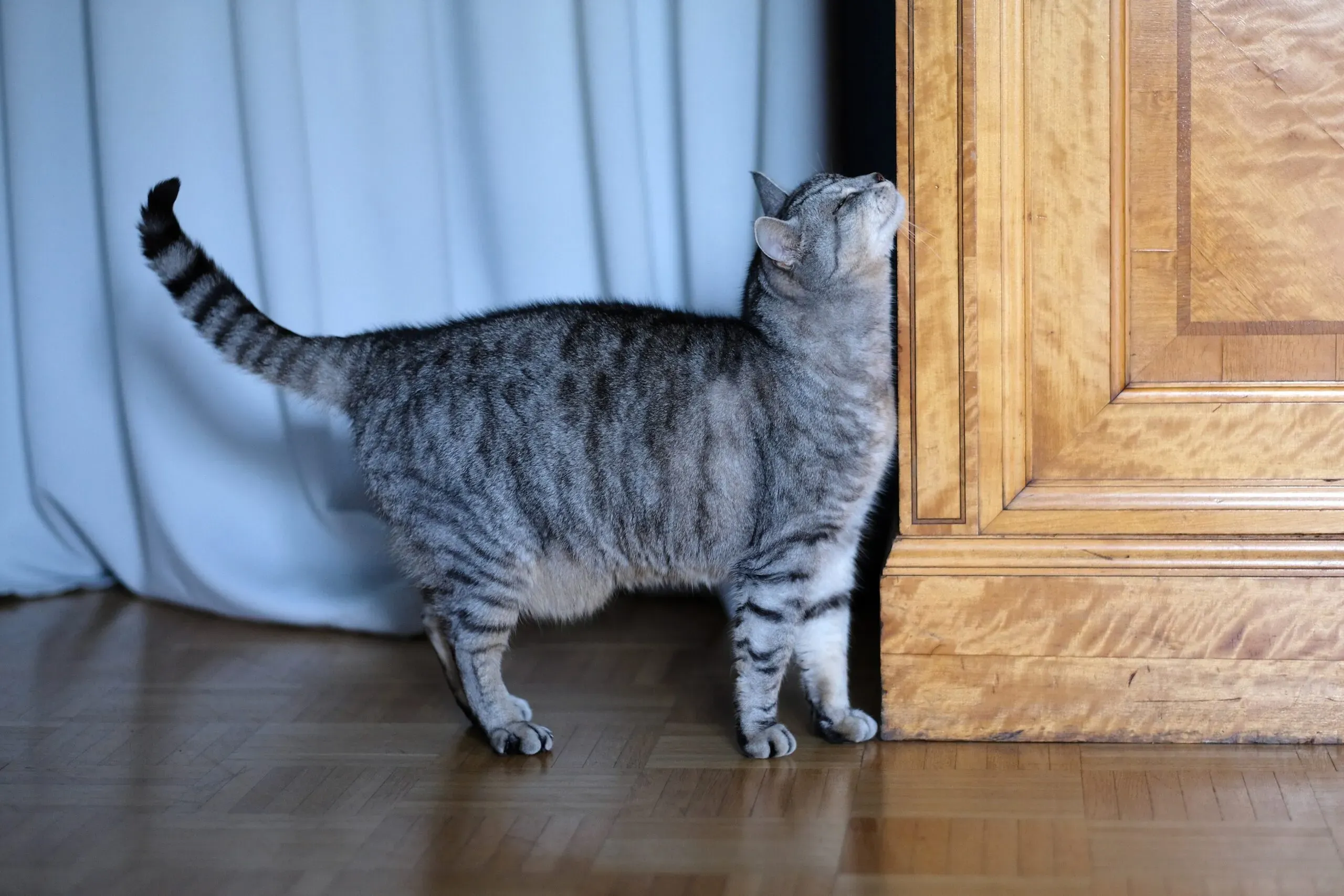 Cats mark territory by rubbing against them with their chin, cheeks or forehead. These places are where their scent glands are located.
Identifying and Eliminating Potential Threats
While hiding is normal, persistent hiding—where your cat refuses to come out even for food or water—warrants a closer look. Consider if anything in the environment might be contributing to their fear.
- Excessive activity: Are there many visitors or a lot of noise and commotion? Loud television volumes, boisterous children, or even loud appliances can overwhelm a sensitive cat.
- Unfamiliar scents: New cleaning products, strong perfumes, or even the lingering scent of another animal can be distressing.
- Startling noises: A constantly chiming grandfather clock or a particularly loud air conditioning unit could be a source of anxiety.
Take a walk through your home from your cat’s perspective and try to identify anything that might be perceived as a threat. Minimizing loud noises and ensuring a calm atmosphere can significantly help your cat feel more secure.
Creating a Safe and Accessible Environment
A cat’s instinct is to always know its escape route. If your cat is hiding, ensure they don’t feel trapped.
- Keep doors open: Never block the entrances to rooms. Always provide clear pathways and escape routes.
- Designate a safe space: Set up a comfortable and quiet area for your cat, perhaps a back room or a secluded corner. This “safe space” should include a soft bed, toys, and a litter box. Providing a designated territory boosts their confidence and encourages bravery. They need a place where they can retreat and feel completely secure. This will help them gradually explore the rest of the house. Kitten constantly meowing could be a sign of anxiety, and providing a safe space can help alleviate this.
Reinforcing Positive Associations
Encourage your cat to venture out and build positive associations with you and their new home.
- Playtime: Engage your cat with interactive toys, such as a feather wand or a laser pointer. Playing near their hiding spot can entice them out without making them feel cornered. Allowing them to chase and “catch” a dangling toy can be very rewarding.
- Treats: Offer high-value treats when your cat comes to you voluntarily or explores their surroundings. This reinforces that positive interactions and being out in the open are rewarding. You can also leave a few treats just outside their hiding spot to encourage them to take a small step out.
- Gentle approach: If your cat peeks out, avoid rushing towards them. Instead, speak in a soft, calm voice and allow them to approach you at their own pace. This demonstrates that you are not a threat.
Essential Needs Close By
If your cat is hiding, they may be too scared to venture out for basic necessities.
- Food and water: Place their food and water bowls near their hiding spot. This reduces the distance they need to travel, making it easier for them to eat and drink without feeling overly exposed.
- Litter box: Similarly, ensure the litter box is easily accessible from their hiding place. If another pet is unintentionally blocking access, consider relocating the litter box temporarily.
- Gradual relocation: Once your cat starts using these resources, you can gradually move the food, water, and litter box to their permanent designated locations as they become more confident.
By implementing these strategies, you can help your new feline friend overcome their initial shyness and build trust. Remember, patience and a deep understanding of feline behavior are key. With a little time and a lot of love, you’ll soon be enjoying those special moments with your new companion, just as you always dreamed. If your cat continues to exhibit extreme fear or anxiety, consulting with a veterinarian or a certified animal behaviorist is recommended. For more insights into feline communication, you might find cat habits and what they mean helpful. Additionally, understanding topics like fixed male cat spraying or female cat yowling can provide a broader perspective on cat behavior.
