
Is your dog suddenly turning up their nose at mealtime? Just like people, dogs can have various reasons for not eating, ranging from disliking their current food to feeling unsettled in a new environment. It’s crucial to remember that an underlying medical condition could be the cause. If your dog abruptly loses interest in food or refuses to eat for a full 24 hours, a visit to the veterinarian is essential for a thorough check-up. However, if your canine companion is in good health but simply exhibiting picky eating habits, this guide offers the top 10 tips for dog parents to motivate their selective eaters.
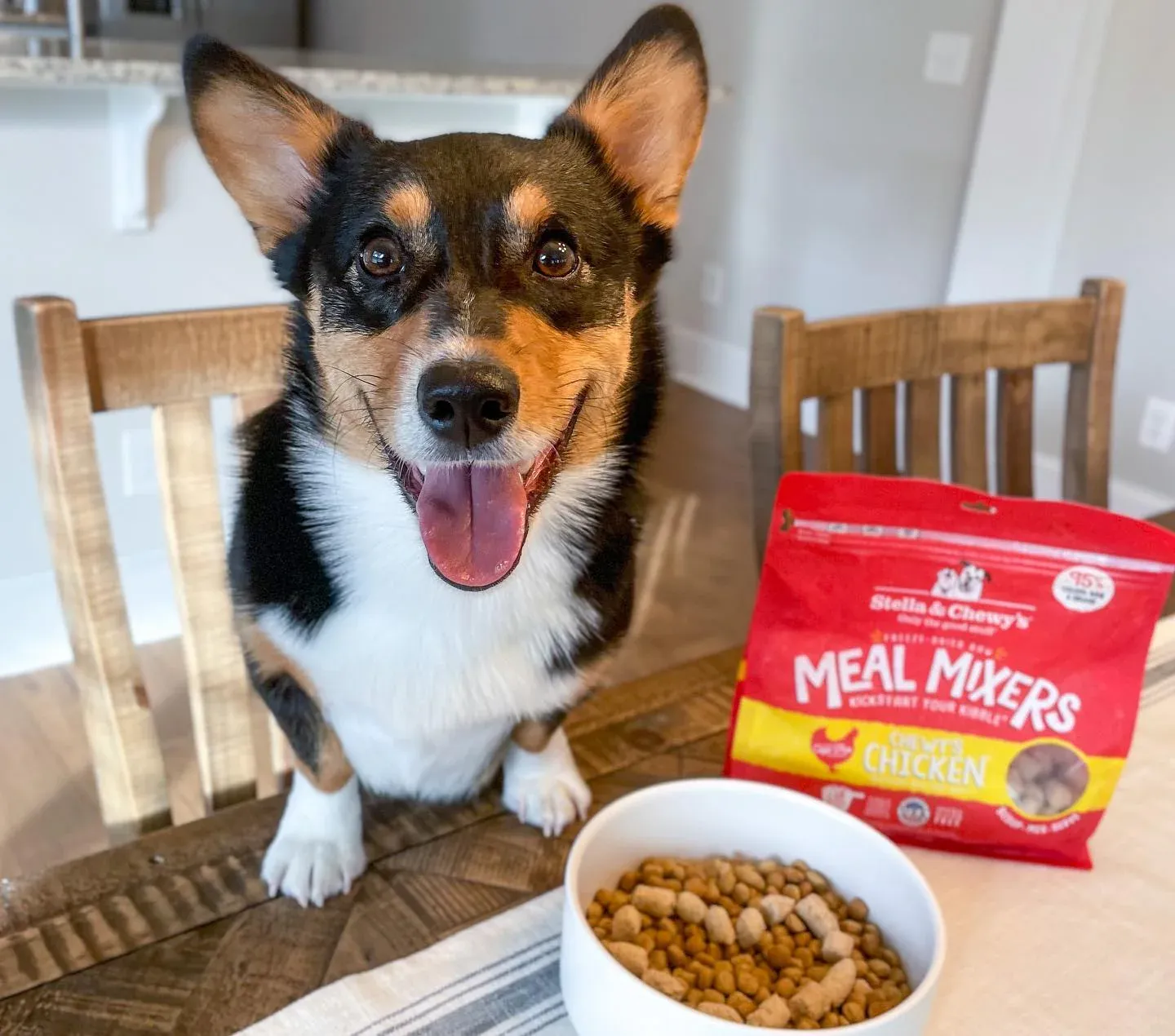 A Corgi enthusiastically eating Stella & Chewy's freeze-dried raw meal mixers.
1. Establish a Consistent Feeding Routine
Dogs thrive on routine, and mealtimes are no exception. Determine a feeding schedule that suits both you and your dog. Offer food at the designated times, allow it to sit for a maximum of 30 minutes, and then remove any uneaten portions. Leaving food out all day can foster poor eating habits and is unhygienic. By removing uneaten food after 30 minutes, your dog will learn to eat when their meal is served. Always remember to remove raw or wet dog food within two hours.
2. Optimize the Feeding Environment
If you have multiple dogs, ensure each has its own dedicated space for meals to prevent competition or distraction. Select a quiet location where your dog won’t be disturbed by household traffic, noise, or other pets. Some dogs feel secure eating in their crates. Experiment to find a spot that works best for your dog and consistently feed them there to reinforce the routine.
3. Consider Food Sensitivities
Your dog’s picky eating might stem from a food sensitivity. Common ingredients that can trigger sensitivities or allergies in dogs include dairy, beef, chicken, eggs, soy, corn, wheat or gluten, and additives like preservatives, dyes, and artificial flavors. Stella & Chewy’s dog food recipes are crafted without artificial ingredients, preservatives, wheat, corn, soy, nuts, or dairy. We also provide poultry-free options and a variety of limited- and single-ingredient diets, which can offer relief for dogs suffering from food allergies and sensitivities.
4. Enhance Meals with Toppers or Mix-Ins
Dog food toppers and mix-ins can significantly enhance mealtime excitement and encourage consistent eating. To maintain your dog’s interest, consider rotating meal toppers or food types. This variety keeps their palate engaged and provides something new to anticipate regularly.
4a. Introduce New Flavors
You can also invigorate your dog’s enthusiasm for eating by diversifying the primary protein source. Our dog food recipes feature a wide array of different proteins for dogs, including beef, chicken, fish, turkey, pork, venison, lamb, duck, and rabbit. Warming dog food slightly can enhance its aroma and flavor, thereby stimulating their appetite. Try adding a small amount of warm (not hot) water or broth to kibble.
4b. Experiment with Food Textures
If your dog has been consuming the same food format for an extended period, offering it in a different texture might reawaken their interest. Stella & Chewy’s provides a diverse range of nutritionally complete dog foods with varying textures. You can also alter the texture of dog kibble or freeze-dried food by incorporating some water or bone broth, which also aids in keeping your dog hydrated. When introducing new dog foods, start with small quantities and transition your dog gradually to prevent digestive upset.
5. Verify Portion Sizes
If your dog isn’t eating at every meal, they might be receiving too much food and require more time to digest. Determine your dog’s ideal weight and adhere to the feeding guidelines on the packaging or your veterinarian’s recommendations for portion control. If you’ve been estimating rather than accurately measuring or weighing your dog’s food, providing the correct amount can make a significant difference.
6. Select the Appropriate Bowl
The type of dog food bowl you choose can depend on your dog’s specific needs and preferences. It’s advisable to avoid plastic bowls, as they can alter the taste and smell of food and are more prone to harboring bacteria. Stainless steel bowls are easier to sanitize and do not affect food flavor. Regardless of the material, wash the bowl with soap and water after each use to eliminate any lingering “old food smell” that might deter your dog from eating. For senior or arthritic dogs, a raised food bowl can make eating more comfortable. Breeds with flat faces, such as Pugs or Bulldogs, may benefit from specially designed bowls that accommodate their scooping eating style.
7. Avoid Treats and Table Scraps
Offering treats and table scraps to a picky eater will exacerbate the problem. If your dog has come to expect human food, try pretending to snack on their own food and share small bits when they beg. If your dog shows willingness to eat their regular food in this context, you can eventually serve it in their dish after offering some as “treats.”
8. Stimulate Appetite Through Activity
Is your dog getting sufficient daily exercise? A lack of activity can lead to a decreased appetite. Generally, healthy adult dogs require at least one hour of exercise daily. Incorporate more activity into your dog’s routine through daily walks, games of fetch, swimming, or tug-of-war. Hide-and-seek, obedience training, and setting up backyard obstacle courses are also excellent ways to increase their activity levels. Ample playtime and interaction not only benefit their digestion but can also help manage stress and anxiety.
9. Gamify Mealtime
Dogs naturally enjoy playing, and some owners of picky eaters observe their dogs engaging with their food more like a toy than a meal. Consider using feeding toys designed to encourage eating through play, such as puzzle feeders, food balls, or snuffle mats. These toys also provide valuable enrichment for dogs, which can be instrumental in managing or reducing stress. However, feeding toys might not be the most suitable option for larger dogs with higher caloric needs.
10. Utilize Positive Reinforcement
Engage your dog in some obedience or behavioral training sessions before their next meal. Conclude the training by offering ample praise for their progress, immediately followed by serving their food. This association helps your dog link mealtime with positive rewards, making it far more engaging than a spontaneously appearing bowl of food. Continue with positive reinforcement and praise after they finish their meal!
Just as humans have unique personalities, so do dogs, influencing their eating habits, including their pickiness. If your dog has a favorite human, they might appreciate having that person serve their meals, and may even enjoy eating alongside them. As social animals, eating as part of a “pack” can sometimes encourage dogs to eat more readily.
As a dedicated dog parent, it’s your role to discover what motivates your dog to eat and ensure they receive proper nutrition. To further your knowledge, explore our guide to promoting dog wellness and other Blog Posts for the Pet Obsessed.
