
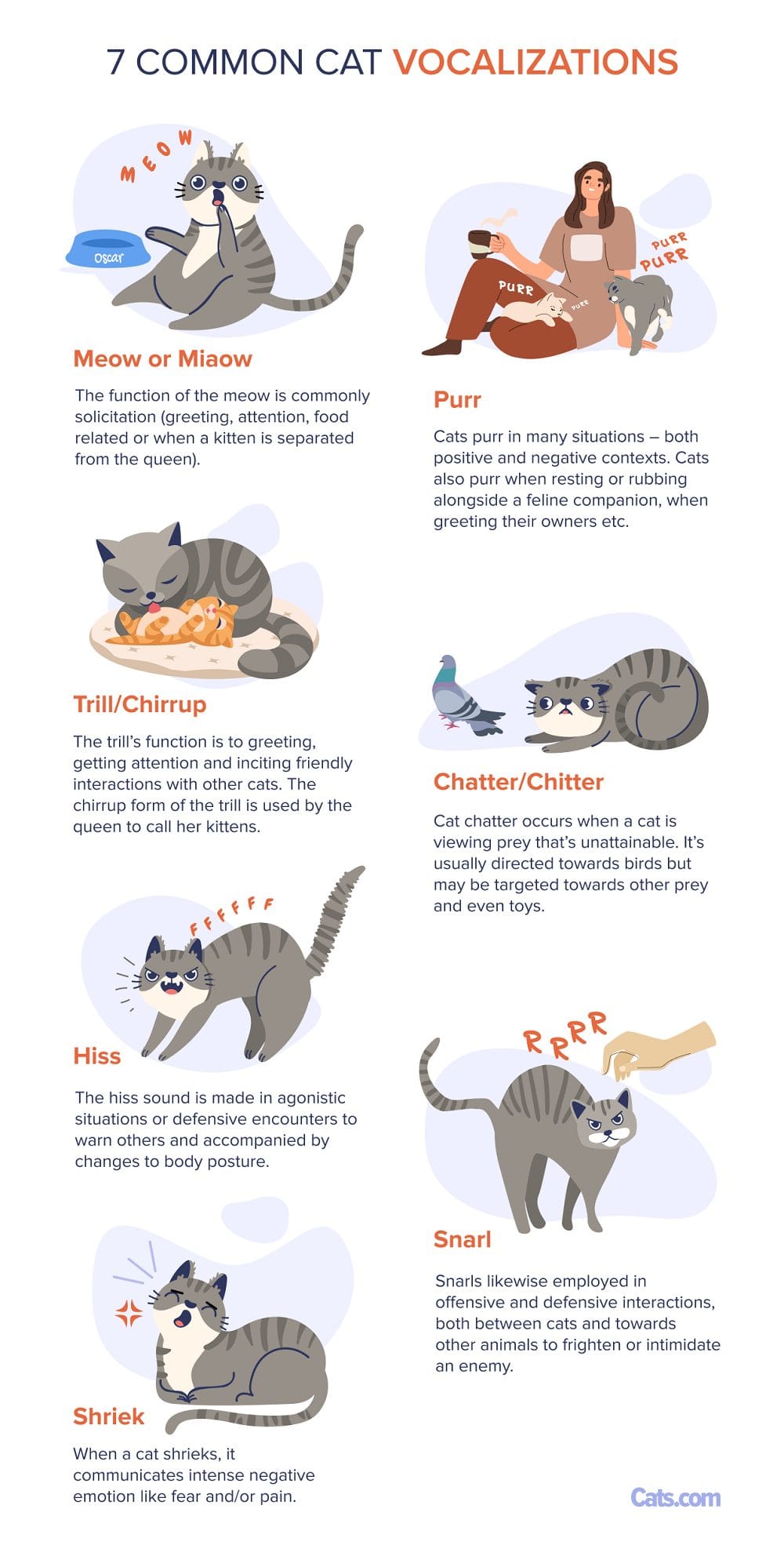
If you’re finding yourself asking, “Why is my cat meowing so much?” you’re not alone. Cats are known for their vocal nature, and deciphering their many meows can be a challenge for even the most seasoned pet owner. However, a noticeable increase in your cat’s vocalizations could signal a specific underlying reason. While cats communicate through a variety of sounds like meows, yowls, hisses, and purrs, excessive meowing can sometimes indicate that something is amiss. Alternatively, your feline companion might simply be trying to convey their needs. This article delves into six common reasons behind excessive meowing in cats and offers practical solutions to help restore peace for both you and your beloved pet.
Understanding Excessive Vocalization
The definition of “excessive vocalization” can vary among pet owners. Some cats are naturally more talkative than others due to their unique personalities. However, if your cat’s meowing has increased significantly and is disrupting your daily routine or causing you distress, it may be considered excessive. For instance, you might be accustomed to your cat meowing around meal times, but if they start yowling in the middle of the night, it warrants closer attention. If this sounds familiar, consider these six common reasons for increased feline vocalization.
Why Is My Cat Meowing Excessively?
1. Seeking Attention and Companionship
Contrary to the stereotype of aloof loners, most cats thrive on attention and companionship and often dislike being alone for extended periods. If your cat is meowing incessantly at you, they might be bored, feeling lonely, or simply craving your interaction. A simple remedy is to engage with your cat by talking to them, offering a gentle scratch behind the ears, or initiating a play session with their favorite toy. This targeted interaction can help alleviate boredom and strengthen your bond.
2. Communicating Specific Needs
Just like humans and other animals, cats use vocalizations to express their desires. If your cat is hungry or their food bowl is empty, they will likely approach you to address the situation. Hunger is one of the most frequent reasons cats meow. It’s essential to check if their food and water bowls are full and ensure they are receiving adequate nutrition. Cats also frequently meow to be let indoors or outdoors, to gain access to a particular room, or even to request a change in what’s on the television. Paying attention to their vocal cues will help you learn to interpret their specific meows.
3. The Urge to Breed
Female cats in heat become remarkably vocal, often yowling for about a week each month. Similarly, if a male cat detects a female in heat nearby, you may observe an increase in their meowing as they search for her. This is a natural reproductive behavior. Spaying or neutering your cat is a highly effective way to prevent this type of yowling and provide relief for both you and your pet.
4. Experiencing Stress or Anxiety
Have there been recent changes in your household, such as the arrival of a new baby, an illness, the loss of a loved one, or a recent move? If so, your cat might be exhibiting increased vocalization due to stress. Cats often become more vocal when feeling anxious, a behavior you might have noticed during a veterinary visit. To help calm your cat, try to identify and alleviate the stressors. Providing extra attention and maintaining a stable environment can help soothe their nerves. For cats exhibiting anxiety-related behaviors, understanding cat behavior problems and aggression can be beneficial.
5. Signs of Aging and Cognitive Decline
Does your senior cat frequently yowl at night, disturbing the household’s sleep? This could be an indication that your pet is experiencing the effects of old age. Similar to elderly humans, aging cats can develop cognitive dysfunction, leading to vision or hearing loss, and forgetfulness. This can be disorienting, leaving your cat feeling dazed and confused. It is very common for senior cats to meow more frequently, particularly at night. Many owners find that installing night lights helps to comfort their senior cats. Additionally, maintaining a stable and consistent environment can help your cat navigate their surroundings with less confusion. Sometimes, a senior cat might be hiding under the bed for days due to confusion or discomfort.
6. Underlying Medical Issues
If your cat is meowing non-stop and this is a new behavior, it is crucial to schedule a thorough checkup with your veterinarian. Numerous medical conditions can cause increased hunger, thirst, or pain in cats. These symptoms not only lead to excessive meowing but also signify that your cat is unwell. Furthermore, cats are prone to developing conditions like kidney disease or an overactive thyroid, both of which can result in increased vocalization. In summary, if you suspect your cat’s increased meowing is due to pain or distress, it is highly advisable to consult a veterinarian to rule out any potential medical conditions.
Addressing Your Cat’s Excessive Meowing
When your cat meows, they are most likely attempting to communicate something to you. Whether it’s a plea for attention, a request for food, or an expression of distress, it’s important to pay attention and try to identify the root cause of their behavior. The most effective approach is to understand their communication and strive to meet their needs in a natural and supportive way. If the context clues aren’t clear, don’t hesitate to contact a veterinarian for expert advice. They can inquire about recent changes in your pet’s behavior or any recent illnesses that might be causing discomfort and leading to more frequent yowling. Prompt action can prevent future concerns.
Lakeland Animal Clinic is dedicated to assisting cat owners in Lakeland, FL, and surrounding areas. For any questions regarding your cat’s health, please call us at (863) 688-3338. We are committed to being your pet’s hero.
