
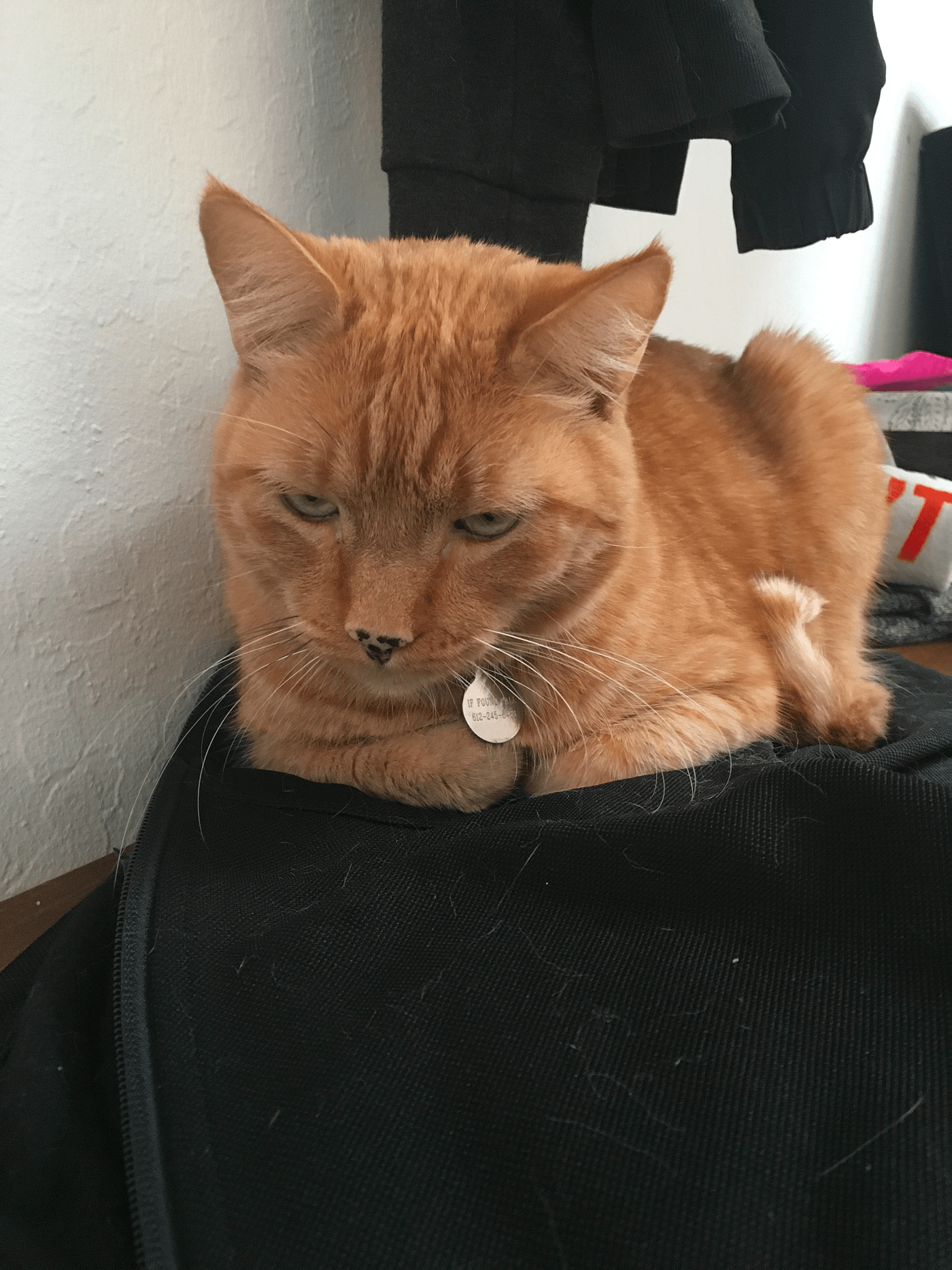
Understanding the moods and whims of our enigmatic cat companions is always a challenge, especially when they seem to be giving us the cold shoulder. We’re often desperate to understand why and mend the bond. Feline welfare charity International Cat Care explains that while living with cats should be a positive experience, they can sometimes face situations that put them under pressure. Cats internalize their stresses to avoid appearing vulnerable, making it difficult for us to understand their concerns. So, if your cat is acting distant, is it a sign of a grudge, or is there more to it?
Cats Protection clarifies that despite their sometimes aloof behavior, cats don’t hold grudges in the same way humans do. The change in behavior we interpret as a grudge is often a cat’s natural reaction to a stressful situation, serving as a way to protect themselves and avoid similar experiences in the future.
It’s Just My Way of Handling Stress
A common scenario illustrating this is a cat’s behavior after a visit to the vet, which many felines find stressful. Cats Protection explains that upon returning home, a cat might hide and avoid you for the rest of the day. This can seem like they’re holding a grudge for the ordeal, but it’s actually a natural stress response. They will hide away until their stress levels reduce.
Small animal veterinarian Catherine Barnette DVM notes that while cats exhibit behaviors that can resemble holding a grudge, their underlying motivations likely differ significantly from human resentment. In a human context, a grudge implies harboring long-term anger or resentment. It’s improbable that this is what drives a cat’s “cold shoulder” behavior. Dr. Barnette suggests that if you accidentally tripped over your cat and they are now avoiding you, it’s more likely because they want to prevent being tripped over again, rather than out of annoyance. She comments, “In a cat, signs of a grudge are more likely to be caused by fear or anxiety than anger or resentment.”
Companion animal vet Dr Rebecca MacMillan adds, “Cats don’t bear grudges in the same way that we do. Instead, they form associations with negative events.” This helps them avoid similar unpleasant experiences. For instance, a cat that accidentally fell down the stairs might avoid that area for a while out of fear of a repeat incident. “It’s a protective mechanism that would have also kept their wild ancestors safe.”
It’s Not You, It’s the Way I Remember Things
“Cats are incredibly intelligent, especially about things they don’t like and things that try to cause them harm,” adds Ed Malaker on Catster. While they might not hate you for placing them in a carrier for a vet visit, they will remember their dislike for the carrier and likely hide when it appears. Cats possess complex memories, similar to humans, with both long- and short-term recall. Their memory aids in forming strong bonds but also protects them from danger. The memory of the carrier ride to the vet will likely endure, rather than the act of being put inside it.
“Cats have different types of memory, just as people do,” comments Dr Rebecca MacMillan. She explains this includes working memory for decision-making, short-term memory for recalling information over minutes to days, and long-term memory for past events. “This appears to be more of a strength in cats, though there is no conclusive study on how long a cat’s long-term memory lasts. It is thought to be highly variable depending on the cat’s breed, health status, and age.”
Therefore, much like humans, cats remember negative past experiences and strive to avoid them. Dr. Macmillan notes, “A cat that remembers something bad happening will be keen to avoid it again, making it seem as though your feline friend has a grudge.” The duration of this avoidance behavior depends on the cause and the individual cat. “There is no definitive answer as to how long your cat will do this,” says Dr. Macmillan. “For many cats, minor misdemeanours seem to fall in the short-term memory category, so it is likely all will be forgiven within a few hours to days.”
How Do You Know If Your Cat Is Mad at You?
Here are some behaviors that your cat might display if they are feeling displeased:
- Your cat hides or leaves the room when you enter.
- They appear tense, stiff, or on high alert.
- Their tail is swishing angrily from side to side.
- Their ears are flattened against their head.
- They arch their back and puff their tail out to appear larger.
- Hissing or growling at you.
- Swiping with their paws.
- Lunging or biting.
Source: The Vets
How to Make Friends Again
If your cat is avoiding you, it’s natural to want to reconcile. However, expert advice suggests a subtle approach rather than overwhelming them with affection, rather than showering them with affection.
Dr Barnette suggests, “Avoid the temptation to force affection on your cat. While you may think that a good snuggle would smooth things over, that approach is likely to backfire. Forcing your cat to be held or petted is likely to make the problem even worse! Avoid the temptation to chase your cat around your home or continually call out to your cat (“here, kitty kitty!”). Extra attention is likely to make your cat even more anxious. Instead, remain calm and give your cat space. As time elapses without any stressful interactions, your cat’s comfort around you should eventually return.”
She recommends sitting a few feet away from your cat’s food bowl at mealtimes, encouraging your cat to approach without feeling pursued. If your cat has a favorite resting spot, moving it closer to your usual seating area can subtly encourage them to come near. “If your cat is playful, use toys that will allow your cat to engage from a safe distance, such as a teaser wand,” adds Dr. Barnette. “The goal is to encourage your cat to approach you, in a subtle and low-key manner.”
“If your cat has had a stressful experience, it can be tempting to make a big fuss of them as you try to beg for their forgiveness. However, this could just make them more stressed,” advises Cats Protection. “Leave them alone and wait for them to come to you when they are ready for some attention. You could then try offering them a small treat, their favourite toy or a gentle fuss to regain their trust.”
Ed Malaker on Catster emphasizes, “Patience, positive reinforcement, and creating a calm environment are essential to helping a cat feel more at ease. Providing treats and engaging in interactive play can help rebuild trust and improve the relationship. Cats may not ‘forget’ in the way humans do, but they can learn to forgive and move past negative experiences. Building positive associations and consistently providing a secure and enriching environment contribute to a cat’s ability to forgive.”
Dr Macmillan suggests trying these techniques to gently encourage your feline friend to trust you again:
- Don’t invade their personal space: Avoid forcing affection by picking them up or petting them if they show resistance. This can increase their displeasure.
- Sit quietly in the same room: Allow them to approach you. You can encourage this by placing their favorite toys or bedding near your spot.
- Prepare their dinner: If they seem grumpy specifically with you, be the one to feed them. Prepare their favourite meal and remain nearby, but again, give your cat space.
- Gently call and talk to them: If they respond, try engaging them with a favorite toy or treats.
She adds, “If your cat continues to seem generally out of sorts, then you may need to seek professional help. Get them checked by a vet to make sure there are no underlying health reasons as to why they are feeling a bit grumpy.”
EVERY CAT DESERVES A DELICIOUS, NUTRITIOUS DINNER. At Burgess Pet Care, all our cat food is made using premium ingredients, locally sourced wherever possible to support British farmers, ensuring excellent quality and superior taste to help keep your cat happy and healthy – from kitten, to adult and mature and our award-winning variety for neutered cats.
Adapting your cat’s diet throughout their life – what you choose to feed your cat can make all the difference >>
Our cat diet and nutrition guide is here to help you create a meal plan that’s tailored especially for your feline friend!
HOW OFTEN SHOULD YOU FEED YOUR CAT? Find out why little and often suits most cats – and the reason why play should be part of your feeding routine…
Is your cat a Burgess cat? Join the Burgess Pet Club for exclusive offers and rewards.
GOT A CAT QUESTION? Whatever your feline related query, we’ve got some fascinating answers for you >>
If you found this interesting, you may also like:
THE CAT COMMUNICATION GUIDE From purrs to scent signals, body postures and blinking, yowls to growls – cats communicate in a variety of ways. They’ve even developed a way of communicating just with humans – cats don’t bother to meow to other cats, just us! Solve the mysteries of cat communication with our guide.
ARE YOU AND YOUR CAT MORE ALIKE THAN YOU THINK? If you have a grumpy Tabby cat, a super friendly Ragdoll cat, or fiendishly feisty Bengal cat, could this actually say more about you than your pet?
HOW TO TELL IF YOUR CAT REALLY LOVES YOU While you may adore your captivating cat, how does your enigmatic feline companion feel about you?
MY CAT IGNORES ME – WHY Unlike dogs, who generally want to be involved in every situation, cats are known for being independent. While some cats can be quite social, it can be hard to take when your favourite feline seems to take absolutely no notice of you. So why is this the case?
WHY DO CATS LIKE TO SQUEEZE THEMSELVES INTO SMALL SPACES? “If I fits, I sits,” has become a catchphrase and search term for cat fans entranced by felines who have an uncanny ability to squeeze themselves into unfeasibly small spaces. But why do they do it?
WHY CATS LIKE THE HIGH LIFE Is your cat a climber? Does your favourite feline always find a way to scale wardrobes, bookcases and even your curtains? Have you ever wondered why cats like to perch in high places?
GIVE YOUR FUSSY FELINE A CHOICE If you have a feline with discerning taste who can be a little on the fussy side when it comes to dinner time, perhaps it’s time to change things up a little…
CAT BREEDS – TAKE A CLOSER LOOK AT SOME OF THE UK’S MOST POPULAR TYPES OF CAT Siamese or Bengal? Norwegian Forest or Maine Coon? Ragdoll or Russian Blue? Which breed of cat do you find most captivating? We count down 10 cat breeds that are riding high in the popularity charts, plus one favourite feline that’s not actually a breed at all …
PLAY BEHAVIOUR OF CATS SURPRISES SCIENTISTSWhile there are lots of things that cats do which cause scientists plenty of head-scratching moments, new research into the way cats play has resulted in some rather baffled boffins…
STRANGER DANGER!Does your cat do a disappearing act when visitors appear? Unfamiliar humans entering their territory can send them running for cover. So why is this the case?
BEST FELINE FRIENDS FOREVER? For cats, their territory (your home and the surrounding environs) is everything and the arrival of a new feline will be viewed with the utmost suspicion. While humans may think their solo feline will enjoy the company of playmate, your cat is likely to have other ideas.
GIRLS V BOYS – FELINE MYTHS AND MISCONCEPTIONS Do male and female cats act differently because of their gender? Are generalisations about laid back, lap-loving boys and aloof, independent girls simply myths – or is there any truth to them?
CAN YOU TRAIN A CAT? Felines excel at training their human guardians to give them food, attention and a cosy lap to curl up on. But is it possible for us to train them?
DOES YOUR CAT KNOW THEIR NAME? Whatever name we choose to bestow upon our beloved pet cats, does it make any difference to them? Do they actually understand that they’re called Alfie or Bella or even Archibald von Snugglemuffin?
THE HOMING INSTINCT – CAN CATS REALLY FIND THEIR WAY HOME? Top tip – it’s much easier if they’re microchipped! Plus, what a change in the law will mean for every cat owner…
References
- International Cat Care. (n.d.). Problem Behaviour. Retrieved from https://icatcare.org/advice/problem-behaviour/
- Cats Protection. (n.d.). Do Cats Hold Grudges? Retrieved from https://www.cats.org.uk/cats-blog/do-cats-hold-grudges
- Burgess Pet Care. (n.d.). Peek-a-boo, Hello Kitty, I see you! Retrieved from https://www.burgesspetcare.com/blog/cat/peek-a-boo-hello-kitty-i-see-you/
- PetsRadar. (n.d.). Do cats hold grudges? Retrieved from https://www.petsradar.com/advice/do-cats-hold-grudges
- The Vets. (n.d.). How long does a cat hold a grudge? Retrieved from https://thevets.com/blog/how-long-does-a-cat-hold-a-grudge/
- Catster. (n.d.). Do Cats Hold Grudges? Retrieved from https://www.catster.com/cat-behavior/do-cats-hold-grudges/
- Burgess Pet Care. (n.d.). Read My Body Language. Retrieved from https://www.burgesspetcare.com/blog/cat/read-my-body-language/
- Burgess Pet Care. (n.d.). Why Some Cats Aren’t Cuddly. Retrieved from https://www.burgesspetcare.com/blog/cat/why-some-cats-arent-cuddly/
