
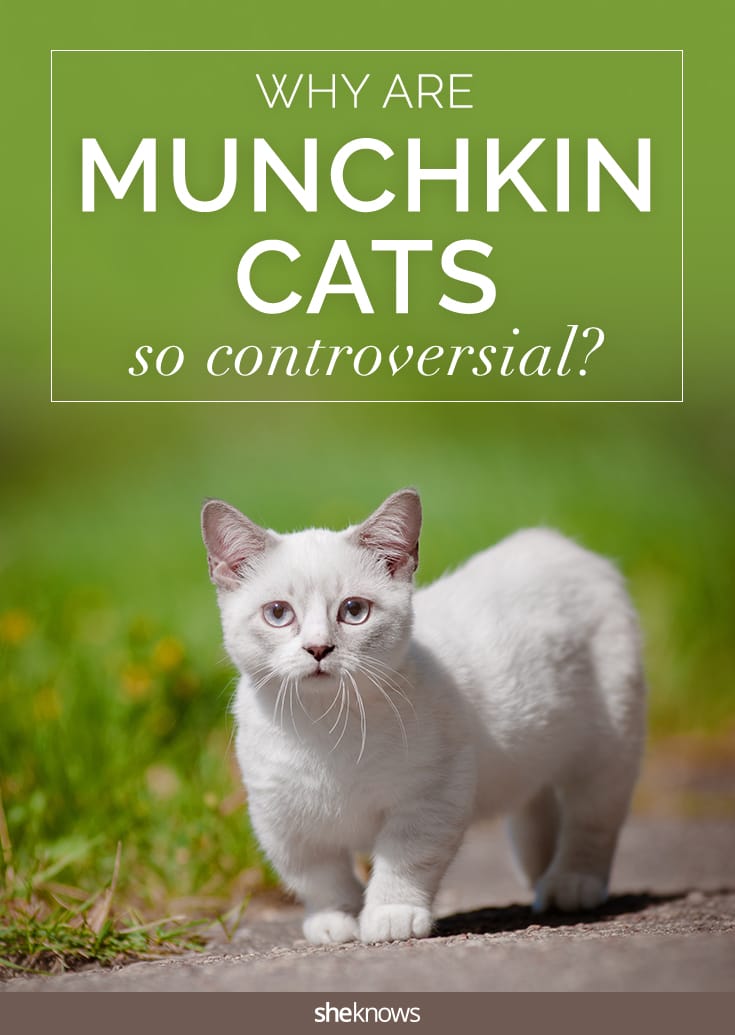
The emergence of the Munchkin cat has captured the hearts of many cat lovers, often described as incredibly cute with their distinctive short legs. This unique trait has led to both growing popularity and significant controversy surrounding the breed. But what exactly is the story behind the Munchkin cat, and why is it a subject of debate among feline enthusiasts and experts? Let’s delve into the history, genetics, and ethical considerations of these charming felines.
A Brief History of the Munchkin Cat
Munchkin cats, sometimes affectionately nicknamed “sausage cats” or “hedgehog cats,” have a history that dates back to the 1940s. However, they largely disappeared from the spotlight after World War II and only reappeared about a decade later. Despite their presence for many years, it wasn’t until 2003 that The International Cat Association (TICA) officially recognized them as a distinct breed. This recognition, however, remains a point of contention, as the definition of a “breed” in cats can be complex and involves scientific understanding.
Understanding Munchkin Genetics
The characteristic short legs of Munchkin cats are the result of a natural genetic mutation. Unlike what some might assume, you cannot reliably breed two Munchkin cats together to produce more Munchkins. In fact, the gene responsible for the short legs is considered “lethal” in its homozygous state, meaning that if two Munchkin cats were to mate, their offspring would not survive.
Instead, a Munchkin kitten typically arises when two cats with normal leg length, one of whom carries the Munchkin gene, mate. When a Munchkin cat mates with a normal-sized cat, there is approximately a 50/50 chance that their offspring will inherit the gene for short legs. This natural occurrence is a key factor in the ongoing discussion about their classification as a breed.
Munchkin Cats vs. Feline Dwarfism
It’s a common misconception that Munchkin cats suffer from feline dwarfism. While their shortened legs are due to a genetic mutation, they are not a result of typical achondroplasia, the form of dwarfism that affects bone growth. Munchkin cats exhibit a condition known as “pseudoachondroplasia.” A key distinction is that while pseudoachondroplasia affects limb length, it does not typically alter the proportions of the head and facial features, which remain normal, unlike in some forms of feline dwarfism.
Furthermore, unlike cats with true dwarfism, Munchkins are generally not prone to the same severe health complications. Famous cats like Lil Bub and Grumpy Cat, who had dwarfism, brought attention to the conditions associated with it. Munchkins, however, present a different genetic profile. Some organizations, like The Cat Fanciers Association, do not recognize Munchkins as a breed, arguing that the “munchkin-ism” does not offer any inherent benefit to the cat and raises ethical questions about selective breeding.
Ethical Considerations and Health Concerns
The ethical debate surrounding Munchkin cats largely centers on whether it is right to selectively breed them. While Munchkin cats generally have an average lifespan of 12 to 15 years, like all cats, they can be susceptible to certain health issues.
One primary concern is the potential development of “lordosis,” a condition where the spine curves downward. This can put pressure on vital organs such as the heart, lungs, and trachea. While lordosis can occur in any cat, studies have indicated a higher prevalence in Munchkins, a correlation that is difficult to dismiss.
Beyond this specific concern, Munchkins are largely considered to lead normal, healthy lives if properly cared for. However, critics argue that breeding them solely for human aesthetic pleasure, without a clear benefit to the cat, is ethically questionable. Despite these debates, the appeal of a cuddly cat with unique, short legs remains strong for many. It’s also possible to find Munchkin cats, or cats with similar traits, in local animal shelters, offering a chance for adoption.
Caring for any cat, regardless of breed or physical characteristics, requires dedication and understanding. For those interested in learning more about feline well-being, exploring resources on cat nutrition and general health can provide valuable insights for responsible pet ownership.
