
The gentle coo of mourning doves has always been a comforting sound, a melody of peace and tranquility woven into the fabric of childhood memories. These birds, known for their devoted monogamous bonds and symbolic significance, often find their way into our lives, nesting in unexpected places. One such instance unfolded in a wooded paradise, offering a profound lesson in resilience, not just for the doves, but for the human observer as well. This is the story of a close encounter with “force-fledgling” and the powerful message it delivered.
Mourning doves are more than just beautiful birds with their distinctive whistling calls. They are often seen as spiritual messengers, a connection to ancient narratives of peace and renewal. For the author, these familiar birds became constant companions, with a pair choosing a hanging basket outside the kitchen window as their nesting site. Witnessing the cycle of life unfold – eggs laid, tiny babies fed by devoted parents, and feathers gradually replacing down – provided a daily source of inspiration. The images capture the tender moments of these fledglings, just a week or ten days old, nestled in their home.
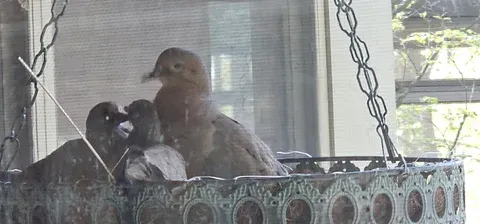
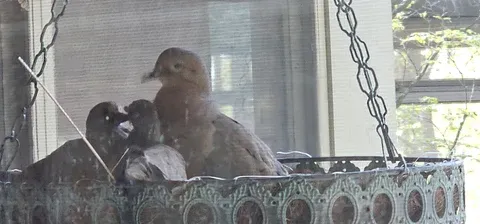 Mourning dove fledglings in their nest, approximately one week old.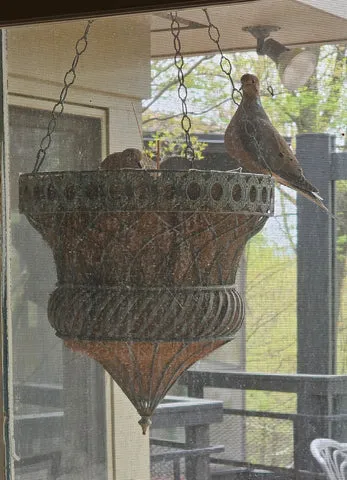
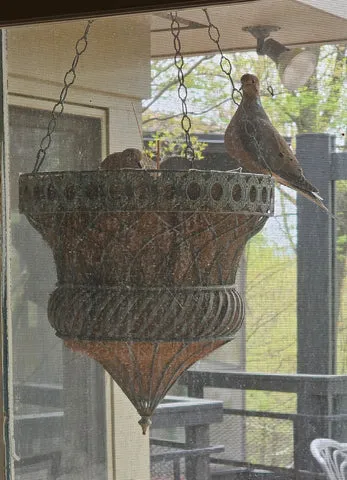 A father mourning dove stands watch near the nest where his young are developing.
However, life rarely follows a perfectly predictable script. A well-intentioned attempt to prepare for guests – hosing down the deck and cleaning windows – led to an unintentional disruption. A stream of water too close to the nest sent the fledglings scattering. The immediate aftermath was a pang of guilt and worry: the nest was empty, and there was no sign of the babies on the ground or nearby. The fear of having caused harm led to a frantic search for answers online, using phrases like, “Help! I scared baby birds out of their nest! Will they be okay?”
Fortunately, the internet provided a surprising solace through resources like toughlittlebirds.com. An article titled “You scared baby birds out of their nest, oh no! Will they be okay?” offered a glimmer of hope. This article, along with other shared experiences, shed light on the concept of “force-fledgling.” While the ideal scenario involves fledglings leaving the nest naturally after about two weeks, parents continuing to feed them for another week, accidents can happen. Ornithologists’ past uncertainty about force-fledgling has given way to more recent research with astonishing findings: force-fledged baby birds often exhibit higher survival rates compared to those that fledge naturally. This revelation brought immense relief and a broader life lesson.
This incident brought to mind a powerful anecdote from the book Life is Tremendous by Charles “Tremendous” Jones. In it, Charles recounts teaching his son, Jeff, the realities of door-to-door sales. He deliberately created challenging scenarios, simulating rejections and difficult customers, to prepare Jeff for the harshness of the real world. Charles believed that shielding children from adversity could be a disservice, hindering their ability to develop resilience and adaptability. His philosophy was clear: prepare your children for the journey, not the journey for your children.

 Cover of the book "Life is Tremendous," featuring a motivational quote.
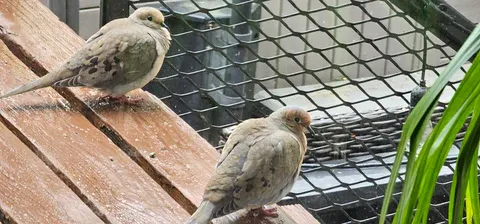
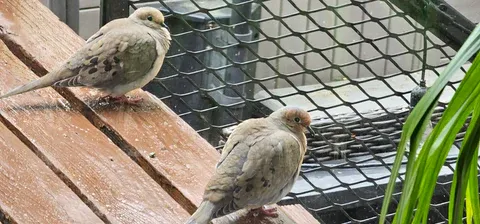
The days following the incident were filled with a lingering sense of unease. Despite the reassuring research, the absence of the dove family was palpable. The author observed the parents, wondering if they were celebrating their newfound “empty nest syndrome.” However, hope rekindled when, the next morning, Mama Dove returned to the nest, her familiar coo filling the air. This gentle call, a beacon of maternal connection, was followed by a joyous reunion. One by one, the fledglings appeared on the deck, soon joined by both parents. The sight brought tears of happiness, confirming the remarkable resilience of these young birds.
 An empty bird's nest, symbolizing the departure of young birds.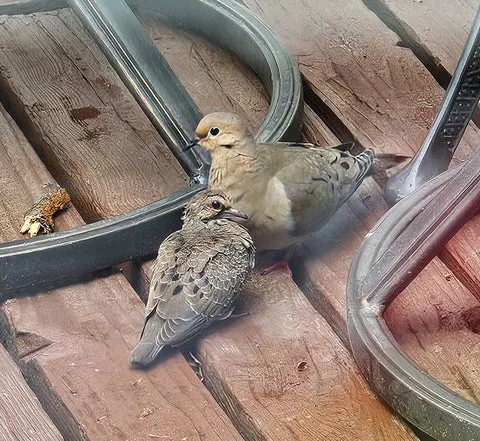
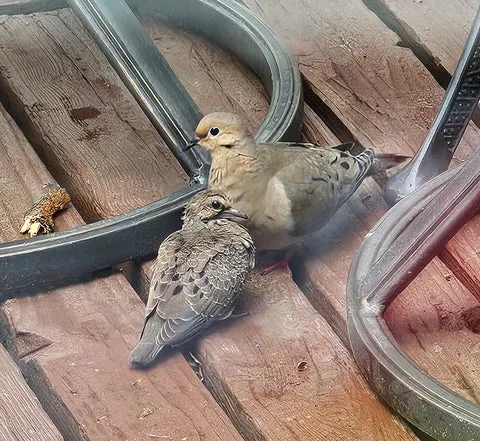 One of the young mourning dove fledglings is seen safely on the deck after being scared from its nest.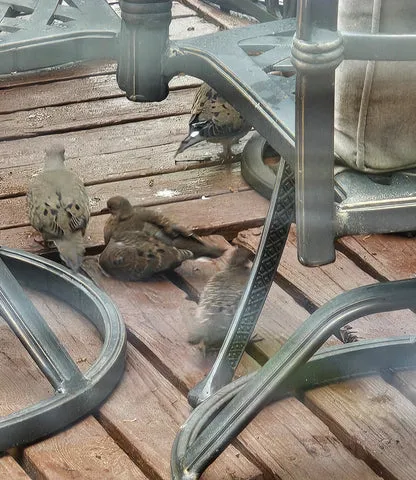
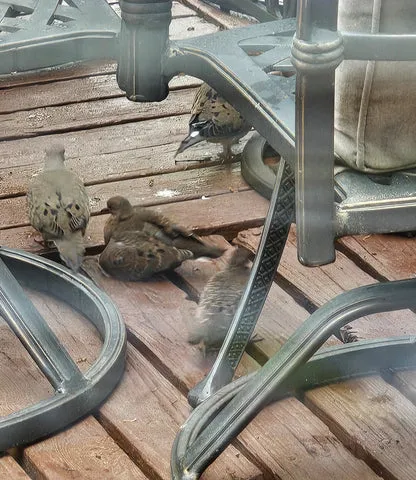 Both fledglings are reunited with their parents on the deck, a scene of successful resilience.
The story of these mourning doves culminates in a powerful message: humans, much like these birds, are far more resilient and capable than we often give them credit for. Exposing individuals, especially from a young age, to challenges can foster greater adaptability and regeneration. Pain is an inherent part of life, but suffering is a choice. The adage “no pain, no gain” holds profound truth. Instead of coddling, we should embrace opportunities for growth, even if they involve discomfort. Just as these doves proved to be tremendously tough, so are we. It is time to leave the metaphorical nest, embrace challenges, and live fully in the expanse of life.
