
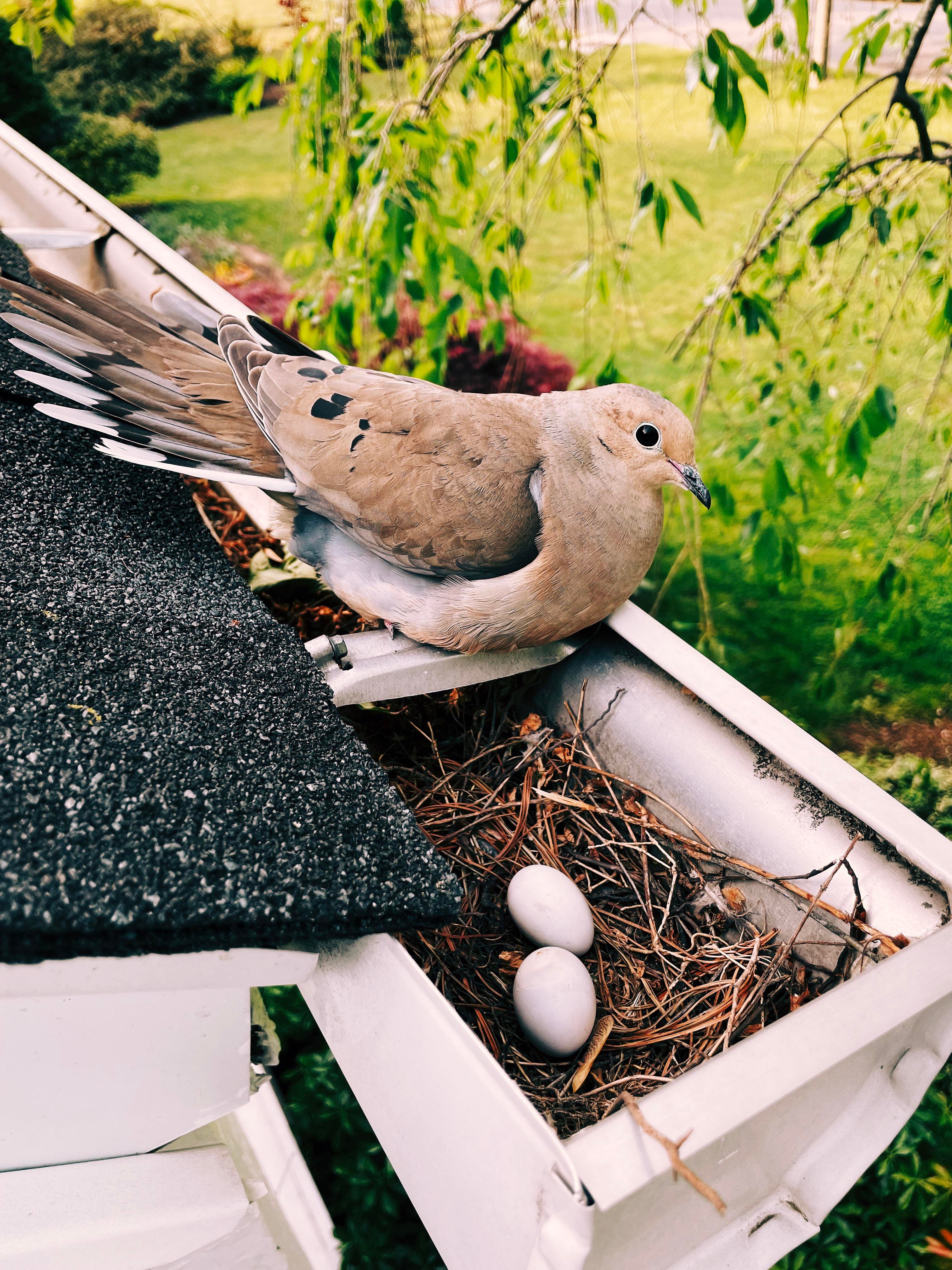
As spring unfolds in Eliza Howell Park, the Mourning Dove is often one of the first non-raptor bird species to begin nesting activities. Observations of a particular nest since March 21 have revealed the dedication of these birds, enduring a cold spell that included a significant snowfall shortly after the nest’s discovery.
Despite the harsh weather, the nest has been continuously attended by both the female, who takes the night shift, and the male, who covers the day. With the usual 14-day incubation period potentially nearing its end, the anticipation for hatching is palpable. Mourning Doves are a common sight year-round in the park, with several pairs nesting annually. Their nesting behaviors, however, are quite remarkable and set them apart from many other local species.
Mourning Doves typically commence their breeding season with characteristic “cooing” sounds by late February. This early start means they begin nesting in March, several weeks before many other migratory birds return to Eliza Howell Park.
One of the most fascinating aspects of Mourning Dove nesting is the construction of their nests. They are known for their remarkably swift building process, completing a flimsy structure of twigs and grass in just 2-3 days. Unlike the intricately cupped nests of many other songbirds, the Mourning Dove’s nest lacks a deep inner cup. The construction itself is a coordinated effort: the male gathers twigs, presents them to the female by stepping onto her back, and she carefully tucks them into place as he retrieves the next piece. This efficient process results in a nest that is visibly less substantial than those of other species.
Furthermore, Mourning Doves typically lay only two eggs per brood, which is half the number of eggs laid by most song bird species. Despite this small clutch size, they manage to maintain their population numbers by having two or more broods each year. This reproductive strategy is closely linked to their unique method of feeding their young.
While many songbirds rely on insects to feed their hatchlings, Mourning Doves, like other members of the pigeon family, possess the extraordinary ability to produce “crop milk” or “pigeon milk.” This nutrient-rich, semi-solid substance, sometimes described as resembling cottage cheese, is high in protein and fat. For the first few days after hatching, the young are unable to digest the adult Mourning Dove’s regular seed diet, making pigeon milk essential for their survival. Both the male and female produce this milk and share the feeding duties. However, even with both parents contributing, the amount of milk produced is sufficient for only two chicks at a time, which explains the typical clutch size of two eggs.
The capacity to produce pigeon milk is a key factor enabling Mourning Doves to nest so early in the season. They are not dependent on the availability of increasing insect prey, a necessity for many other bird species. This allows them to establish nests and incubate eggs even during colder periods.
For observers, pinpointing the exact moment of hatching can be challenging. Unlike birds that frequently leave the nest to forage for insects, Mourning Dove parents remain close to the nest, diligently keeping the chicks warm and feeding them milk. This consistent presence at the nest site makes it difficult to observe the precise hatching time.
If all proceeds favorably and observation timing aligns, it may be possible to witness the young chicks several days after hatching. By this stage, they will have grown sufficiently for the parents to begin transitioning their diet from milk to seeds, a crucial developmental step.
Share this:
- Click to share on X (Opens in new window) X
- Click to share on Facebook (Opens in new window) Facebook
Like Loading…
