
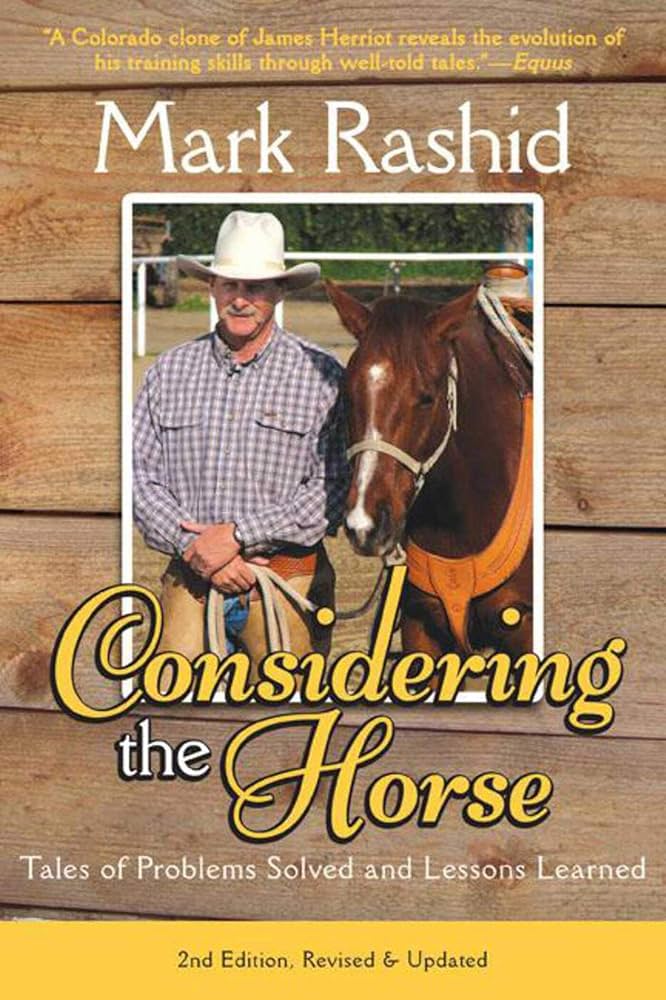
Mark Rashid’s approach to horsemanship centers on understanding and emulating the “passive leader” within a horse herd, a concept that promotes trust and altruistic relationships. This philosophy, deeply rooted in natural horsemanship, emphasizes self-improvement for humans to become better “horse-people,” thereby also becoming better people. Rashid’s work draws parallels between horsemanship and the martial art Aikido, highlighting the importance of energy, balance, and addressing the trauma horses may experience. This article explores Rashid’s core principles and their application in horse training and human-horse interactions.
Mark Rashid has dedicated his journey to uncovering truths that foster trusting relationships between horses and humans. His work is a testament to the idea that as one becomes ready to learn, the right teachers and insights will emerge. Like various spiritual traditions that share a common underlying message despite different names, horsemanship, when approached with integrity, reveals universal truths.
In the pursuit of understanding horsemanship, many have encountered kindred spirits through personal experience, books, and videos. The guiding principle has always been to act in the best interest of both horses and people. This commitment has led to the discovery of exceptional equipment, such as saddles and hoof boots, and invaluable learning from experts like Charles de Kunffy on dressage biomechanics and Tara Calvert-Jackson on natural hoof trimming. Mark Rashid stands out in the realm of Natural Horsemanship for his advice, which encourages individuals to look deeper within themselves to find their inner truths.
Understanding the Passive Leader
Mark Rashid’s study of herd dynamics in wild horses has led him to a perceptive conclusion: the “leader” is not necessarily the “alpha” horse, as commonly believed. Instead, he identifies the “passive leader,” often an older mare, as the figure who engenders the most trust within the herd. This passive leader is characterized by reliability and consistency, possessing the knowledge of essential resources like water and shelter and consistently making the best choices for the entire group’s welfare. Rashid suggests that humans seeking to build a trusting and altruistic relationship with their horses should emulate this passive leader figure.
The Essence of the Passive Leader
Unlike the assertive “alpha” horse, the passive leader exhibits a different temperament. While an alpha might be dominant, especially concerning resources like food, a passive leader is more concerned with the overall well-being of the herd. They are reliable, consistent, and knowledgeable about the environment. This makes them the natural choice for other herd members to follow, especially in situations requiring guidance or facing perceived threats.
Mark Rashid’s Books and Their Impact
Mark Rashid’s books are highly recommended for anyone involved in any equestrian discipline who wishes to enhance their awareness of horse behavior and their own responses. The fundamental understanding is that horses are inherently “horsely,” and it is humans who must train themselves to become accomplished “horse-people.” This self-development journey, facilitated by horses, helps individuals discover their own inherent wisdom.
Rashid’s writings also detail his spiritual evolution, revealing parallels between the martial art Aikido and horsemanship. He demonstrates how the principles of Aikido, such as energy levels and self-balancing, can be applied to daily interactions with horses and other people. This aligns with the concept of “vibration,” a term used to describe one’s energetic state. Furthermore, his teachings address the significant issue of traumatization in horses and effective resolution methods, a perspective that resonates with those who have experienced similar challenges in their work with horses.
Applying Passive Leadership Principles
The concept of the passive leader extends to the physical aspects of riding. By understanding and adopting the posture of a passive leader, riders can achieve an intelligent approach to dressage that is not based on dominance or force. Instead, it involves training one’s body to gymnastically channel the horse, guiding it towards balance, power, and grace. This approach fosters an unparalleled altruistic connection in riding.
Personal Observations of Passive Leaders
Observing horse herds through the lens of Rashid’s passive leader philosophy can be insightful. In some herds, the most dominant male is not the one who leads. Instead, a more consistently reliable individual, often a mare, naturally takes on this role. Such passive leaders demonstrate a caring nature and concern for the entire herd. They might not aggressively compete for resources but will ensure the well-being of the group.
For instance, a 15-year-old Hannoverian gelding named Tali, despite a challenging past and initial diffidence with people, has always been a caring horse concerned with the herd’s welfare. While holding a high position in the hierarchy, he rarely pushes for his share and is described as a true gentleman. Similarly, Xas, a ten-year-old mare bred by the authors, exhibits passive leadership qualities. Born with Neo-natal Maladjustment Syndrome, she developed a close bond with humans and is a thoughtful, altruistic mare who often guides others through difficulties and acts sensibly in crises. She also enforces patience during feeding times, ensuring other horses wait calmly.
Both Tali and Xas embody an egalitarian and benevolent mindset, caring for others as much as themselves while also knowing how to look after themselves. This balanced approach is what earns them the trust and following of other horses, making them ideal role models for human-horse relationships.
Conclusion
Mark Rashid’s principles in common offer a profound framework for understanding and interacting with horses. By focusing on the qualities of the passive leader—reliability, consistency, and altruism—humans can cultivate deeper, more trusting relationships with their equine partners. His work, interwoven with insights from Aikido and an understanding of horse trauma, provides a holistic approach to horsemanship that emphasizes self-awareness and personal growth. Ultimately, becoming an accomplished horse-person through Rashid’s philosophy leads to becoming a more accomplished person, discovering inherent wisdom through the partnership with horses.
Further Reading
For those interested in learning more about natural horsemanship and related topics, the following resources offer valuable insights:
- How To Train A Horse Without Force
- Natural Horse Training
- Lunging A Horse Well: The Best Foundation For Training
- Dressage And Natural Horsemanship – What’s The Difference?
- The Monty Roberts Technique: How It Works For Us
- Training Young Horses: Important Attributes in Trainer
- Understanding Horse Herd Dynamics
- Horse Healing Philosophy
- Training horses: the whole way!
- What is real dressage riding?
- The Significance of the Horse Herd
- Posture
- Intelligent approach to dressage
