
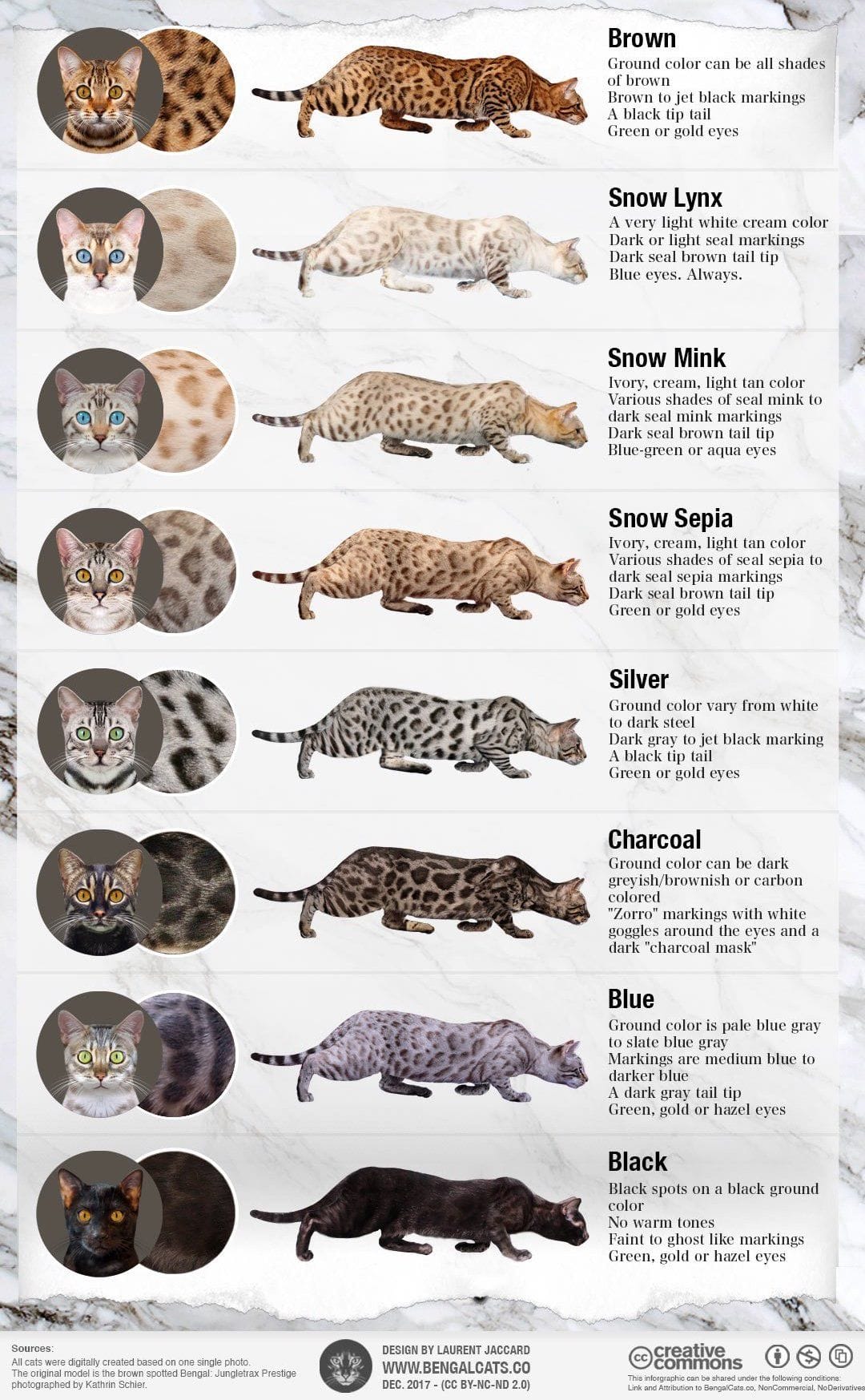
The Bengal cat is renowned for its striking coat patterns, and among these, the marble pattern stands out for its intricate beauty. While genetically a form of the classic tabby, a well-executed marble pattern on a Bengal is a far cry from its traditional counterpart. Achieving this sophisticated look involves a unique interplay of genetics that modifies the standard tabby markings, creating a visually stunning and highly sought-after coat.
The Classic Tabby vs. The Marble Bengal
Genetically, the marble pattern in Bengals is rooted in the classic tabby pattern, the same pattern seen in breeds like the American Shorthair. However, a Bengal exhibiting a pattern too similar to a traditional classic tabby is not considered a desirable representation of the marble trait. For a cat to be a true Bengal, especially one with a classic tabby pattern, it must have a pedigree to verify its lineage.
A key differentiator lies in the markings themselves. Traditional classic tabbies, like the brown/black example pictured, feature solid black markings on a ticked coat, often with a distinct “bullseye” shape on their sides and solid black shoulder markings. They also display the characteristic tabby “M” above their eyes. While these markings can be found on various cat breeds, their presence alone does not make a cat a Bengal.
The marble Bengal pattern, conversely, is a modified version of the classic tabby. The more it resembles a traditional pattern, the less desirable it is in the context of a marble Bengal. This modification is evident in both the coloration and the arrangement of the markings.
Coloration and Arrangement of Markings
Marking Coloration on Brown/Black Marbles
Traditional tabby markings are solid. In contrast, the markings on a marble Bengal are two-toned. They feature a captivating blend of black and various shades of brown that ripple within the black. Finer black markings may even appear within the brown areas. This intermingling of colors is a result of leopard cat genetics interacting with the tabby gene in a way not typically seen in nature, leading to the “marblization” of the classic tabby pattern.
How Marble Markings Differ from Traditional Classic Tabby
Leopard cat DNA significantly alters the classic tabby pattern in Bengal cats. For instance, the shoulder markings on marble Bengals are not solid. While a classic tabby has solid black shoulder markings, a marble Bengal displays black-outlined markings filled with rich brown and speckles within that brown.
On the body, a traditional classic tabby typically exhibits a round bullseye marking. For a marble Bengal, this bullseye should be elongated and broken, losing its perfect circular shape. This asymmetry is believed to be an evolutionary adaptation mimicking the dappled light of a forest, providing better camouflage than a symmetrical pattern. The classic tabby’s bullseye might make it a target for predators in the wild, whereas the marble Bengal’s jagged, asymmetrical pattern allows it to blend seamlessly with its environment, much like a leopard cat in its natural habitat.
Can a Cat with a Classic Tabby Pattern Be Part Bengal?
While most domestic cats possess the genetics for a classic tabby pattern (around 80% of cats have at least one classic tabby gene), it’s unlikely that a cat with a classic tabby pattern is an unintentional Bengal mix. This is due to the low probability of pedigree Bengal cats breeding with feral populations. However, evidence of Bengal genetics can be observed even in mixed-breed cats. For example, a cat with one Exotic Shorthair grandmother and Bengal sire and grandsire might display modified tabby markings, such as non-solid black markings and elongated bullseyes, indicating the influence of Bengal genetics, even if the cat itself is not a full Bengal.
The Challenge of Breeding Good Marbles
Achieving a desirable marble pattern in Bengals is challenging because it requires a specific set of genetic traits that may not align with the preferences for spotted cats. Breeders often aim for three key traits in marble Bengals:
- Horizontal Flow: This characteristic breaks the roundness of the bullseye pattern, particularly the edge closest to the shoulder. This translates to rib bars in spotted Bengals, and breaking these solid, curved edges is a significant hurdle for many breeders.
- Small Markings: Smaller markings contribute to the overall aesthetic.
- Acreage: This refers to the background space between the markings. Ample acreage allows the background color to be visible within the pattern.
When a spotted cat with large markings and minimal acreage is bred to produce a marble, the resulting marble may appear “sheeted,” lacking visible background color on its sides. While sheeted marbles still exhibit the rich, multi-toned ripples and speckles within the black markings, they miss the distinct background color. The combination of small markings and significant acreage is paradoxical, as less acreage is generally considered more desirable in spotted Bengals. This complexity leads some breeders to maintain separate breeding programs for spotted and marble Bengals.
Many marble Bengals tend to be sheeted due to the breeder preference for less acreage in spotted cats. However, these cats still display the characteristic multi-toned shoulder markings and the captivating rippling within the black markings on their sides, which will continue to develop as the kitten matures.
If you are interested in a marble Bengal that deviates from the traditional classic tabby pattern, explore available Bengal kittens. As the marble gene is recessive, availability can fluctuate, but breeders can often provide an estimated timeframe.
