
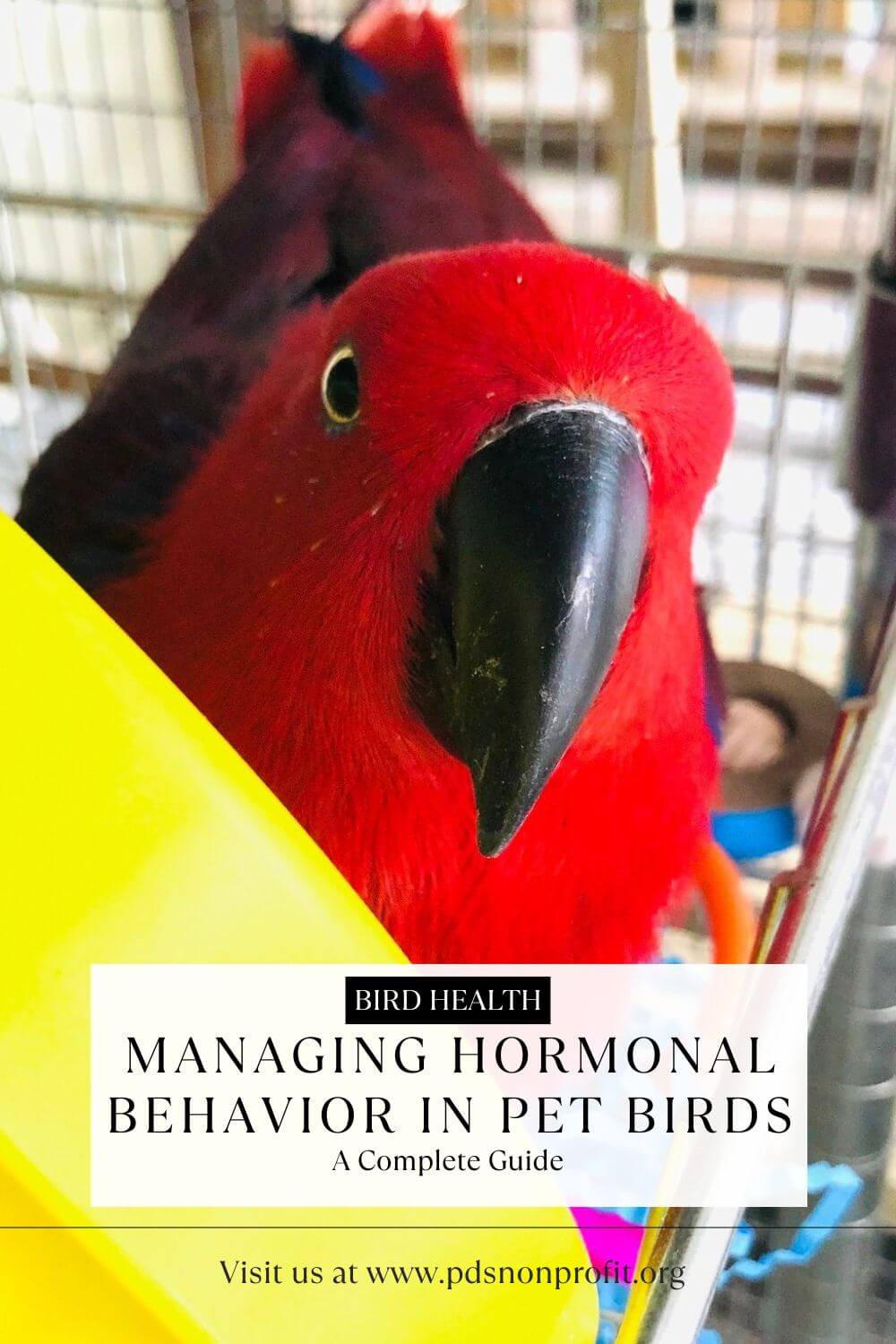
As bird owners, we cherish the bond we share with our feathered companions. However, sometimes this bond can lead to unintended consequences, particularly during a bird’s natural breeding season. Hormonal behaviors, often expressed as a desire to nest or raise young, can be challenging to manage. This article will provide a comprehensive guide to understanding and mitigating these behaviors, ensuring a harmonious environment for both you and your bird.
Understanding and Managing Breeding Season
Recognizing your bird’s natural breeding season is the first step in managing hormonal behavior. During this time, typically coinciding with longer daylight hours in spring, birds naturally exhibit instincts to find a mate and prepare for nesting. Implementing specific strategies can help redirect these instincts and maintain a balanced relationship with your pet.
Adjusting Daylight Hours and Environment
To help curb nesting behaviors, it’s crucial to limit daylight hours, ensuring your bird experiences 10-14 hours of complete darkness and quiet each day. A separate cage for sleeping may be necessary to achieve this. Furthermore, ensure your bird’s cage is placed in a bright, open area, avoiding dim or secluded corners that can stimulate nesting instincts. Rearranging the cage or even the room can disrupt a bird’s sense of a stable environment conducive to raising a family.
Diet Modifications for Hormonal Birds
Diet plays a significant role in managing hormonal behavior. Limiting fatty foods, often found in all-seed diets, is essential. Transitioning to a diet rich in sprouted seeds, fresh vegetables, and a limited amount of safe fruits can help. Parrots fed high-fat diets are more likely to engage in breeding behaviors. Avoid feeding mushy or warm foods, as these mimic the regurgitated food parrots feed their mates and chicks.
Eliminating Nesting Stimuli
It is vital to remove any items that could encourage nesting. This includes snuggle huts, tents, nest boxes, and allowing your bird access to tight spaces like shoes. These items can be dangerous, with fabric strands posing a risk of entanglement and injury. Nesting parents may also ingest and feed toxic fibers from toys to their young.
Modifying Physical Interaction
Physical contact needs careful consideration. Avoid allowing your bird to snuggle under your hand or on your shoulder, as these actions can be sexually stimulating. Limit physical interaction to stepping up and providing head or neck scratches. Never place your hand over the bird’s back unless it’s an emergency.
Reinforcing Boundaries and Training
When your bird exhibits nesting behaviors, such as backing up its rear end with its tail in the air or attempting to mount your hand, immediately return it to its cage. This action signals that you are not interested in participating in raising a family. After the bird has calmed down, re-engage with a non-cuddling activity.
Encouraging Hands-Off Training and Foraging
While direct physical contact may decrease, the time your bird spends out of its cage should not. Redirect your bird’s energy into hands-off training, teaching new behaviors and tricks such as waving, coming when called, or returning to its cage on command. These activities provide mental stimulation and a non-sexual way to bond. Incorporate foraging toys into your bird’s routine, which encourages natural foraging behavior and makes them work for their food. This not only keeps their minds occupied but also prevents overfeeding, as excess food can signal abundance suitable for raising young.
Involving All Household Members
Ensure all members of the household interact with the bird. While it may be tempting to isolate a bird exhibiting hormonal behavior or to have only one trusted person handle it, this can strengthen the mate bond and encourage hormonal responses. Encourage positive interactions with all family members, even simple activities like reading to the bird or having them nearby during homework. Any positive interaction from individuals other than the perceived mate can help redirect hormonal behavior.
By implementing these strategies, you can effectively manage your bird’s hormonal behavior, fostering a healthier and more harmonious relationship for everyone involved.
