
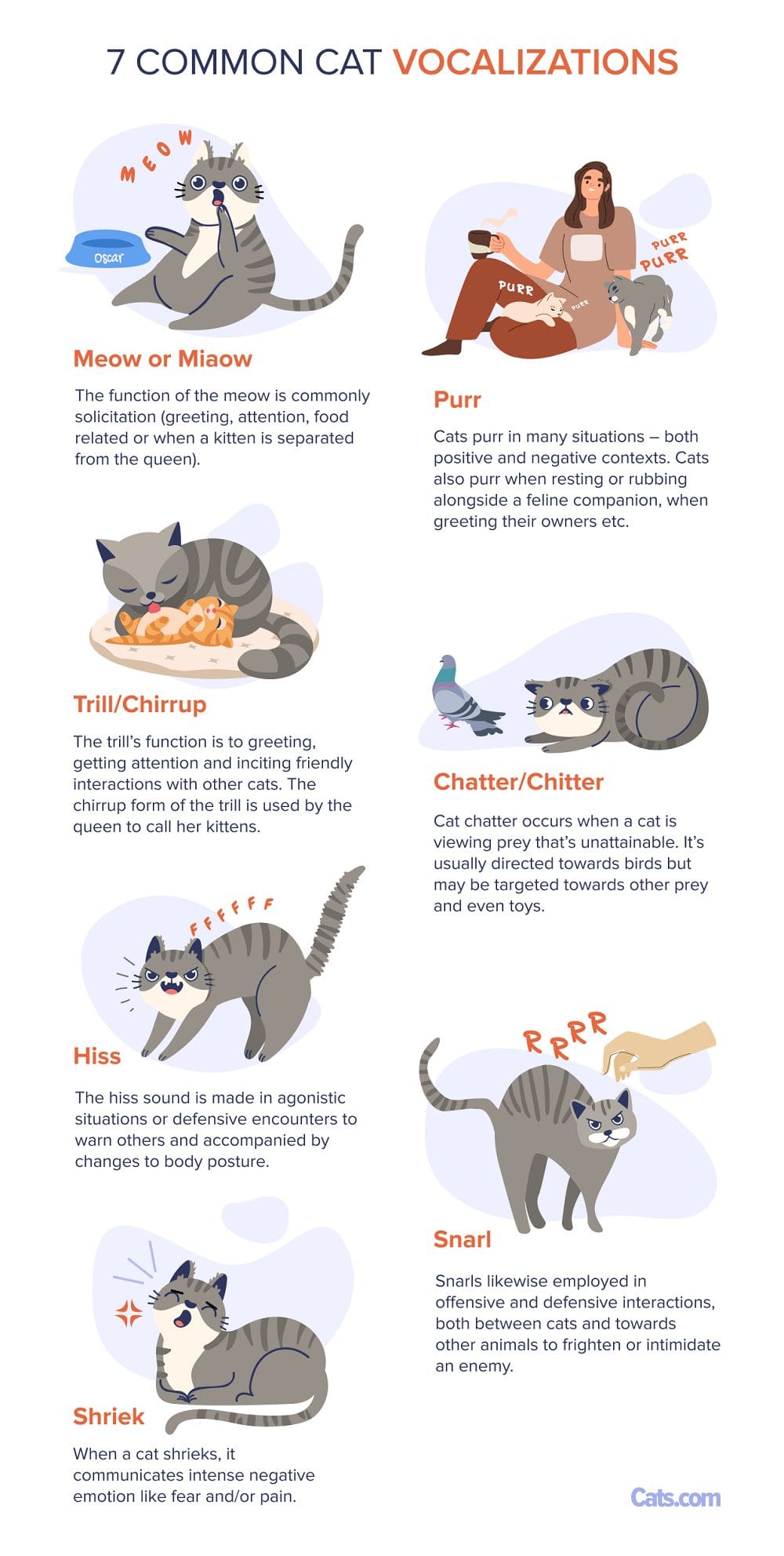
Cats communicate with humans primarily through meows, a vocalization they typically reserve only for their human companions. While kittens meow to signal distress to their mothers, adult cats largely forgo this behavior with each other, instead using it as a tool to interact with and influence their owners. This innate vocalization can range from a simple greeting to a more insistent demand, and understanding its various causes is key to managing excessive meowing. This article explores the common reasons behind feline vocalizations and provides practical strategies for pet parents to help their cats become less vocal when necessary.
The Many Reasons Behind a Cat’s Meow
Cats meow for a variety of reasons, each serving a specific communicative purpose. Recognizing these signals can help you respond appropriately and address underlying issues.
- Greetings: A cheerful meow upon your return home or a soft vocalization when you enter a room is your cat’s way of saying hello and acknowledging your presence.
- Seeking Attention: Many cats are social creatures and will vocalize to solicit attention. This can include requests for petting, play, or simply conversation. Cats who experience prolonged periods of solitude may be more prone to meowing for attention.
- Food Requests: Mealtimes are often accompanied by vocal demands, especially if a cat learns that meowing near the kitchen or upon waking you up results in food. Begging for human food through meowing is also a learned behavior.
- Access Demands: Whether it’s wanting to go outside or be let back in, meowing at doors and windows is a cat’s primary method of signaling their desire for entry or exit. Transitioning a cat to an indoor-only lifestyle can temporarily increase such vocalizations.
- Disorientation in Elderly Cats: Older cats experiencing cognitive dysfunction may meow due to disorientation, similar to a feline version of Alzheimer’s disease. Behavior Problems in Older Cats can shed further light on this.
- Mating Calls: Unspayed female cats will yowl to advertise their receptivity to males, while males may yowl to gain access to females during breeding seasons.
When to Consult a Veterinarian
Excessive meowing can sometimes indicate an underlying medical condition. It is crucial to have your cat examined by a veterinarian to rule out any health issues that might be causing distress, such as unusual hunger, thirst, restlessness, or irritability. Conditions common in aging cats, like overactive thyroid or kidney disease, can also manifest as increased vocalization.
Strategies for Managing Excessive Vocalization
To effectively manage your cat’s meowing, it’s important to first identify the trigger. Observing the circumstances surrounding the vocalizations and noting what makes them stop can help pinpoint the cause. Keeping a log can reveal patterns in their behavior.
- Greeting Meows: If your cat meows simply to greet you, this is a normal expression of happiness and may be difficult to change.
- Attention-Seeking Meows: Train your cat that attention is only given during quiet moments. Avoid any form of attention, even negative, when they are meowing. Wait for a brief silence before responding. If they meow again, disengage until they are quiet.
- Loneliness: If your cat seems lonely due to your absence, consider arranging for a pet sitter to provide companionship and playtime during the day.
- Food-Related Meows: Do not feed your cat when they meow for food outside of scheduled mealtimes. Consider using an automatic feeder that dispenses food at set times to redirect their vocalizations towards the device. If your cat wakes you to be fed, an automatic feeder can also be beneficial.
- Dietary Adjustments: If your cat is on a diet, consult your veterinarian about high-fiber options or supplements to promote satiety. For cats not prone to weight gain, leaving dry food accessible at all times may prevent hunger-related meowing.
- Access Issues: Installing a cat door can offer your cat independent access. However, the ASPCA recommends keeping cats indoors for their safety. If transitioning an outdoor cat to an indoor-only life, expect a period of adjustment with increased meowing at doors and windows. Patience and consistency are key as they adapt. Creating an outdoor cat enclosure is another option for safe outdoor access.
- Heat Cycles: Unspayed female cats in heat will yowl more frequently and exhibit increased affection. Spaying is the most effective solution to reduce vocalizations associated with heat cycles. Male cats may yowl incessantly if they detect a female cat in heat. Neutering is the recommended solution for this behavior.
- Elderly Cats: For elderly cats exhibiting new excessive meowing, a veterinary evaluation is essential to address potential medical conditions, sensory deficits, or cognitive dysfunction.
What NOT to Do
- Do not ignore your cat indiscriminately. While ignoring attention-seeking meows is recommended, always ensure their basic needs are met. Your cat might be meowing because their litter box is dirty, their water is empty, or they are trapped somewhere.
- Avoid scolding or punishing your cat for meowing. While this might elicit a temporary response, it’s unlikely to resolve the underlying issue and can lead to fear and anxiety.
