
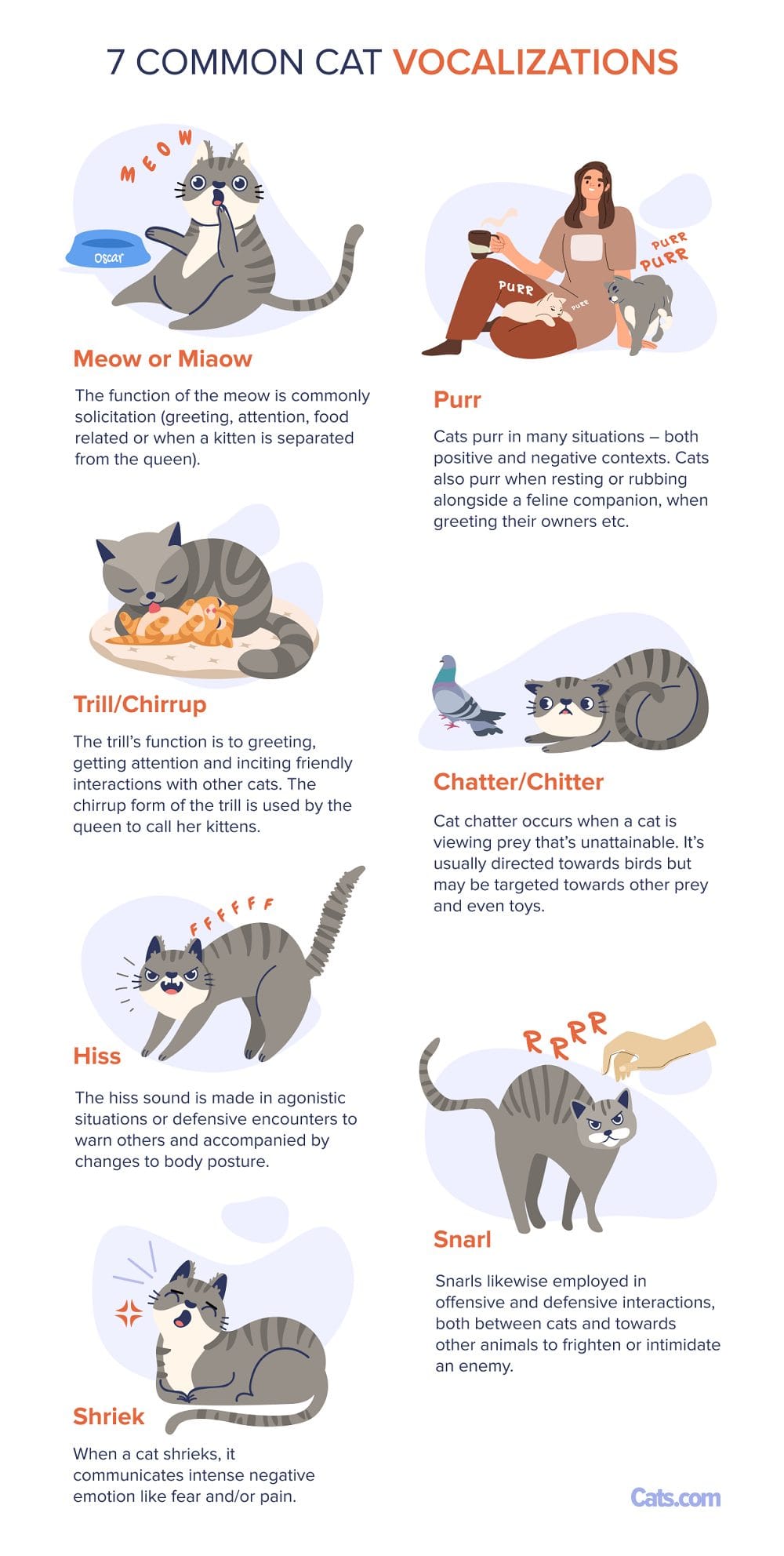
Cats communicate with humans through a variety of vocalizations, with the meow being one of the most common. While adult cats rarely meow at each other, they frequently meow at their human companions, likely because it’s an effective way to get our attention and fulfill their needs. Kittens meow to their mothers to signal hunger or cold, a behavior they largely retain when interacting with people throughout their lives. Beyond meowing, cats also yowl, a more prolonged and melodic sound often associated with mating calls. Understanding the reasons behind your cat’s meows is crucial for a harmonious relationship.
The frequency and intensity of meowing can vary significantly among individual cats and breeds. Some breeds, such as Siamese cats, are known for being more vocal. While some meowing is normal, excessive vocalization can be a cause for concern. It’s important to differentiate between normal communication and a potential sign of distress or an underlying medical issue.
Common Reasons Why Cats Meow
Cats meow for a multitude of reasons, often related to their social interactions, basic needs, and environmental changes.
- Greetings: Your cat may meow to say hello when you return home, when you meet in the house, or even when you speak to her. This is a simple acknowledgment of your presence.
- Seeking Attention: Cats are social animals and often vocalize to solicit attention. This can include requests for petting, playtime, or simply conversation. Cats left alone for extended periods may be more prone to meowing for attention.
- Requesting Food: Mealtimes are a common trigger for meowing. Cats learn to associate vocalization with receiving food, whether it’s their regular meal or a request for human food. Some cats will meow incessantly around mealtimes or even to wake their owners for breakfast.
- Access to Outdoors/Indoors: A cat wanting to go outside or come back in will often meow at doors or windows. Transitioning an outdoor-access cat to an indoor-only lifestyle can lead to a period of persistent meowing, which may take weeks or months to subside.
- Cognitive Dysfunction in Elderly Cats: Older cats experiencing disorientation due to cognitive dysfunction, a feline form of Alzheimer’s, may meow excessively. This can be a symptom of confusion and distress. For more in-depth information on this topic, consider exploring resources on behavior problems in older cats.
- Mating Calls: Unspayed female cats in heat will yowl to attract males, and unneutered males will yowl in response to females in heat. This vocalization is a key part of their reproductive cycle.
When to Consult a Veterinarian
A sudden increase in your cat’s meowing warrants a thorough veterinary examination. Many medical conditions can cause behavioral changes, including increased vocalization. Diseases affecting appetite, thirst, or general comfort levels can lead to meowing. Conditions like an overactive thyroid or kidney disease, which are common in aging cats, can also manifest as excessive meowing. It’s essential to rule out any underlying health issues before addressing behavioral causes.
Strategies to Reduce Excessive Vocalization
Understanding the root cause of your cat’s meowing is the first step to managing it. Observing the circumstances surrounding her vocalizations and noting what effectively stops her can provide valuable clues. Keeping a log can help identify patterns.
- Greeting Meows: If your cat meows simply to greet you, it may be challenging to change this behavior, as it reflects her happiness to see you.
- Attention-Seeking Meows: Teach your cat that quiet behavior is rewarded with attention. Avoid giving any form of attention, even negative attention, when she is meowing. Wait for a brief moment of silence before engaging with her. If she resumes meowing, disengage until she is quiet again. Consistency is key to this training method.
- Loneliness: If your cat meows due to loneliness from extended periods of your absence, consider arranging for a pet sitter to provide companionship and playtime during the day.
- Food-Related Meows: Do not feed your cat when she is meowing for food. Instead, establish set feeding times so she learns that vocalizing outside these times is ineffective. Automatic feeders can be useful for maintaining a schedule and redirecting her focus away from you. This is particularly helpful if your cat wakes you for breakfast; she may learn to wait by the feeder instead. If your cat is on a diet, discuss high-fiber options with your veterinarian to help her feel fuller. For cats not prone to weight gain, leaving dry food available at all times might prevent hunger-related meowing.
- Access Issues: If your cat meows to be let in or out, consider a cat door. For cats accustomed to outdoor access, transitioning to an indoor-only life may involve a period of persistent meowing at doors and windows. Patience and consistency in never letting her outside again will eventually lead to adjustment. Alternatively, an outdoor cat enclosure can provide safe outdoor access. The ASPCA recommends keeping cats indoors for their safety and health.
- Heat Cycles: Unspayed female cats in heat often become more affectionate and vocal. Spaying is the most effective way to reduce excessive meowing caused by heat cycles.
- Male Cats and Heat: Unneutered male cats may pace and meow relentlessly when they detect a female cat in heat. Neutering is the best solution to reduce this vocalization.
- Elderly Cats: If an elderly cat suddenly starts meowing excessively, a veterinary evaluation is crucial to identify and manage potential medical conditions, sensory deficits, or cognitive dysfunction.
What NOT to Do
It is crucial to address your cat’s vocalizations with understanding and patience.
- Do not ignore meows: Unless you are certain your cat is meowing solely for attention, always assume there might be an unmet need, such as an empty water bowl, a full litter box, or entrapment in a room. Ensure her basic needs are met before assuming she is simply being demanding.
- Do not punish: Scolding or hitting your cat for meowing can create fear and damage your bond, without effectively altering her vocal behavior in the long term.
