
Bringing a new feline friend into your home is an exciting experience, and understanding their reproductive cycle is crucial for responsible pet ownership. Female cats, known as queens, experience a reproductive cycle called “heat” or estrus, which is essential to grasp for those considering breeding or simply aiming to manage their pet’s health and behavior effectively. This guide delves into the intricacies of the cat heat cycle, from the age at which it begins to the signs to watch for and the preventative measures available.
When Do Cats First Go into Heat?
The onset of a cat’s first heat cycle, or puberty, typically occurs between 5 to 9 months of age. However, this timeline can vary significantly. Some female kittens may enter heat as early as 3 to 4 months, while others might not experience their first cycle until they are around 18 months old. Factors such as the cat’s breed, body weight, and even the time of year can influence this timing. As “long-day breeders,” cats tend to have more frequent heat cycles during periods with longer daylight hours, typically starting in spring and continuing through autumn.
The Stages of the Feline Heat Cycle
The feline heat cycle is a complex process comprising four distinct stages:
Proestrus
This initial stage marks the beginning of rising estrogen levels. Proestrus usually lasts only one or two days and is often undetectable by owners, as there are no outward behavioral signs. During this period, male cats may display an increased interest in the female, but she will not yet be receptive to mating.
Estrus
Estrus is the most noticeable phase of the heat cycle, commonly referred to when people say a cat is “in heat.” This stage typically lasts about a week, though it can range from three to 14 days. Behavioral changes become apparent during estrus, with cats often becoming more affectionate, vocalizing excessively, and exhibiting restlessness. This is the period when mating can occur.
Interestrus or Metestrus
These terms describe the phases between estrus cycles. Cats are induced ovulators, meaning egg release is triggered by mating.
- Metestrus: If a cat mates and conceives during estrus, the cycle pauses. This stage, known as metestrus, lasts for 30–40 days if pregnancy occurs. A confirmed pregnancy will then proceed for the full 60–64 days.
- Interestrus: If mating does not occur or eggs are not fertilized, the cat enters a period of interestrus, lasting one to three weeks. During this time, “in-heat” behaviors diminish before the cycle restarts with proestrus.
Anestrus
This is the period of reproductive inactivity that occurs between active breeding seasons. Anestrus typically lasts two to three months, during which there is no hormonal activity related to reproduction.
Recognizing the Signs of a Cat in Heat
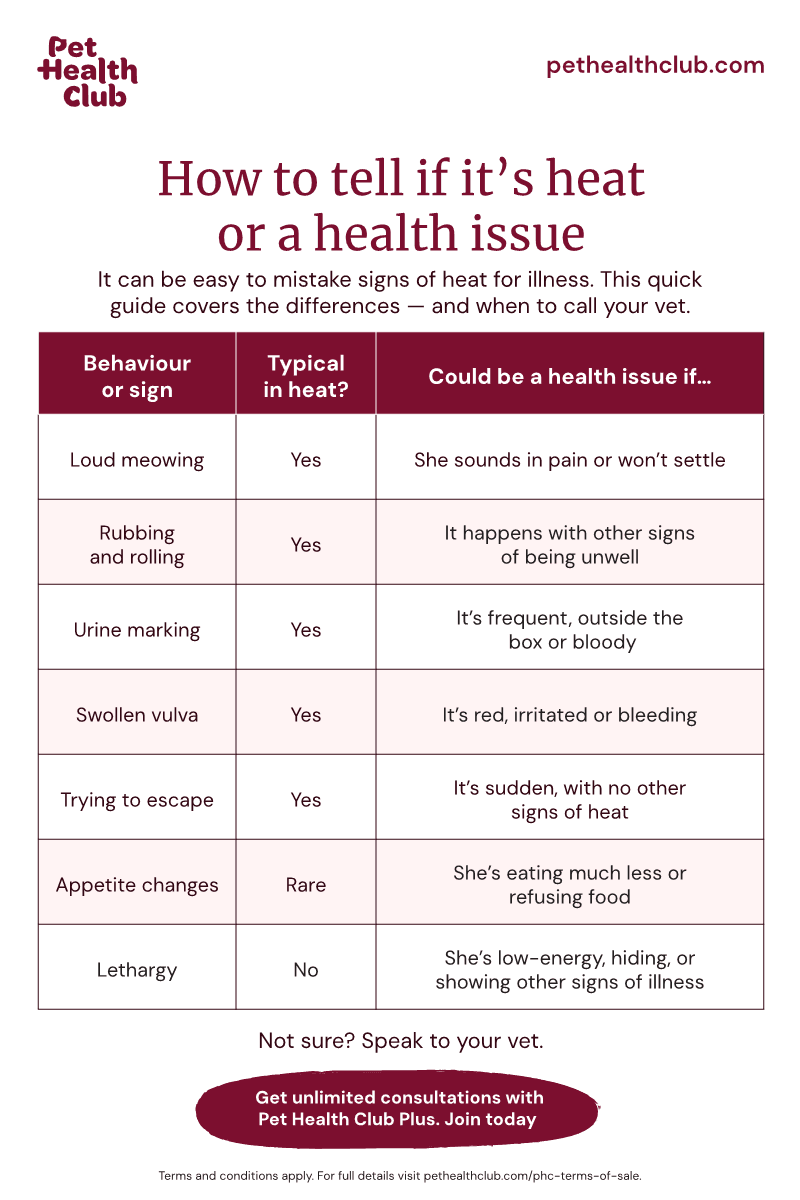
Unlike dogs, cats do not exhibit bleeding during their heat cycle. The most common indicators are behavioral:
- Increased Affection: Your cat may become unusually cuddly and seek more attention from you and other pets.
- Excessive Vocalization: Many cats will meow or yowl loudly and frequently, often in a distinctive mating call to attract males.
- Restlessness: A cat in heat may pace or seem unable to settle down.
- Poor Appetite: Some cats may eat less during this period.
- Inappropriate Urination: While less common, some cats might urinate outside their litter box or more frequently as a marking behavior.
These behavioral changes can be concerning for pet owners, sometimes leading to worries about the cat being in pain. If you observe any sudden or drastic behavioral shifts, it’s always wise to consult your veterinarian.
Managing a Cat in Heat
The primary concern when a cat is in heat is preventing unwanted pregnancy. Keeping your female cat indoors and away from intact males is essential during this time. If your cat must travel, use a secure cat carrier or backpack to ensure her safety.
For owners who do not intend to spay their cat, it’s important to monitor the heat cycles closely. Complications such as pseudopregnancy (false pregnancy) or mucometra (mucus accumulation in the uterus) can occur. More seriously, pyometra, a life-threatening uterine infection, can develop at any age but is most common in middle-aged, unspayed cats. Seek veterinary attention immediately if your cat exhibits any of the following during or after a heat cycle:
- Persistent vocalization: Continuous or unusually loud meowing.
- Aggression: Unusual hostility towards humans or other animals.
- Lethargy: Lack of energy or unusual quietness.
- Vaginal discharge: Any discharge, especially if bloody or colored.
- Loss of appetite: Refusal to eat or drink.
The Importance of Spaying
The most effective method to prevent heat cycles and unwanted pregnancies is spaying, a surgical procedure to remove the uterus and ovaries. Unless you are involved in a professional breeding program, there is no significant health benefit to allowing a cat to go through heat cycles. Spaying not only eliminates the behavioral challenges associated with heat but also significantly reduces the risk of serious health issues, including:
- Pyometra (uterine infection)
- Pseudopregnancy
- Mammary cancer
- Ovarian cancer
Veterinary professionals recommend spaying kittens around 5–6 months of age to preemptively avoid the first heat cycle.
Frequently Asked Questions About Cats in Heat
Do cats bleed when in heat?
No, cats typically do not bleed during a heat cycle. While they may have a clear vaginal discharge during proestrus, any presence of blood is abnormal and warrants an immediate veterinary visit.
Can a cat be spayed while in heat?
Yes, it is possible and often recommended to spay a cat even if she is currently in heat. Waiting for the heat cycle to end can prolong the risk of complications and is generally not advised unless there are specific medical contraindications.
Do male cats go into heat?
Male cats do not experience heat cycles as they lack the necessary reproductive organs. However, intact male cats (toms) can mate with receptive females at any time.
How long does a cat stay in heat?
The estrus phase, the period when a cat is receptive to mating and exhibits noticeable behaviors, generally lasts between three to 14 days, with an average duration of about one week.
How can I tell if my cat is in heat?
Key signs include increased vocalization, heightened affection or clinginess, restlessness, and potential changes in appetite. If you suspect your cat is in heat, consult your veterinarian for confirmation and guidance.
