
The president’s retelling of a Vietnam War encounter, drawing parallels to a scene from the 1948 film “Fort Apache,” offers a colorful anecdote. While the spirit of the exchange seems to align, a closer look at the film’s script and narrative reveals discrepancies in the specific details, particularly concerning the infamous insult.
The Setting and the Players
The president’s recollection places soldiers on horseback, which is accurate for the initial search across Apache territory in “Fort Apache.” However, when the principals from both sides agree to parley, they dismount and advance on foot. The Apache party in the film consists of five individuals, including Chief Cochise, none of whom are depicted wearing traditional headdresses. Instead, they wear folded bandanas as headbands. The U.S. Cavalry contingent comprises six members.
Deconstructing the Insult
The most striking element of the president’s story is the alleged insult: “He’s a lying, dog-faced pony soldier.” While the term “pony soldier” might logically refer to a Cavalry member, neither this phrase nor “dog-faced” or “lying” appear in the script of “Fort Apache.” However, the script does contain a significant put-down directed at Silas Meacham, a representative of the U.S. government. Sergeant Beaufort translates Chief Cochise’s words, describing Meacham as “a yellow-bellied polecat of dubious antecedents and conjectural progeny.” This translates to a cowardly scumbag with speculative qualifications and an imaginary posterity. While not identical, the sentiment of severe insult and deception is present.
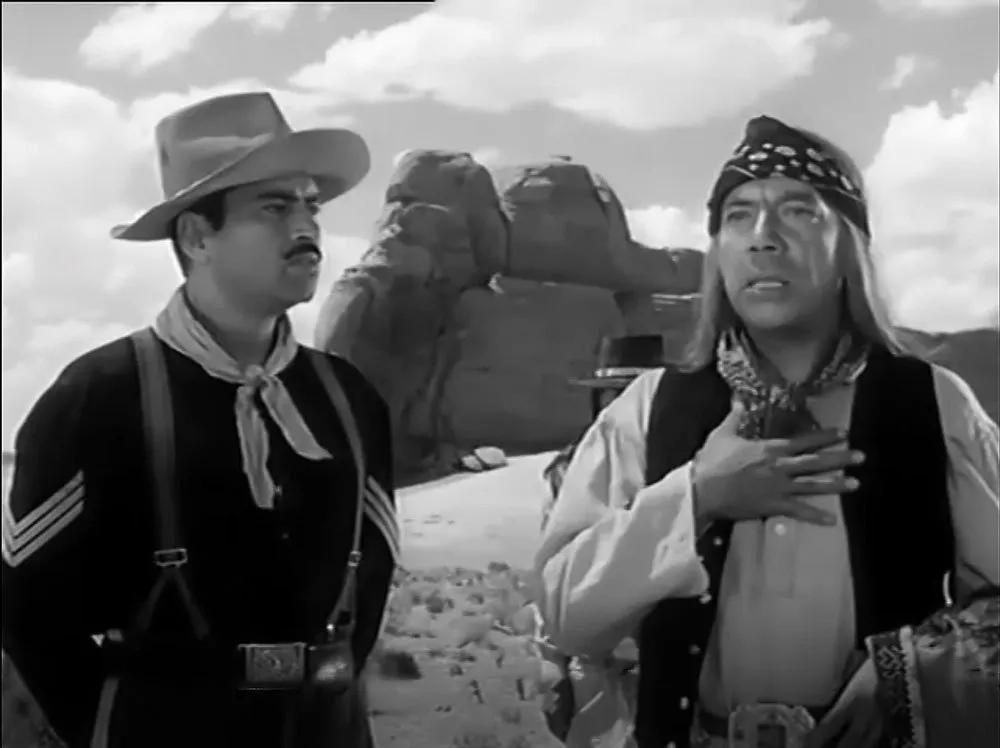 Sergeant Beaufort (Pedro Armendáriz) translates Chief Cochise’s words in Spanish for the Cavalry party. Sergeant Beaufort (Pedro Armendáriz) translates Chief Cochise’s words in Spanish for the Cavalry party.
The Genesis of the Grievance
The conflict between Chief Cochise and Silas Meacham stems from a broken treaty. Five years prior to the film’s events, the government had established a peaceable reservation for the Apache. This peace was shattered when Meacham, described in the script as part of a corrupt government ring, was sent to them. Instead of promised provisions like beef and blankets, Meacham supplied whiskey and trinkets, leading to sickness and drunkenness among Cochise’s people. This betrayal prompted Cochise to lead most of his people into Mexico, a justifiable reaction to deception and mistreatment.
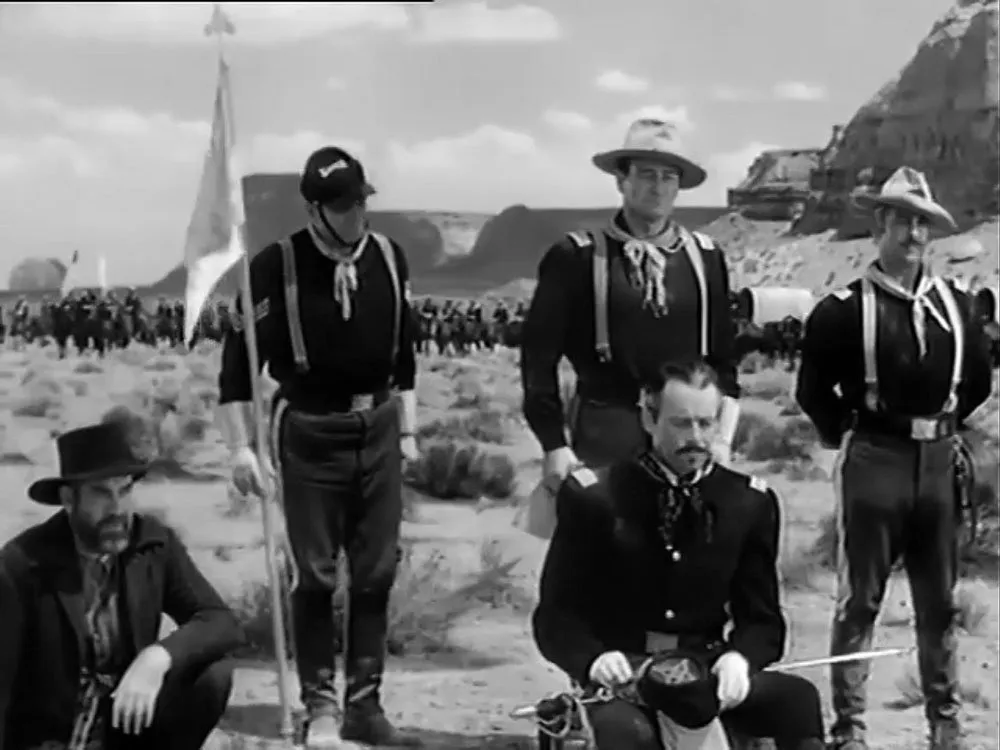 Silas Meacham (Grant Withers, far left) is accused of betraying the Apache and is called a yellow-bellied polecat by Chief Cochise. Silas Meacham (Grant Withers, far left) is accused of betraying the Apache and is called a yellow-bellied polecat by Chief Cochise.
Possible Influences: “Hondo” and “Pony Soldier”
Some speculate that the president’s recollection might be a blend of “Fort Apache” with elements from other John Wayne Westerns, such as “Hondo” (1953) and “Pony Soldier” (1952). The term “pony-solider” does appear in the script for “Hondo,” and Wayne’s character in that film is an Army scout named Hondo Lane. However, the phrase “dog-faced” is absent from that script as well.
Conclusion: Spirit Over Specifics
While the precise wording of the insult may differ, the overall narrative of deception, betrayal, and strong condemnation conveyed in the president’s anecdote aligns with the thematic core of the meeting scene in “Fort Apache.” The exchange, whether literal or slightly embellished, certainly captures the dramatic tension and animosity between the U.S. government’s representatives and the Apache people, highlighting a history of broken promises and justifiable anger. The colorful language, regardless of its exact origin, serves as a memorable and potent expression of contempt.
