
Lovebirds, like many animals, experience mating seasons that can lead to hormonal and broody behavior. Recognizing these signs is crucial for lovebird owners to proactively manage their pet’s well-being and avoid the unexpected responsibility of caring for chicks. This guide delves into the common indicators of hormonal behavior in lovebirds, including mating displays, aggression, changes in appetite, and nesting instincts.
When Hormonal Behavior Begins
Lovebirds typically reach sexual maturity around six months of age. From this point onward, they are likely to experience hormonal periods twice a year, often coinciding with spring and fall, which are their natural breeding seasons. Understanding this natural cycle is the first step in managing their behavior.
Mating Displays and Affection
During a hormonal phase, a lovebird might exhibit specific mating displays. This can include lifting its rear, spreading its wings, and emitting soft “singing” noises. The bird may also puff up its feathers, appearing round and fluffy. To cope with sexual frustration, a lovebird might rub its cloaca (the common chamber for intestinal, urinary, and genital tracts) or direct this energy towards a favorite toy.
A significant sign of hormonal behavior is an increased affection towards one specific person in the household. The lovebird may become very cuddly with this individual and possessive, displaying aggression towards anyone else who approaches. This intense bond is the bird’s attempt to find a mate, even though it’s not biologically possible with a human.
Territoriality and Aggression
Hormonal changes can also manifest as territoriality and aggression. If your lovebird, normally amiable, becomes possessive of its toys, food, or cage, it’s a strong indicator of hormonal influence. This possessiveness can escalate into biting behavior as the bird tries to cope with its sexual frustration. It’s important to remember that this aggression is not a sign of dislike but a hormonal response. Providing the bird with some space is often the best course of action.
Increased Vocalization
While lovebirds are known for their charming sounds, hormonal periods can lead to significantly louder and more frequent vocalizations. This can include screeching that may be unpleasant for owners. If possible, try to minimize exposure to the noise by moving the bird to a different area or using earplugs. Shouting at the bird will likely exacerbate the problem rather than resolve it.
Preening and Feather Plucking
Preening is a normal and essential behavior for lovebirds, allowing them to maintain their feathers for optimal flight. However, during hormonal periods, some birds may engage in excessive preening. In more severe cases, this can develop into feather plucking, where the bird actively pulls feathers from its body. While feather plucking is a natural behavior associated with nesting, owners should monitor it closely. If the habit persists or seems excessive, it is advisable to consult a veterinarian.
Nesting Behavior
A clear sign of a hormonal lovebird is the urge to build a nest. The bird will begin collecting various materials such as wood chips, shredded toy parts, or paper. It will then transport these items to a chosen location within its cage or environment to construct a nest. Lovebirds often carry nesting materials on their backs, tucking them among their feathers for transport. Nests can be built in designated nest boxes, “happy huts,” or any location the bird deems safe for laying eggs.
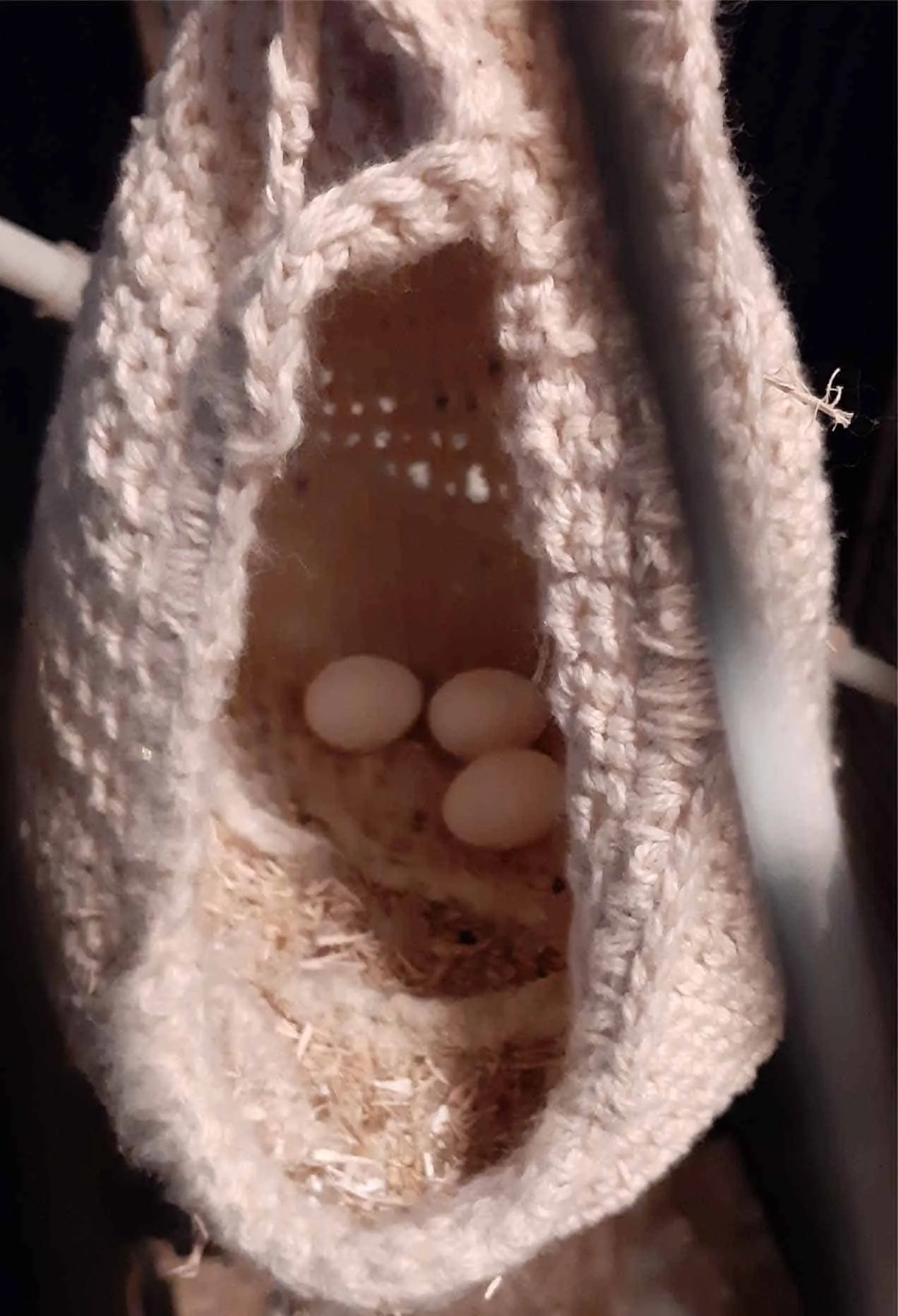 Self-made nest triggering hormones in a lovebird
Regurgitating Food
Regurgitation is a natural behavior in lovebirds, primarily used to feed their young or their mates. During the mating season, a lovebird might regurgitate food if it has bonded with its owner as a mate. While occasional regurgitation is normal, excessive instances should prompt a veterinary visit, as it could indicate underlying health issues.
Understanding and recognizing these hormonal behaviors allows owners to provide appropriate care and management, ensuring a happy and healthy environment for their lovebirds.
