
That heart-stopping moment when you unclip the leash and your dog becomes a blur of fur and paws, completely deaf to your increasingly frantic calls—every dog owner knows the feeling. You want to give them the joy of freedom, but the fear of them running off, getting lost, or heading into danger is overwhelming. What if there was a tool that could bridge the gap between on-leash control and off-leash freedom? Enter the Long Training Lead For Dogs, a simple yet transformative piece of equipment that could revolutionize your training and your walks.
This isn’t just an extra-long leash; it’s a lifeline. It’s a tool for building confidence (for both you and your dog), perfecting that all-important recall, and allowing for safe exploration. Using a long training lead gives your dog a sense of autonomy while ensuring you remain in ultimate control, making it an indispensable asset for puppies, rescues, and any dog learning the boundaries of freedom. Many of the issues that arise during walks, which can be as frustrating as ongoing dog training housebreaking problems, can be managed and improved with the right approach and equipment.
What Exactly Is a Long Training Lead?
A long training lead, often called a long line or check cord, is precisely what it sounds like: a leash that is significantly longer than your standard 6-foot version. They typically range from 15 to 50 feet and are designed not for heel-work in a busy street, but for training in open, safe spaces like a park or a quiet field.
Unlike retractable leashes, which can teach a dog to pull and offer inconsistent tension, a long line maintains a fixed length. This allows you to manage distance manually, either by letting the line trail on the ground or by gathering and releasing it as needed. It’s the perfect middle ground, providing security for you and a world of sniffing, exploring, and running for your dog.
The Top Benefits of Using a Long Line
Integrating a long training lead into your routine can feel like unlocking a new level of communication and trust with your dog. The benefits extend far beyond just safety.
Perfecting the Recall Command
This is the number one reason most trainers recommend a long line. It allows you to practice calling your dog back from a significant distance. If they ignore you, you aren’t left helpless. Instead, you can give a gentle tug on the line to remind them you’re there or reel them in. This prevents the dog from “self-rewarding” by continuing to sniff a fascinating smell or chase a squirrel, which reinforces the behavior of ignoring you. It’s a foundational part of any good dog training program focused on off-leash reliability.
Safe Exploration and Freedom
Dogs experience the world primarily through their nose. A short leash severely restricts their ability to engage in this natural behavior. A long training lead for dogs allows them to zigzag, follow scents, and explore their environment in a way that is mentally stimulating and fulfilling. This enrichment makes for a happier, more tired, and better-behaved dog at the end of the day.
Transitioning to Off-Leash Reliability
The ultimate goal for many is confident, reliable off-leash walking. The long line is the bridge to get you there. You can start by holding the end, then progress to letting the line drag on the ground as your dog’s recall improves. This gives you a safety net; you can step on the line if you need to stop your dog. Gradually, as trust builds, the long line becomes a tool you rely on less and less, until one day, you don’t need it at all.
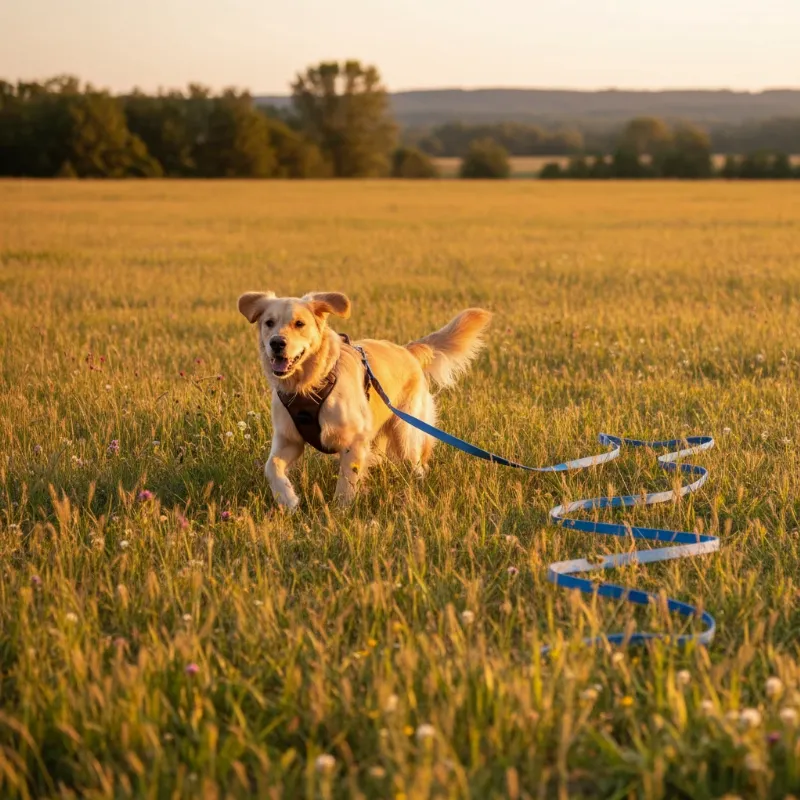 A Golden Retriever in a harness running happily across a green field with a long training lead for dogs trailing behind it, demonstrating freedom and control.
How to Choose the Perfect Long Training Lead for Dogs
With various materials and lengths available, picking the right long line can seem daunting. Here’s a breakdown of what to consider.
Length Matters: From 15 to 50 Feet
The right length depends on your environment and your goals.
- 15-20 feet: Great for smaller parks, initial training stages, or for smaller dogs. It’s more manageable and less likely to get tangled.
- 30-50 feet: Ideal for large, open fields and advanced recall training. This length gives your dog a true sense of off-leash freedom but requires more skill to handle without getting tangled.
Material Breakdown: Nylon, Biothane, or Cotton?
The material affects the lead’s weight, durability, and how it feels in your hands.
- Nylon: Lightweight and inexpensive, but can cause rope burn if it slides through your hands quickly. It also absorbs water, becoming heavy and smelly when wet.
- Biothane: A PVC-coated webbing that is waterproof, odor-proof, and easy to clean. It glides over grass and terrain without snagging and is very durable. It can be a bit heavier but is often the top choice for serious trainers.
- Cotton: Softer on the hands than nylon but absorbs water easily and can rot or mildew if not dried properly.
Don’t Forget the Hardware
Pay attention to the clip. It should be durable and rust-proof. A high-quality brass or stainless steel clasp is essential, especially for larger, stronger dogs. Ensure the clip is appropriately sized for your dog—not too heavy for a small breed, but robust enough for a large one.
A Step-by-Step Guide to Using Your Long Lead
Using a long training lead for dogs effectively is a skill. It’s not just about letting your dog run to the end of it.
- Start in a Safe, Open Area: Choose a location with minimal distractions, like a quiet park or field, far from traffic.
- Always Use a Harness: Never attach a long line to a flat collar. If your dog runs to the end of the line at full speed, the sudden jolt can cause serious injury to their neck and trachea. A well-fitting back-clip harness is the safest option.
- Manage the Slack: Don’t let the line become a tangled mess at your feet. Practice gathering the slack in loose loops in one hand and feeding it out as your dog moves away. This is much safer than wrapping the line around your hand, which can cause serious injury.
- Keep it Positive: Use an upbeat, encouraging tone when you call your dog. When they turn and come back to you, reward them enthusiastically with high-value treats, praise, or a favorite toy. The goal is to make coming back to you the best thing they could possibly do.
- Never Punish: If your dog doesn’t come back and you have to reel them in, don’t scold them when they get to you. They will associate coming to you (even if assisted) with being told off. The experience should always be positive. This principle is as important here as it is when teaching other commands, like learning [how to train my puppy to stay](https://dogcarestory.com/how-to-train-my– puppy-to-stay/).
Expert Tip from Dr. Sarah Miller, Canine Behaviorist: “The goal of a long line isn’t to yank the dog back. It’s a tool to prevent the dog from successfully ignoring you. Gentle guidance, combined with high-value rewards for returning, teaches the dog that checking in with their human is far more rewarding than any distraction.”
Critical Safety Rules: What Not to Do
A long line is a powerful tool, but it can be dangerous if used improperly.
- Don’t Let it Get Tangled: Be constantly aware of where the line is. It can easily get wrapped around trees, other people’s legs, or your own.
- Avoid Other Dogs: Do not let your dog play with other dogs while on the long line. It’s incredibly easy for dogs to get tangled during play, which can lead to panic and serious injury.
- Never Leave it Unattended: A dog left unsupervised with a long line can easily become dangerously entangled.
- Watch Your Hands: A line pulled quickly through your hands by a running dog can cause severe rope burn. Consider wearing gloves, especially when you are first starting out. Just as you use specific tools for teaching hand signals dog training, proper handling gear for long lines is crucial for safety.
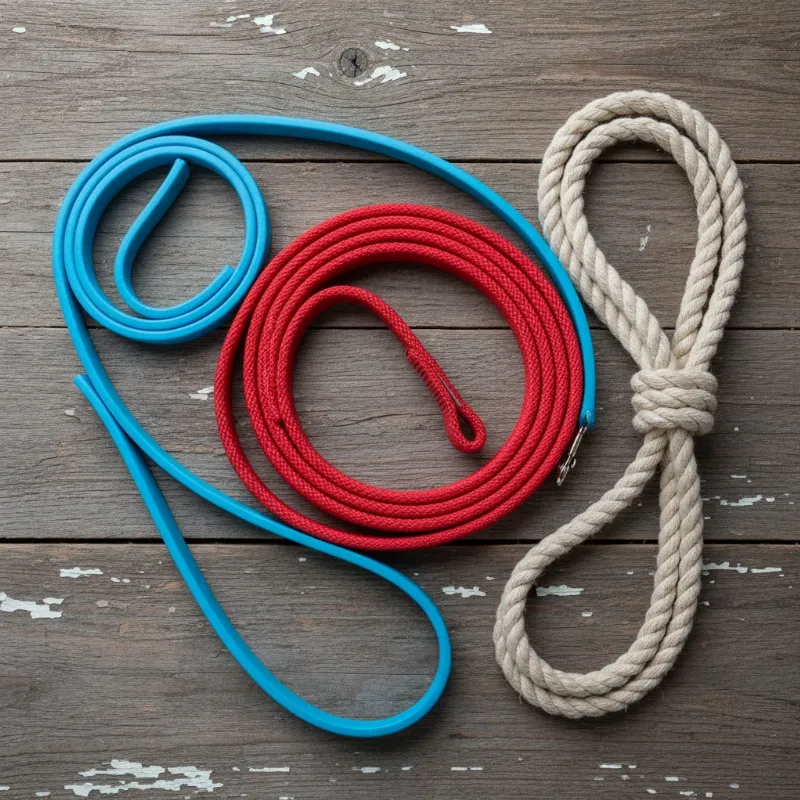 A collection of different long training leads for dogs made from nylon, biothane, and rope, coiled neatly on a wooden floor.
Frequently Asked Questions (FAQ)
Can I use a long training lead for a puppy?
Absolutely. It’s a fantastic tool for puppies. It allows you to teach them recall from a young age in a safe environment, giving them space to burn off that puppy energy without the risk of them running into trouble. The foundational skills learned can even help with other challenges, such as figuring out how to get puppy to like crate by building a positive association with training.
What’s the difference between a long line and a retractable leash?
A long line has a fixed length, giving you consistent control. You manage the slack manually. A retractable leash has a spring-loaded mechanism that keeps tension on the line, which can inadvertently teach a dog to pull. They also have thin cords that can snap and bulky handles that can be dropped, leading to a scary object “chasing” the dog. Most professional trainers strongly advise against using retractable leashes for safety reasons.
How do I stop the long line from getting tangled?
Practice is key. Use a “figure 8” or looping method to gather the rope in your hand rather than letting it pile up on the ground. Always be aware of your surroundings and try to walk in straight lines initially before practicing turns. Choosing a Biothane material can also help, as it is less prone to knotting and snagging on debris.
How long should my first long training lead be?
A 20-30 foot lead is a great starting point. It offers a good amount of freedom without being overwhelming to manage. You can always purchase a longer one later as your handling skills and your dog’s training progress.
Can I use a long line in a wooded area?
It is not recommended. Long lines are best for open spaces like fields, beaches, or parks. In wooded areas, they will inevitably get snagged on trees, roots, and underbrush, creating a frustrating and potentially dangerous situation for both you and your dog.
Your Path to Off-Leash Confidence
The journey to reliable off-leash freedom is built on a foundation of trust, communication, and safety. A long training lead for dogs is one of the most effective tools you can use to build that foundation. It empowers you to be a confident and effective trainer while giving your dog the enriching experience of freedom they crave. By investing the time to learn how to use it correctly, you’re not just training a behavior; you’re strengthening the bond with your canine companion, one successful recall at a time.
