
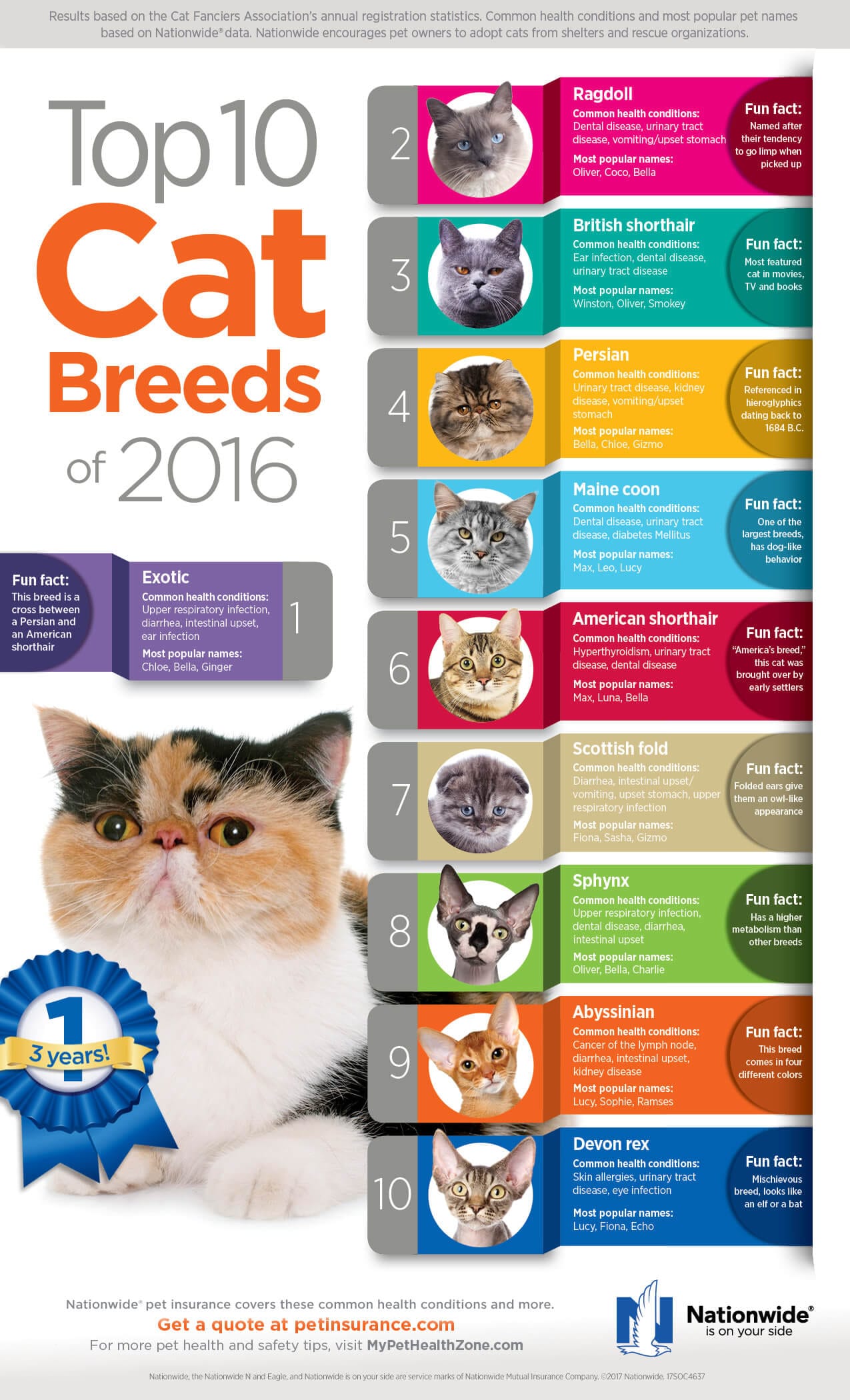
Bringing a new feline friend into your home is an exciting experience, and understanding the diverse world of cat breeds can help you choose the perfect companion or simply appreciate the cats you encounter. This guide delves into some of the most popular and historically significant cat breeds, offering insights into their characteristics, care, and lifespans. While mixed-breed cats are incredibly common and cherished, this exploration focuses on distinct purebreds.
1. Ragdoll
[Renowned for their striking blue eyes and luxuriously long coats, Ragdolls have maintained their popularity for decades. These affectionate and easy-going cats typically stand just under a foot tall and weigh between 10 to 20 pounds. Ragdolls are born white and develop various patterns and colors as they mature. While they don’t have specialized nutritional requirements beyond high-quality, protein-rich food, a balanced diet is crucial for their average lifespan of 12 to 15 years. It’s important to note that Ragdolls are not considered hypoallergenic.
2. Maine Coon Cat
[Often referred to as “gentle giants,” Maine Coons can weigh over 25 pounds and have a lifespan of 10 to 13 years. Uniquely among cats, many Maine Coons exhibit a fascination with water. Their larger size can make them predisposed to certain health conditions such as cardiomyopathy, a heart muscle disease, and hip dysplasia. This diverse breed boasts up to 75 different color combinations.
3. Devon Rex
[The Devon Rex is characterized by its high energy levels, playful nature, and intelligence, requiring ample opportunities for play and exercise. Their distinctive facial features are also a notable trait. These slender felines typically measure around 18 inches in length and weigh between 6 to 9 pounds. Originating in the English countryside in the 1960s, the Devon Rex has a lifespan of nine to 15 years. Their hypoallergenic coats come in a wide array of colors and patterns, from solid hues to calico.
4. Exotic Shorthair
[Developed from a cross between the American Shorthair and the Persian, the Exotic Shorthair has charmed owners with its gentle and affectionate personality since the 1950s. Often called Shorthaired Persians, these cats typically live for 12 to 16 years, becoming deeply integrated into family life. While their coat colors vary significantly, they often feature a dense, plush coat that, due to its thickness, may be unsuitable for individuals with severe allergies.
5. Persian
[The Persian cat is instantly recognizable by its distinctive appearance. Hailing from Iran (formerly Persia), this breed has graced the big screen numerous times. Persians are medium to large cats, weighing between seven and 12 pounds and measuring up to 18 inches long. Their regal look is complemented by a long, luxurious coat that requires consistent grooming. Due to their coat, Persians are not hypoallergenic, although males may produce more of the allergy-triggering protein than females. Regular grooming can help mitigate allergic reactions.
6. Bengal
[With a striking resemblance to a miniature leopard, the Bengal breed was developed by blending the wild beauty of leopards with the docile nature of domestic cats. Their sleek coats and almond-shaped eyes contribute to their distinctive appearance. Bengals possess a long, muscular build, which can make them seem larger than their actual weight. Females typically weigh around 6 pounds, while males can reach up to 15 pounds. Their high energy levels help them maintain a healthy weight.
7. Toyger
[The name “Toyger” is a portmanteau of “toy” and “tiger,” reflecting the breed’s development goal. Created in the 1980s by crossing a striped domestic shorthair with a Bengal, Toygers are exceptionally rare, with kittens often priced between $1,500 and $5,000. Their short, dense coats are typically brown or deep orange, adorned with dark tabby stripes and circular head markings. Weekly brushing is recommended to maintain the shine of their silky coats. Like Bengals, Toygers are energetic and typically maintain a healthy weight.
8. Tortoiseshell
[Tortoiseshell cats are celebrated for their beautiful, multi-colored coats that evoke the pattern of a tortoise shell. While not a distinct breed, the term “tortoiseshell” describes this coat coloring and pattern, with a history dating back to ancient times. If you encounter a tortie, it is likely to be a member of popular breeds such as the American Shorthair, British Shorthair, Persian, Cornish Rex, or Maine Coon.
9. Russian Blue
[As their name suggests, Russian Blue cats originate from Russia and are known for their distinctive blue-colored coats. This is an older, naturally occurring breed. They possess a characteristic upturn at the corners of their mouths, giving them a perpetual gentle smile. Russian Blues are recognized for their graceful demeanor, muscular bodies, and long, fine-boned legs. Their short, double-layered coat indicates their origin in a cold climate. With proper care and if kept indoors, Russian Blues can live for 15 to 20 years or even longer.
10. Norwegian Forest Cat
[These playful and affectionate cats are believed to have arrived in Norway centuries or even millennia ago, developing as a natural breed without intentional human intervention. Norwegian Forest Cats can weigh up to 22 pounds, making them larger than many other cat breeds. Their lifespan, like many domesticated felines, ranges from 12 to 20 years, depending on their care and quality of life. While generally healthy, they can be susceptible to weight-related issues, such as diabetes and joint strain as they age.
Feed Your Cat Only The Best
Regardless of your cat’s breed, whether it’s one of the popular breeds listed here or a beloved mixed breed, providing a nutritionally complete and balanced diet formulated for obligate carnivores is always the optimal choice. Explore options to find a retail partner near you to ensure your feline companion receives the best nutrition.
Find RAWZ Near You
