
Fleas are a common and irritating problem for both cats and dogs, not only causing discomfort through itching but also posing a significant health risk by transmitting diseases like cat scratch fever, which can affect humans. Fortunately, a range of safe and effective products are available to protect pets from fleas, ticks, and other external parasites. Consistent, year-round use of these products ensures continuous protection. When used as directed, these treatments are safe and effective; however, improper use can lead to serious health complications for your beloved companions.
Preventing Flea Control Product Toxicity in Dogs and Cats
Before administering any flea control product to your pet for the first time, it is crucial to consult with your family veterinarian. They are best equipped to recommend the most suitable options for your individual pet’s needs and can guide you through the diverse choices available on the market.
Dos and Don’ts for Flea Control Products
Dos:
- Always use a flea control product that has been prescribed or recommended by your veterinarian. This guarantees the product’s safety and efficacy for your specific pet.
- Thoroughly read and strictly follow all label directions. Correct application is paramount to preventing toxicity.
- In multi-pet households, ensure treated pets are separated until topical flea control products are completely dry. This prevents pets from grooming each other and ingesting the medication, which can be harmful.
- Store all flea control products securely. Keep them out of reach of children and pets to prevent accidental ingestion or exposure.
Don’ts:
- Never use flea control products on very young puppies, kittens, or on pets that are pregnant or nursing without first consulting your veterinarian. Most products have specific age restrictions clearly indicated on their labels.
- Avoid applying topical flea control products to skin that is already red, irritated, scratched, or broken. This increases the potential for absorption and subsequent toxicity.
- Do not use more than one flea control product on your pet simultaneously unless specifically directed by your veterinarian. Combining different products can easily lead to an overdose.
- Never apply a flea control product designed for dogs to a cat. Canine and feline sensitivities to certain ingredients differ significantly, and using the wrong product can be extremely dangerous.
Potential toxicities and adverse reactions associated with flea control products are typically detailed on the product label. Should you have any questions or concerns, do not hesitate to discuss them with your veterinarian or their qualified veterinary team. For further information on parasite control, exploring resources on fleas, ticks, and other ectoparasites is highly recommended.
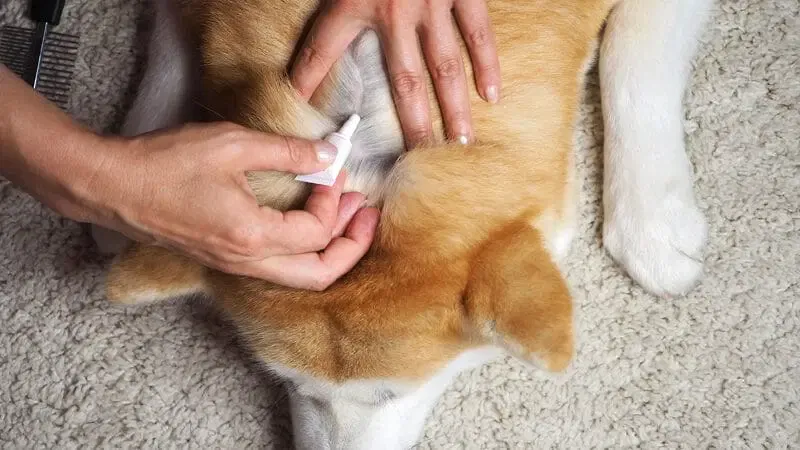 A veterinarian holding a flea control product for a dog
Signs of Flea Control Product Toxicity in Cats and Dogs
Flea product toxicity occurs when a pet ingests or absorbs a harmful amount of the active ingredients present in flea control products. These products can come in various forms, including topical treatments, oral medications, collars, and sprays. The active ingredients, such as pyrethrins, pyrethroids, and organophosphates, are potent in killing fleas but can be detrimental to pets if exposure levels are too high.
While rare, flea control product toxicity can occur, particularly when a product formulated for dogs is mistakenly used on a cat. Symptoms can manifest within one to 12 hours post-application and may vary based on the product type and its ingredients. Cats exhibit a heightened sensitivity to the toxic effects of pyrethrums and organophosphates, necessitating extreme caution when using these products on felines.
 A close-up of a cat's face, highlighting its sensitivity
The most frequently observed signs of toxicity from pyrethrum-based flea products include muscle tremors and excessive salivation. For organophosphate-based flea product toxicity, common symptoms encompass diarrhea, vomiting, difficulty breathing, constricted pupils, muscle tremors, weakness or collapse, and drooling. Organophosphate toxicity can progress rapidly and may be fatal, depending on the specific ingredients and the dosage the pet was exposed to.
What to Do If Your Dog or Cat Exhibits Signs of Flea Control Product Toxicity
- Immediately remove your pet from the source of the toxin. If the product was applied topically, gently wash your pet using warm water and a mild dishwashing liquid, such as Dawn®. This process aids in removing the product from their skin.
- Contact your family veterinarian without delay or transport your pet to the nearest MedVet veterinary emergency clinic. They are equipped to provide essential guidance and necessary medical treatment.
 A person gently washing a dog with mild dish soap and water
Common Flea Control Products
A wide array of flea and tick control products are available. It is essential to read product labels carefully and consult your veterinarian to identify the most suitable option for your pet. Some common and effective products include:
- Isoxazolines: Products like Nexgard, Bravecto, and Simparica.
- Fipronil: Commonly found in Frontline Plus and its variations (available over-the-counter).
- Imidacloprid: Present in Advantage and its variations, as well as K9 Advantix (for dogs only).
- Selamectin: Available as Revolution (FDA-approved for sarcoptic mange in dogs) and Revolution Plus (for cats).
- Seresto Collars: Often recommended for pets with food allergies or epilepsy, and a viable option when topical or oral preventatives cannot be used.
- Lufenuron: An ingredient in Sentinel for dogs, it functions as a growth regulator and is highly beneficial in a comprehensive flea control program.
Flea product toxicity is a significant concern for pet owners, but it can be effectively prevented with the right knowledge and precautions. By understanding the warning signs, taking prompt action, and seeking veterinary care when needed, you can help ensure your pet remains safe and healthy. Always select flea products specifically formulated for your pet’s species and age, and consult your veterinarian for personalized guidance.
For more pet health and safety information, explore our extensive Pet Care Resources library.
